Now Reading: Justice before concessions: why accountability cannot be negotiated
-
01
Justice before concessions: why accountability cannot be negotiated

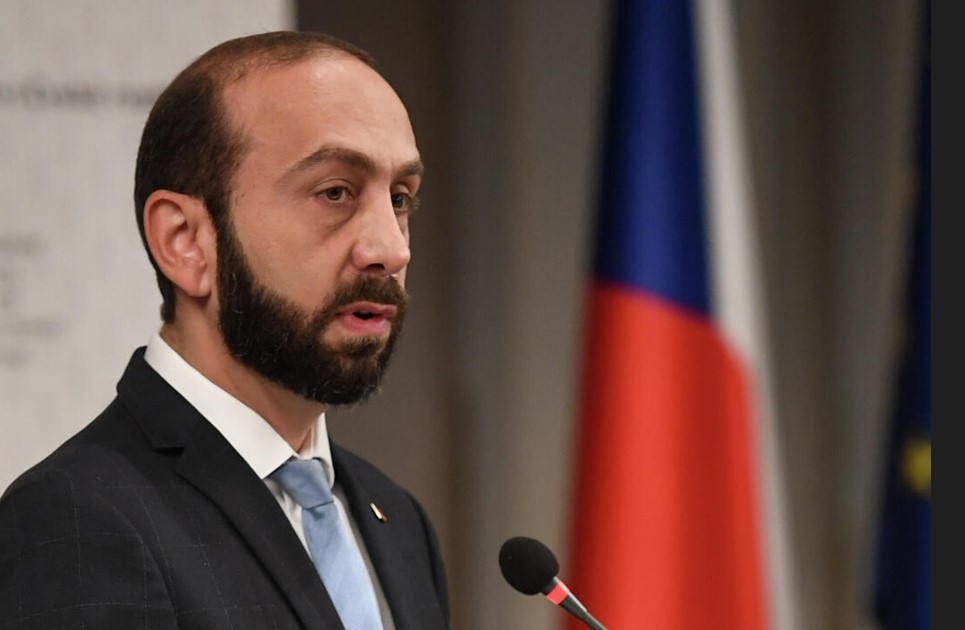
At a time of sustained resistance by Baku to the Western practice of double standards, Azerbaijan has, to some extent, grown accustomed to this phenomenon with a sense of heightened readiness. The recent statement by Armenian Foreign Minister Ararat Mirzoyan should be approached in the same way — firmly and with well-reasoned arguments in defense of one’s position, which is both logical and justified.
Mr. Mirzoyan’s call for the swift release of Armenian detainees held in Azerbaijan does not align with the peace agenda that Yerevan ostensibly supports. No matter how Armenian officials attempt to frame this case, it cannot be presented as part of a peace initiative, as such an approach contradicts the core principles of international law and undermines the very logic of accountability for serious crimes.
First, it is important to distinguish between categories. These individuals are not classic prisoners of war, whose status is governed by the Geneva Conventions, but rather persons accused or already convicted of specific crimes, including war crimes and terrorism. Their legal status is determined by court decisions based on evidence, not by political statements or diplomatic gestures.
Historical and international experience clearly shows that serious crimes cannot become a subject of political bargaining. After the Nuremberg Trials, the international community established the principle of the inevitability of punishment as a foundation for lasting peace. It is worth noting that those convicted were not released for the sake of reconciliation; on the contrary, their punishment became the cornerstone of the post-war legal order.
The same logic has been applied in more recent conflicts. For example, international judicial mechanisms, including the tribunal for the former Yugoslavia, delivered verdicts against individuals found guilty of grave crimes, such as Ratko Mladić. Thus, in European practice, there are no precedents where such sentences have been revised to suit political expediency or “gestures of goodwill.”
Furthermore, the modern Western position in the context of the war in Ukraine demonstrates the same consistency: lists of suspects are being compiled, investigations are underway, and the International Criminal Court has already issued arrest warrants. The core principle remains unchanged — those responsible must be held accountable. Against this backdrop, attempts to apply a different logic to Azerbaijan appear, at the very least, strange and inconsistent. What is this, if not an example of double standards?
Releasing individuals convicted of serious crimes would not represent humanitarianism, but rather a rejection of the principle of justice. It would set a dangerous precedent in which punishment could be overturned under external pressure, thereby undermining trust in judicial institutions and the system of international law itself.
It is also important to highlight the domestic dimension: in Azerbaijan, court decisions are made within the framework of national legislation and on the basis of evidence. Ignoring them would constitute interference in the country’s legal system and undermine the rule of law. Moreover, in a society that has experienced a prolonged conflict, the issue of accountability for crimes is of fundamental importance. Renouncing punishment would be perceived as a denial of justice and could risk the recurrence of such acts in the future.
Thus, a peace agenda cannot be built on ignoring crimes or releasing convicted individuals. Sustainable peace is only possible when there is a balance between humanitarianism and justice, where the key role is played not by political expediency, but by the inevitability of punishment and respect for judicial decisions.
Alla Zeydullayeva