Now Reading: Change of power in Hungary: what it means and what Baku thinks
-
01
Change of power in Hungary: what it means and what Baku thinks

The rise of Hungary’s new prime minister, Péter Magyar, could mark a turning point in the country’s foreign policy, which under former leader Viktor Orbán had long been characterized by an independent and often confrontational course within the European Union. The new premier has declared his intention to restore relations with Brussels, but it remains unclear whether this will lead to abandoning a multi-vector policy or whether Budapest will maintain a pragmatic balance between the EU, Russia, Türkiye, and partners in the South Caucasus.
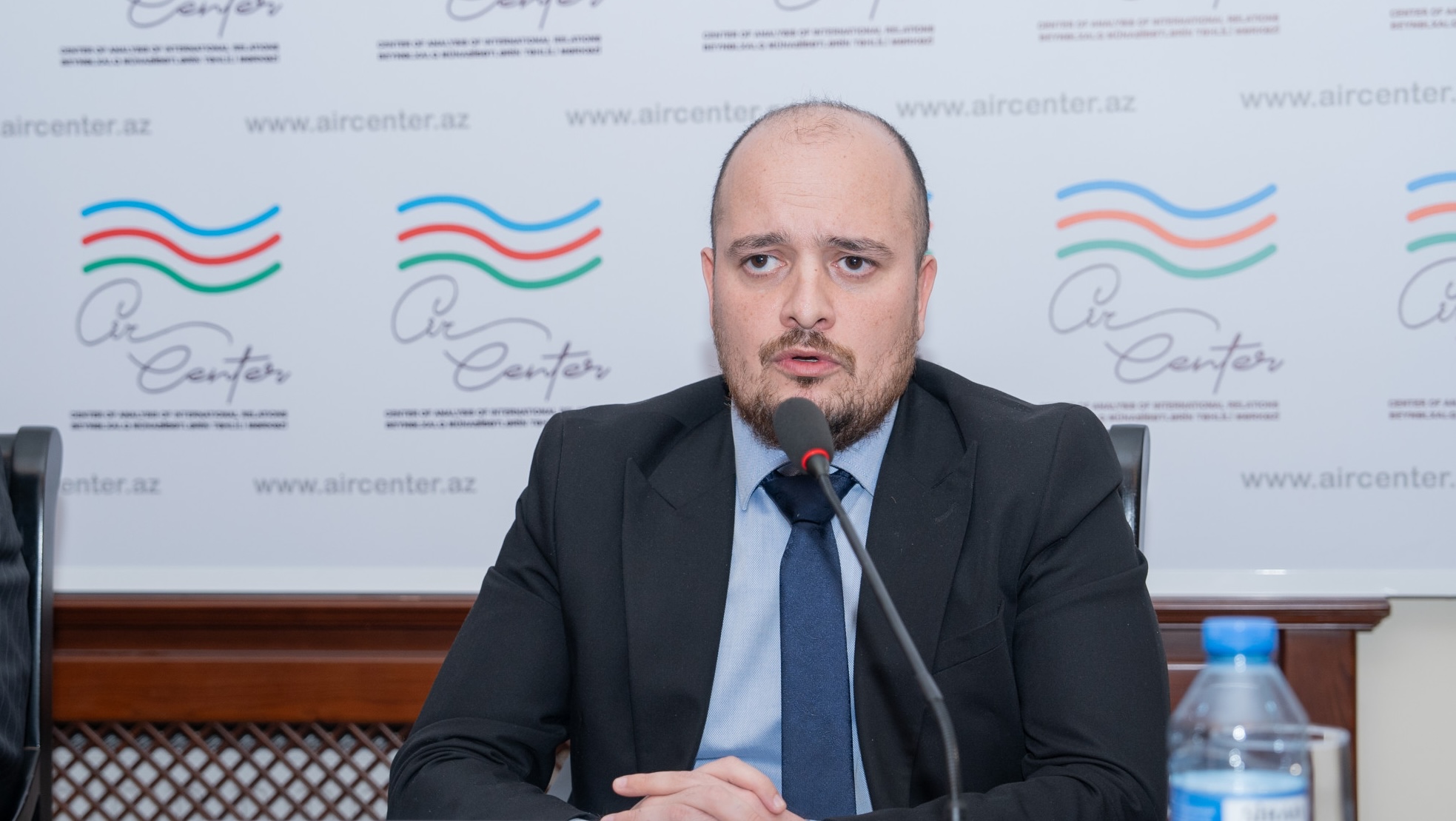
In an interview with Minval Politika, Sultan Zahidov, a leading advisor at the Center of Analysis of International Relations, discussed how Hungary’s foreign policy strategy may evolve, what to expect in relations with Azerbaijan, and the role of energy and geopolitics.
— How could Péter Magyar’s rise to power affect Hungary’s foreign policy priorities? Will he distance himself from Viktor Orbán’s more independent EU course, or should we expect closer coordination with Brussels?
— Péter Magyar’s victory in Hungary’s elections will undoubtedly influence the country’s foreign policy priorities. Although his campaign mainly focused on domestic issues—such as addressing economic challenges, combating corruption, and improving public services—Magyar made it clear that restoring relations with the European Union, which deteriorated under Orbán, would be one of his key foreign policy priorities.
Although Magyar was previously affiliated with the Fidesz party, he broke ties in 2024 following a scandal involving presidential pardons for officials and subsequently resigned from public office. He then launched a political campaign against Orbán, criticizing his anti-European and pro-Russian course. As a result, Magyar is often described as a pro-European politician and has received significant support from EU representatives. European Commission President Ursula von der Leyen, along with leaders of Poland, France, and Germany, were among the first to congratulate him—seen as an indirect signal of political backing. After his victory became clear, Magyar stated that his first visits would be to Warsaw and then Brussels.
One of his main foreign policy tasks will be unlocking €18 billion in EU funds allocated to Hungary that were frozen due to Orbán’s policies. Given the limited timeframe, the new leadership will need to quickly implement reforms and convince Brussels of Hungary’s commitment to EU values.
— During Orbán’s tenure, Baku and Budapest maintained a high level of political dialogue. Will this dynamic continue under the new leadership?
— As for Hungary-Azerbaijan relations, which reached their peak under Orbán, no major disruptions are expected, although Magyar is more inclined to align Hungary’s foreign policy with the EU. During his campaign, he paid little attention to Azerbaijan and other countries, focusing instead on the EU, NATO, the United States, Russia, and Ukraine.
There is only one interview from February in which Magyar criticized Orbán for prioritizing close ties with Russia and several post-Soviet states, including Kazakhstan and Azerbaijan, over the EU. This highlights a key difference: Orbán pursued a multi-vector policy balancing East and West, while Magyar is expected to adopt a more Western-oriented approach aligned with EU positions.
Nevertheless, if he follows a pragmatic approach, he will have to consider Azerbaijan’s geopolitical and geo-economic importance, particularly in terms of EU energy security and Eurasian transport projects. This suggests that while Hungary under Magyar may not support Azerbaijan as strongly as it did under Orbán—for example, when the EU blocked funding for Armenia under the European Peace Facility—it will not jeopardize its economic and energy interests and will therefore maintain ties with both Azerbaijan and Türkiye.
Overall, foreign policy priorities often shift depending on geopolitical conditions and diplomacy. If Hungary seeks to reduce its dependence on Russian energy, Azerbaijan’s role as an energy supplier will grow, which should be reflected in bilateral relations.
— How do you see Budapest’s relations with Moscow under Magyar?
— Hungary-Russia relations under Péter Magyar are unlikely to be as close as they were under Orbán, though this does not mean a complete rupture. During his campaign, Magyar criticized Russia for interfering in Hungary’s affairs and attempting to turn the country into a dependent state. He also referenced historical context, particularly the 1956 uprising against Soviet rule. One of his supporters’ slogans was “Ruszkik, haza!” (“Russians, go home!”), reflecting his distrust of Russia and desire to shift away from a pro-Russian foreign policy.
He has also stated that Hungary will gradually reduce its dependence on Russian energy, though this process will be lengthy and may not be completed before 2035.
At the same time, this stance does not imply a break in relations or a move toward confrontation, given his pragmatic approach.
— And relations with Kyiv?
— Magyar has taken a cautious and restrained position on Hungary-Ukraine relations. During the campaign, Orbán accused him of potentially dragging Hungary into the Russia-Ukraine conflict. Before the elections, I was in Hungary and saw billboards depicting Magyar, Ursula von der Leyen, and Volodymyr Zelensky alongside a Hungarian soldier—part of a government campaign suggesting that a Magyar victory could lead to Hungary’s involvement in the war.
As a result, Magyar avoided emphasizing direct support for Ukraine, focusing instead on the need for a ceasefire and peace. He also stressed that Hungary would not send weapons or troops to Ukraine and would not support its fast-track EU membership, reflecting a cautious and pragmatic stance.
However, indirect support for Ukraine may emerge once the new government unlocks €90 billion in EU funding previously blocked by Orbán.
— How might Hungary’s approach to the Organization of Turkic States (OTS) change under Magyar? Will Budapest maintain its current level of engagement?
— Regarding Hungary’s participation in the OTS, Magyar’s February speech is telling—he criticized Orbán for prioritizing the organization over the EU and granting Hungary observer status. This suggests that his pro-European foreign policy line will limit engagement in other regional forums.
At the same time, Magyar has emphasized strengthening ties with NATO, where Türkiye plays a key role. Additionally, geo-economic and energy considerations may lead him to reassess Hungary’s approach to the OTS, as energy diversification depends in part on relations with member states.
It is also worth noting that Magyar criticized Orbán for excessive dependence on Russian energy and insufficient diversification. Therefore, it is unlikely that Hungary under Péter Magyar will radically change its policy toward the Organization of Turkic States, even if its engagement becomes less active than in previous years.