Recently, official Yerevan made another absurd statement. Vahan Kostanyan, Deputy Minister of Foreign Affairs of Armenia, announced the Armenian state’s desire to join the grand project of laying an electric power cable on the seabed of the Black Sea, launched about a year and a half ago.
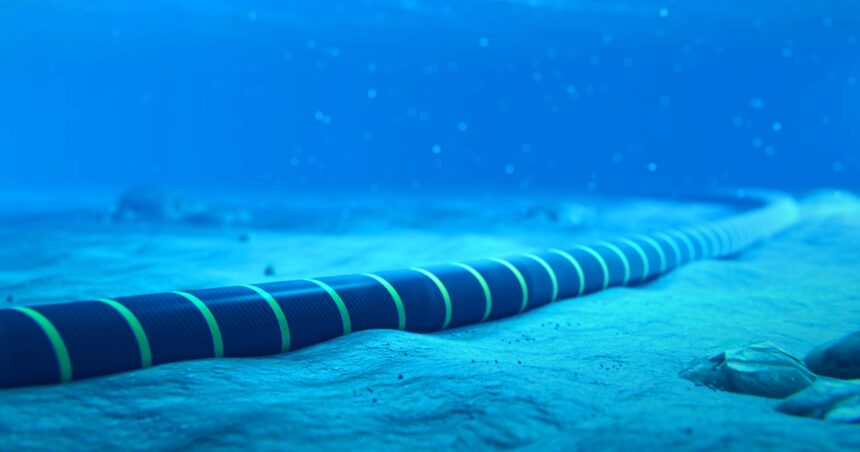
Let’s recall that the Black Sea Energy project agreement between Azerbaijan, Georgia, Romania, and Hungary was signed in December 2022 in Bucharest. The plan involves laying an underwater cable with a capacity of 1 GW and a length of 1,195 km. The cable is intended for the supply of “green” electricity produced in Azerbaijan, through Georgia, and then across the Black Sea to Romania for subsequent transportation to Hungary and the rest of Europe.
A year and a half is not a century. Our memory is fresh, and we well remember how the “expert community” of the neighboring country and even some official figures at that time accompanied the signing of this agreement with caustic, scornful comments.
Of course, these envious remarks did not bother the consortium participants at all. Moreover, well-known world politicians, including those in the European Commission, supported the project. This was understandable—after all, the very concept of Black Sea Energy further connected the vital Caspian-Black Sea region with Europe, bypassing the problematic eastern neighbor (for us, the northern one), and it also served the goals of “greening” the energy sector and the economy as a whole. However, in Armenia, thinking has always been quite unorthodox—for the revanchist circles of this country, dreaming of restoring the borders of Tigranes’ Armenia (to which the current ethnic Armenians have a very peripheral connection), anything good for Azerbaijan is bad for them. Therefore, Azerbaijan treated the outburst of bile from our western neighbors with understanding (or rather, condescension).
It seemed to be nothing unusual, quite familiar. We saw and heard the same thing during the construction of pipelines. And suddenly, like a bolt from the blue, came the statement of the Deputy Foreign Minister of this country, Vahan Kostanyan.
“The Black Sea Cable project, in which Georgia participates and plays a crucial role, is very important for us. We also count on the support of our Georgian partners. We want Armenia to become part of this project. For Armenia to become part of the project, it needs to complete certain homework to update and improve its energy infrastructure. Relevant instructions have been given, and work is underway,” said the Armenian diplomat.
And here, eyebrows begin to rise slowly in surprise. We cannot understand if, in Armenia, where the Deputy Foreign Minister addresses only Georgia, they are aware of why the Black Sea Energy project is being launched and who else is involved in it.
Kostanyan wants his country to connect to the cable being laid for transmitting electricity to Europe. Electricity, as is known, does not come out of thin air. It is produced somewhere. WHERE? Who is the producer of what is being invested in with multimillion-dollar investments? That is, 4 countries will lay the cable, including across the seabed of the Black Sea, so that when everything is ready, suddenly, out of nowhere, Armenia will appear and say, “Here I am! You weren’t expecting me?”
Armenia’s desire to join the project, into which it has not invested a cent, can be met with a condescending smile. But we would like to advise the Deputy Foreign Minister of Armenia to study the issue more deeply, in particular, to inquire whether Azerbaijan is participating in this project to later share the cable, laid in part with its funds, with a country with which it is formally still at war.
This also brings to mind a strange statement from about fifteen years ago by one of the close associates of then-President Serzh Sargsyan, who said that his country would like to connect to the Baku-Tbilisi-Kars railway to access Europe, as if this railway had no owners or investors. Such a “ownerless” railway, like a path in the forest. The poor fellow did not understand that it is not only about through which country’s territory you want to send your goods, but also who owns the railways and which countries are listed as partners.
Apparently, since the time of Serzh Sargsyan, the level of political thinking in Armenia has not progressed far, as we have to hear such absurdities again.
And we can only advise Vahan Kostanyan to hurry his leaders to agree on the text of the peace agreement and sign it. Without a peace agreement, there is no point in even mentioning Armenia’s connection to regional projects.
Zukhrab Dadashev