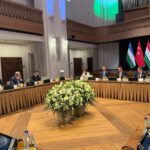
The ink dried, and the “deal of the century” was done. In September 1994, Azerbaijan and a handful of international oil companies signed an agreement that ushered in decades of rapid growth for Azerbaijan’s energy and improved the energy security for North Atlantic Treaty Organization (NATO) member countries in Europe.
Azerbaijan quickly became one of the world’s most pivotal oil and gas exporters under the direction of the State Oil Company of the Azerbaijan Republic (SOCAR).
Azerbaijan’s Green Energy Push
The energy deals of this century tend not to attract the same attention. Increasingly, they unfold without the involvement or the glitz and glamour of the oil industry, but they are no less important.
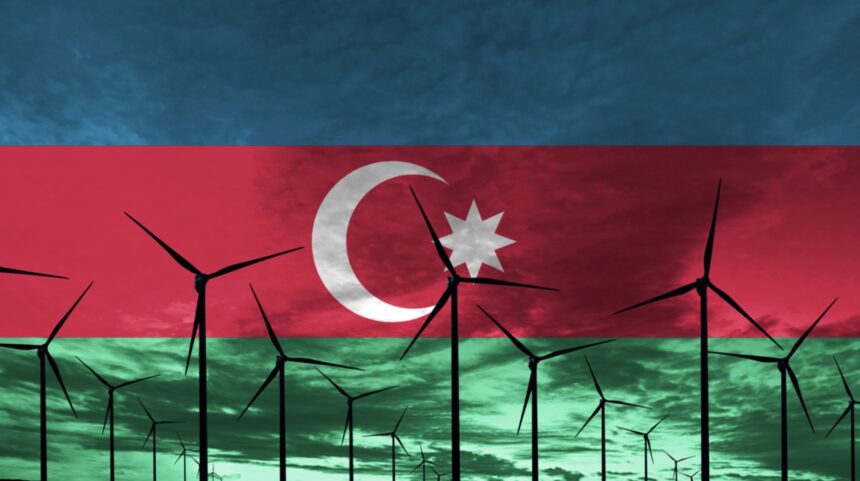
One such energy deal was signed at the Conference of the Parties (COP) 29 last year in Azerbaijan. SOCAR and two of the Middle East’s most powerful energy companies, ACWA Power of Saudi Arabia and the United Arab Emirates’ Masdar, signed a memorandum of understanding to develop approximately 3.5 gigawatts (GW) of offshore wind projects in Azerbaijan.
For SOCAR, the move is in line with Azerbaijan’s energy goal to ensure that 30 percent of its electricity comes from clean energy by 2030, roughly four GW of which will be slated for export.
Azerbaijan’s energy potential in wind could one day power homes in Europe the same way its gas does now. Baku means “City of Wind,” and the offshore wind energy potential of Azerbaijan is geo-economically significant. According to the Global Wind Energy Council, Azerbaijan is among the top four countries in the world for offshore wind energy potential—along with Australia, Sri Lanka, and Azerbaijan’s neighbor, Turkey.
Total global offshore wind farm production is expected to reach 447 GW by 2032, and while that figure is probably ambitious, the Azerbaijani portion of the Caspian Sea alone has a potential capacity of 157 GW. Azerbaijan has long been one of the most interested littoral states in the wind potential of the Caspian Basin, with SOCAR Green (SOCAR’s green energy subsidiary) a leading voice in this regard.
Green and Blue Hydrogen Ambitions
Economic development of Azerbaijan’s energy, particularly its wind potential, is already underway thanks to the agreement signed at COP29. Under a Build Own Operate (BOO) model, Masdar is working on a one GW portfolio, including one onshore wind and two solar projects in the country in partnership with SOCAR.
Furthermore, SOCAR’s ambition is to use its natural gas reserves to produce “blue hydrogen.” Blue hydrogen is produced by reforming natural gas, with the waste carbon produced in the process captured and stored. It is seen as potentially a cleaner production method for hydrogen. Meanwhile, the European Bank for Reconstruction and Development (EBRD) has funded research into green hydrogen production in Azerbaijan. Green hydrogen—produced by the electrolysis of water using renewable electricity—is in line with the European Union’s (EU) goal of having hydrogen account for at least 10 percent of its energy consumption by 2050.
Energy Independence from Russia
Russia is trying to achieve a dominant position in hydrogen, similar to the one it holds in hydrocarbons. A little-noticed Russian government map from 2021, on the eve of the invasion of Ukraine, showed a hydrogen blitz—some 33 projects planned across 18 regions. NATO must be wary of the potential for Russian hydrogen dominance.
To transport the energy, a new framework for a “Southern Green Corridor,” complementing the existing gas corridor, has been conceived. The original Southern Corridor, championed by NATO and the EU in the early 2000s and 1990s, was pipeline diplomacy at its finest and was the last great geopolitical pipeline project of the twentieth century. Former US President Bill Clinton was directly involved in some of the early outreach to Azerbaijan to ensure the project moved forward.
The proposed project was meant to reduce European dependence on Russian energy by linking Caspian and (to a lesser extent) Middle Eastern gas supplies to Europe via Turkey. Over the years, a broad array of partners has been involved, including the EU, Azerbaijan, Georgia, Turkey, the Balkans, and Italy. SOCAR has pre-existing relations with many of these countries, which should make the transition to the green corridor easier and elevate Azerbaijan’s energy role.
A New Security Imperative for NATO
Yet, a new century poses new challenges. The war in Ukraine has dramatically underscored Europe’s energy dependence on Russia.
For its part, NATO must show a willingness to help protect the offshore wind farms, subsea cables (high-voltage direct current lines to Europe), and other forms of alternative energy that are often even more geographically diffuse. NATO’s know-how and experience in maritime security, anti-sabotage measures, and cybersecurity will prove invaluable.
The mysterious sabotage events in the Baltic Sea, occurring since the start of the war in Ukraine, have their antecedents in the Baku–Tbilisi–Ceyhan (BTC) pipeline sabotage of August 5, 2008, just three days before the Russo–Georgian War. Though at the time, media narratives were keen to blame terrorists from the Kurdistan Workers’ Party.
The Russo-Georgian War also warrants attention for another reason. Regardless of the specific outcome of the Russo-Ukrainian war, the two countries are likely to continue fighting a proxy conflict, which in many ways has already begun in Africa. Ukraine and Russia have fought on different sides in Sudan, and Ukraine has built a new relationship with Ghana in part to ensure it doesn’t tilt toward Russia the same way as its Sahel neighbors.
NATO should work with the Caucasus countries now to ensure this is not the case. A more economically diversified Azerbaijan, in particular, will be well placed to bolster the security situation in the Caucasus region more generally.
NATO’s concept of energy security can add strategic depth by embracing new partnerships on alternative energy in the Caspian Basin. Supporting Azerbaijan’s green transition and SOCAR’s green ambitions weakens Moscow’s grip on global energy markets and helps to secure Europe’s energy needs. Global ambitions for wind and solar may fall short of their targets in the near term, but when the ink dries this time, one thing is certain—it will be green.
Joseph Hammond is a journalist and former Fulbright Public Policy fellow with the government of Malawi. He has reported from four continents on topics ranging from the Arab Spring to the M23 rebellion in the Eastern Congo, with bylines in Newsweek, The Washington Post, Forbes.com, and more.