Aze.Media is publishing a reprint of the analytical article “To Offset China, the US Must Engage with the Caspian Region,” originally published by the American outlet The National Interest on December 13, 2025. The article focuses on current US strategy in Central Asia and the Caspian region in the context of global competition with China. The author examines the role of regional cooperation formats, the strategic importance of the Middle Corridor, and Azerbaijan’s place in the emerging geo-economic architecture of Eurasia from the perspective of US interests.
In November 2025, a series of diplomatic successes marked American policy in Central Asia and the Greater Caspian. After the C5 (Kazakhstan, Kyrgyzstan, Tajikistan, Turkmenistan, Uzbekistan) leaders met with President Donald Trump in the White House, Kazakhstan joined the Abraham Accords and inked $17 billion in deals with the United States. At the same time, Uzbekistan and the United States pledged reciprocal investment and trade deals totaling over $100 billion. Most importantly, the C5 became the C6 with Azerbaijan’s ascension to the organization. This changes the geopolitical and geo-economic map of Eurasia, with Azerbaijan emerging as a pivot state.
The expansion of American-led diplomatic, political, and economic frameworks into the region, long advocated by experts in the United States, is the capstone of a successful diplomatic campaign. It is primarily because of Azerbaijan’s newfound integration that American engagement and commerce can now more easily enter the region via the Middle Corridor—the economic transit route from the Black Sea, through the Caucasus, across the Caspian, and into Central Asia. This journey depends not just on Azerbaijan’s access to the Caspian but will also build on the recently inaugurated Trump Route for International Peace and Prosperity between Azerbaijan and Armenia.
This newfound ability to project soft power will bolster American influence in a vital but long undervalued area. The interests of Europe, Russia, China, India, and Iran intersect and clash in the heart of Eurasia on issues ranging from terrorism to export flows, energy pipelines, nuclear power, critical minerals, sanctions compliance, supply chains, and more. However, to consolidate its gains, Washington must retire outdated legislation that impedes progress and ensure that American engagement in infrastructure projects and resource development continues to expand. Lack of follow-through could snatch defeat from the jaws of victory—work needs to be done to ensure the C6 group doesn’t succumb to the gravitational pull of Beijing’s massive Belt and Road Initiative.
America’s recent diplomatic breakthroughs do represent clear strategic gains, but they are not without limitations. Another surprising actor could also claim a consolation prize from recent American efforts: China. If America fails to solidify its recent wins, China might end up benefiting considerably from America’s advances.
It was in Central Asia that China first launched the Belt and Road Initiative over a decade ago, where it unveiled “BRI 2.0” after “BRI 1.0” encountered severe structural and financial problems, and where every Chinese dynasty from the Han onward has projected military might and economic influence via the Silk Road.
A Greater Caspian region confident in what it believes are solid business and transportation ties to the West and investments from the West will naturally feel free to indulge in more Chinese investments as well. The region’s multi-vector foreign policy, designed to balance the interests of great powers against one another in defense of its regional and national sovereignty, practically dictates that this will happen.
However, the recent surge in Western investment deals should not be seen as a guarantee of drastically increased trade flows in the years to come. The build-up will likely be more gradual, and the problem is that if America does not effectively communicate its limitations and expectations, local actors may be tempted to immediately accept higher levels of Chinese investment without waiting for the promised gradual increases from Western engagement to counterbalance them. This could push Central Asia further into Beijing’s orbit—an outcome that Washington certainly does not want.
American diplomacy, therefore, must be active and clear in this regard, not just now but for years to come. Beyond the overall investment challenges, China will also benefit from the reinvigorated Middle Corridor promised by Azerbaijan’s ascension to the C5 and its transformation into the C6. A robust Middle Corridor could empower enterprises in Xinjiang and Western China while reducing thousands of miles of transit to Chinese ports further east and then to European markets by sea.
The Middle Corridor also gives China the option to keep its influence over Iran and Russia by making sure that neither actor can dominate any land routes to the West, even if they collaborate.
The Middle Corridor can also give China a route for trade with Europe that the American Navy cannot easily challenge, unlike routes through the island chains off China’s eastern coast and the Strait of Malacca. This means that if Euro-American relations continue to worsen and Sino-American relations in the Far East break down badly, Beijing could still present itself to Europe as a ready-made trade partner with secure access, allowing it to move goods without going through Russia or American-controlled shipping lanes. The mere presence of such an option could weaken Western efforts to contain China.
One way to prevent such difficulties is to ensure that American soft power and influence in Central Asia go beyond recent trade agreements or immediate political initiatives like the Abraham Accords. Self-imposed limits on American influence in the region should be discarded, as they belong to a past era. Legal barriers to trade, such as the Cold War-era Jackson-Vanik Trade Act of 1974, need to be eliminated so America can establish permanent normal trade relations and regular investment ties with Azerbaijan, Kazakhstan, Uzbekistan, and Turkmenistan. Likewise, Section 907 of the 1992 FREEDOM Support Act, which bans US government support for Azerbaijan, should also be repealed.
Currently, these acts are waived from enforcement via executive orders. However, hinging American foreign policy on domestic lobbying pressure, partisan considerations, and executive orders is not only dangerous but also signals insufficient American interest in this strategic region and makes the United States appear unreliable. Retracting these strictures on military sales, trade, and development that benefit the United States should not be a matter of partisan divide. Both parties can and should work together to revoke Section 907 before the current Congress moves into the election mode next year. Rectifying this would be a high-impact, low-cost, beneficial action, colloquially called a “no-brainer.”
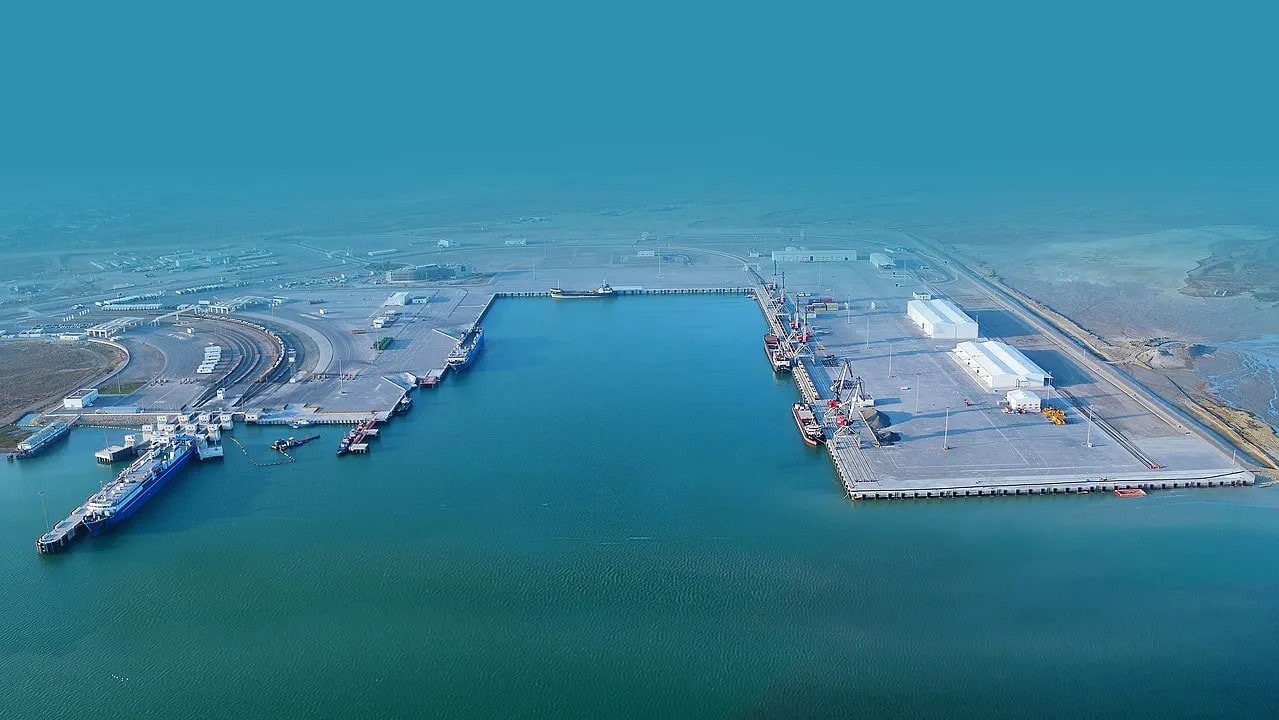
The United States also needs to engage with infrastructural projects and follow up to ensure that China’s BRI doesn’t hijack the C6 group. America should also ensure that the Export-Import Bank and Development Finance Corporation support infrastructure projects so that Chinese firms can’t disrupt US firms. America should pay special attention to the port infrastructure expansion on both ends of the Caspian Sea in Baku and Atyrau, as this represents not only the current logistical bottleneck of the Middle Corridor, but also the greatest opportunity for China to insert itself into the C6 framework.
The recent diplomatic victories are accomplishments, but without a solid plan, consolidation, institutionalization, and systematic follow-up by numerous government agencies, they will be only tactical diplomatic photo-ops lacking strategic vision and execution.
For those tempted to rely on victories without a long-term strategy, you might want to remember the Carthaginian general Hannibal’s experience against the Roman Republic. Even after some of the greatest military triumphs in history, his failure to consolidate his victories doomed his campaigns. Recent American victories may not match the scale of the Battle of Cannae, but they still require consolidation. Fortunately, the steps America needs to take are not burdensome and mainly involve removing self-imposed obstacles and properly directing funding. The Trump administration is on the verge of a long-term diplomatic triumph, but it must put in the necessary legwork and sweat equity.
Wesley Alexander Hill is the assistant director of the Energy, Growth, and Security Program at the International Tax and Investment Center.