As recent examples, we were told that Russia would easily conquer Ukraine; a few months later, after the failure to achieve a quick takeover, we were expecting a successful Ukrainian counterattack as well as the collapse of the Russian economy.
On a more conceptual level, it was expected that, after the Cold War, humankind would enter an unwavering period of liberal triumph dubbed “the end of history,” while China’s drive to embrace a market economy would enable the development of a liberal political system within the country.
A plethora of articles highlighted that Donald Trump had no chance of winning the US presidential election in 2016 and that Syrian leader Bashar Assad would meet the same fate as Saddam Hussein and Muammar Ghaddafi.
Occasionally, scholars are puzzled over how Singapore, with its centralised government, successfully promotes economic growth and well-being—or how Chile, despite the legacy of military dictatorship, outperforms other Latin American countries.
Victory over Armenia
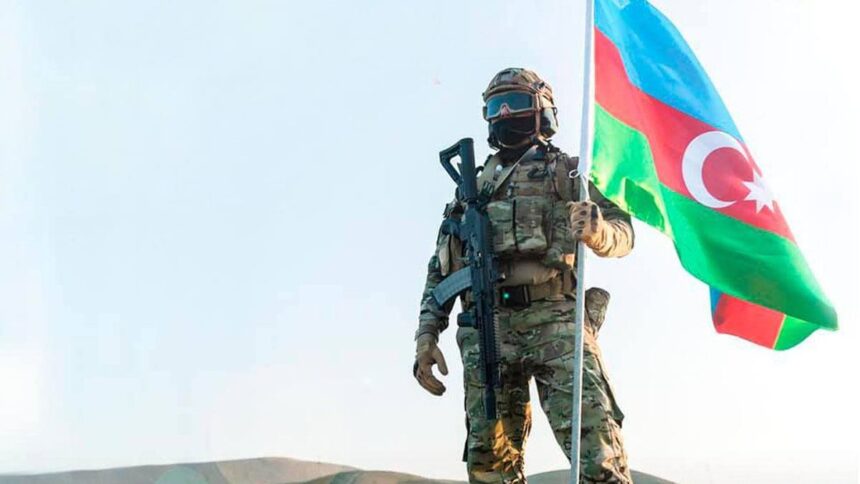
In my region, the South Caucasus, the victory of Azerbaijan over Armenia in the 44-Day War in 2020 came as a massive surprise to many. For years, experts predicted that Azerbaijan would waste its oil money because the people were not united and the army was disorganised, in contrast to the professional and spirited Armenian military.
Each of these events, and others, have underlying factors that explain the outcome of each particular development, but the mainstream remains dominated by so many false predictions. Combined with my 30 years of experience in academia and diplomacy, this prompted me to reflect on why this is continually happening.
The main culprit in faulty forecasting is our bias, or what I would term “ideological self-confinement.” We all have certain predispositions, which is natural, as our knowledge is formed through various channels and shaped mainly through mainstream (majority) opinion, whether promulgated by government or mass media.
A dedicated scholar would delve further into details, trying to go beyond accepted boundaries or what Michel Foucault termed ‘limit-experience.’ On the subject of international affairs, that limit-experience emanates from several factors. First, we tend to trust prominent scholars working in major universities.
Often, though, they follow the dominant ideology, and this remains true for liberal societies. Today, many instructors in American universities would not risk their tenure by speaking against, for example, the ‘woke’ agenda. In the meantime, Western experts are dismissive of alternative opinions and research originating from, for example, China, regarding them as propaganda.
However, Chinese and Russian journals contain valuable thoughts and data, including those relevant to international relations. Sometimes, simple arrogance or cultural bias, such as Orientalism, leads to the rejection of the opinions of Arab or Turkish scholars unless they endorse Western ideological tenets.
I would argue that modern bias is formed not only by the influence of governments in a Foucauldian sense but by our intolerance, which, ironically, is formed in a liberal environment with free access to media and all forms of knowledge and information. This self-confinement worsens due to an overwhelming sense of technological or social superiority.
Moreover, in free, liberal societies, lobbies or special interest groups assume greater importance among elected officials, educational establishments, and think tank communities. Since the arrival of social media, public ‘naming and shaming’ campaigns have threatened the reputations of experts, so they decided to avoid sensitive topics.
For example, while visiting Washington in 2022, I was asked by several think-tank representatives not to make any public remarks about particular discussions due to fear of the Armenian lobby. As an aside, it was in part Armenian xenophobia and a sense of superiority that prevented Armenian policymakers and experts from making a sober assessment of Azerbaijan’s growing potential and led to defeat in the Second Karabakh War.
Western experts repeated the Armenian narrative because the voice of the Azerbaijani side was either silenced or arrogantly ignored.
Ukrainian identity
If Western experts had more seriously studied articles written in Russia before 2014, they would have discovered a prevalent discourse about the non-existence of a Ukrainian identity. At Ottawa University in 2008, I attended a lecture by well-known American professor Timothy Colton, who depicted possible scenarios of the Ukrainian break-up and the loss of Crimea and Donbas.
Many of his colleagues were sceptical about such dramatic predictions. Most Western scholars had been trapped in a rigid framework of Soviet-Russian studies and now urged the ‘decolonisation’ of post-Soviet studies. Because of this, many believed that the Ukrainian identity was weak and would quickly succumb to the Russian invasion.
Similarly, out of the belief that the Russian army is corrupt, the same experts rushed to predict the success of the Ukrainian counterattack in 2023. Many are still surprised at how the Russian economy continues to withstand sanctions, as ideologically adverse opinions about Russia do not permit a scientific assessment of the overall situation in the country and the professionalism of Putin’s financial or other managers.
As scholars, we use the power of scientific application and try to apply rational thinking when analysing the possible actions of governments and leaders. But we miss things: for example, leaders can be irrational, highly ideological, or trapped within very narrow thinking.
The war against Iraq was as much personal for George W. Bush as the Ukraine conflict is for Vladimir Putin, who truly believes that the Ukrainian identity is simply a by-product of Bolshevik nation-making, in which the Soviets enforced, through affirmative action, the cultural values of particular ethnic groups that constituted the Soviet Union.
It is also true that nations are not only the products of ‘imagined communities’; they have older, entrenched historical markers that facilitated the development of modern nationalism.
Experts tend to focus on the economic implications of the possible Chinese takeover of Taiwan (and, for that reason, dismiss the military scenario) but not so much on Chinese leader Xi Jinping’s personal ideas or ordinary Chinese people’s sense of national pride about the country’s unification.
For half a century or even more, the dominant liberal idea has rested on the assumptions that people are good and leaders are wrong. So, if we manage to change leaders, everything should go well. However, the demise of Saddam Hussein and Muammar Ghaddafi brought chaos to the countries concerned, and it seems that the systems those dictators built with the blood of their people could not survive their leaders.
Mainstream opinion
There is no simple, single answer to all these problems. Yet, mainstream opinion remains that we should be confined to the set of values that humankind produced in one particular part of the world and that were successful for a relatively short period if we take as reference the entirety of human civilisation.
We walk a more sensitive line (or avoid the subject altogether) when discussing why corruption and crime continue to rise in South Africa or why economic well-being endures in Chile despite Pinochet’s legacy. To point this out is not to justify authoritarianism or unfavourably compare liberal to conservative models; no one should justify apartheid or extra-judicial executions in Chile or elsewhere. Simply looking at the two Koreas allows us to reach a definite conclusion about which model is better.
Each case requires open and honest debate, stifled by neither authoritarian constraints nor liberal shaming campaigns. Afghanistan is a clear example where the Western liberal model failed, and most people opted for religious dogma. Perhaps a policy more attuned to local circumstances would have been better for all those involved, Americans and Afghans.
Several European countries still have constitutional monarchies. With the end of military rule in Spain in 1976, the monarchy was restored to help advance the liberal system. At the same time and in a similar situation, Portugal opted for a classical republic. The problem today is less room for open academic or political discussion in significant power centres, such as Washington and Brussels.
One can argue that people want to continue believing in what they think, which has always been the case. However, different decisions have global implications and can spread quickly and thoroughly with the advent of AI. Already, Google searches produce what Google is paid or told to promote, and trolls and well-organized amateurs dominate Wikipedia.
The same fate awaits experts in academic journals and leading universities: non-mainstream opinions are dismissed, silenced, or shamed. Several authoritative publications such as Foreign Affairs, Foreign Policy (except for some breath of realism from Stephen M. Walt), The Economist and others depict the world inside a liberal bubble. In contrast, the outside world has different realities. That bubble has been created not by machines but by individuals with vested authority in education and academia who are ideologically self-confined.
Dr Farid Shafiyev olds a PhD from Carleton University and an MPA from Harvard Kennedy School.