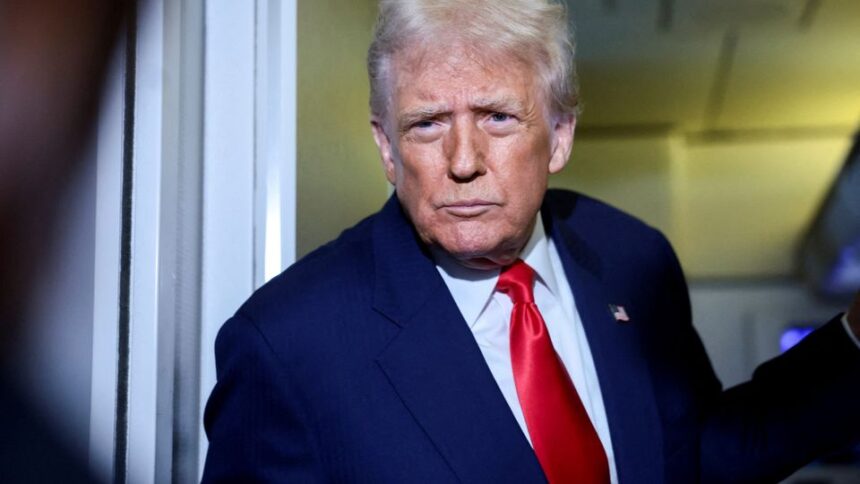
For millennia, whoever controlled the Silk Road controlled the wealth and influence of Central Asia. Alexander the Great, Genghis Khan, and Tamerlane were among the great figures who left an indelible mark on the region. Today, the Silk Road’s legacy presents a different kind of opportunity—one of diplomacy. President Donald Trump can become the first United States president to visit Central Asia, demonstrating that America is prepared to play a significant role in the region for the first time since its independence from the Soviet Union in 1991.
Once overlooked, Central Asia is now commanding attention. Its vast mineral wealth and strategic location make it a critical arena for US interests. As leaders from Kazakhstan, Uzbekistan, and Kyrgyzstan gather in Washington, DC, for the C5+1 summit, a presidential visit to the region would signal that the United States is committed to being a central player in its economic and geopolitical future.
Central Asia has been persistently seeking US attention. Both Kazakhstan and Uzbekistan have recently inked multibillion-dollar deals with US companies for Boeing planes and locomotives. These agreements, signed on the sidelines of the UN General Assembly, were widely seen as an attempt to capture President Trump’s attention. Azerbaijan, while not technically in Central Asia, is a key player in regional integration and has also deepened its outreach to Washington. President Ilham Aliyev’s joint peace summit with Armenia’s leader in Washington—eschewing previous mediators such as Russia and the European Union—in August, and Baku’s willingness to consider joining a US-backed stabilization force in Gaza, both demonstrate an interest in closer ties with the United States.
Beyond its bilateral diplomacy, Azerbaijan has emerged as the region’s connective hub, both through geography and diplomacy. Sandwiched between Russia and Iran, Baku sits at the heart of the Middle Corridor, linking Central Asia’s markets and energy routes to Europe. It has also led efforts in regional integration, such as through the Organization of Turkic States, helping coordinate transport, trade, and military exercises among Turkic-speaking nations from Anatolia to Central Asia. As Azerbaijani political analysts Rusif Huseynov and Gulkhanim Mammadova noted, “Azerbaijan aims to position itself…as a bridge to Central Asia…particularly to Western powers.”
For these countries, deeper engagement with Washington aligns with their “multi-vector” foreign policy, in which they maintain balanced ties among global powers to avoid dependency on any single one. For years, though, the United States wasn’t really part of that equation. Its engagement with the region was too often framed around human rights concerns and democracy promotion. In contrast, Trump’s pragmatic, business-first approach is seen in Central Asia as refreshingly straightforward and free of ideological baggage.
The war in Ukraine has only heightened the opportunity for mutually beneficial cooperation. Moscow’s influence has eroded as it remains bogged down in conflict, while Beijing has filled much of the vacuum. In 2023, China surpassed Russia as Central Asia’s top trading partner. Yet regional leaders are acutely aware of the risks of overreliance on Beijing—from debt-trap diplomacy to diminished sovereignty.
For Washington, the benefits of closer cooperation are clear. As China monopolizes the rare earths market, the United States urgently needs alternative sources. Central Asia offers both abundant reserves and existing mining infrastructure inherited from the Soviet era. And the region is eager to capitalize on its advantage.
This year alone, Uzbekistan’s President Shavkat Mirziyoyev and Kazakhstan’s President Kassym-Jomart Tokayev have directed their governments to develop processing capabilities further while attracting investors through strategies such as tax refunds for investors who help develop rare earths.
During the UN General Assembly, Mirziyoyev met with executives from Traxys, FLSmidth, the Colorado School of Mines, and McKinsey to strengthen partnerships in critical minerals and sustainable mining. The results were tangible: a $1 billion framework agreement with Traxys, the launch of a new mining training center with the Colorado School of Mines, and McKinsey’s finalized modernization strategy for Uzbekistan’s extractive industries.
The latest US-China trade spat, triggered by China’s export controls on rare earths, has recently eased into a tentative détente. Yet whenever Beijing senses an advantage, it is likely to leverage its near monopoly on these critical minerals against Washington again. Central Asia—home to much of the rare earth supply that China currently restricts—offers the United States a nearby alternative, helping to neutralize this strategic vulnerability.
But Central Asia’s strategic value isn’t limited to critical minerals. The region also anchors vital trade corridors linking East Asia to Europe, offering Washington opportunities to diversify supply chains as well.
Central Asia anchors the Trans-Caspian International Transport Route—the Middle Corridor—linking East Asia to Europe while bypassing both Russia and Iran. The corridor offers a strategic alternative to the Suez Canal and northern rail routes through Russia, especially amid shifting global supply chains and geopolitical realignments.
Over the past five years, freight volumes along this route have increased sixfold and are projected to triple by 2030. The region is already investing heavily: Baku plans to expand its port capacity from 15 million to 25 million tons and has already expanded its rail freight capacity from 1 to 5 million tons. In contrast, Kazakhstan and Uzbekistan have invested billions in modernizing and expanding their rail infrastructure.
A presidential visit to the region would signal that the United States is serious about engagement. Presence matters—and US adversaries like Russia and China understand that. Chinese leader Xi Jinping has visited the region 15 times, while Russian President Vladimir Putin has visited an astonishing 77 times. But it’s not just adversaries who have taken notice; allies have also made recent high-profile trips, including French President Emmanuel Macron, European Commission President Ursula von der Leyen, and Turkish President Recep Tayyip Erdogan. A Trump visit would show that the United States intends to be a central player in the region’s future, not a bystander.
Central Asia is no longer a peripheral theater—it is a crossroads of resources, trade, and great-power competition. If the United States wants to compete and build lasting influence, it needs to be visibly present. The first step is simple—show up.
Joseph Epstein is the Director of the Turan Research Center, a senior fellow at the Yorktown Institute, and a research fellow at the Begin Sadat Center for Strategic Studies at Bar Ilan University.