
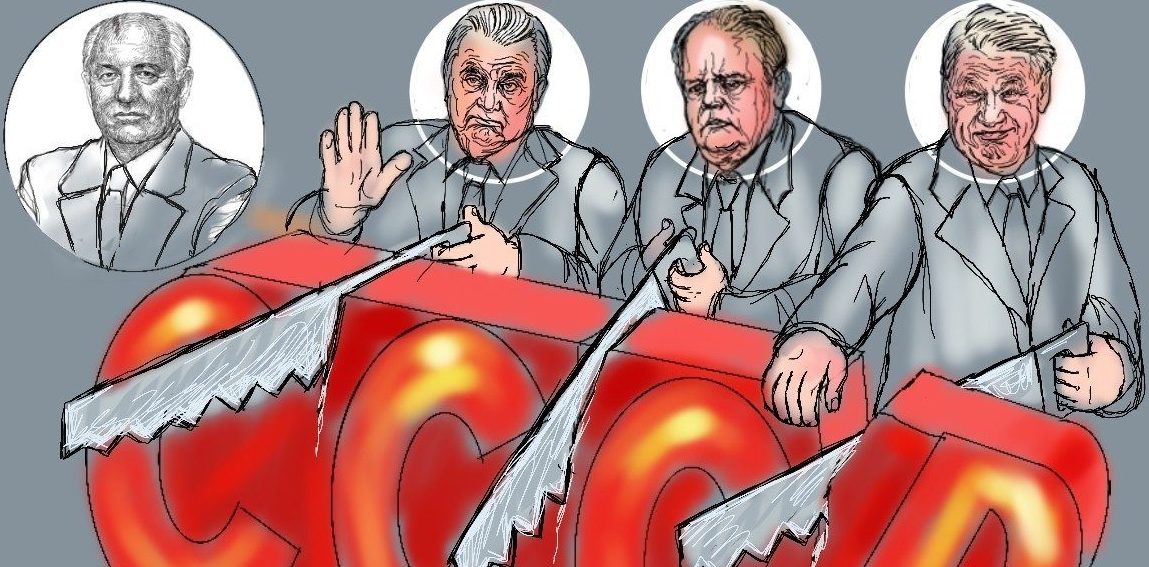
The ideological and moral values of the people were gradually eroding. In the workplace, the needs and opinions of ordinary workers and the general public were ignored. In the social sciences scholastic theorization was encouraged and developed, but creative thinking was driven out from the social sciences. A breach had formed in word and deed, which bred public passivity and disbelief in the slogans being proclaimed. Decay began in public morals; the great feeling of solidarity with each other that was forged during the heroic times of the Revolution, the first five-year plans, the Great Patriotic War and postwar rehabilitation was weakening. The need for changes was brewing not only in the material sphere of life, but also in the public consciousness.
Reforms were becoming a formula of urgent need of the socialist society. In the early 1980s, the signs of the crisis in the USSR were already apparent. The country faced new economic challenges brought by modernization. Gorbachev’s rise to power inspired the population’s optimism that the Soviet system could be reformed. Gorbachev first proposed the idea of reconstruction, of perestroika, in his speech in December 1984. His early speeches as leader gave little indication of what would come later. The biggest change at first appeared to be one of style. For the first time after so many years of rule by gerontocrats, the Soviet people saw an energetic, obviously intelligent leader. Elected General Secretary of the party at the Central Committee plenum of 11 March 1985, Gorbachev said: “This line is for the acceleration of the socio-economic development of the country, for the improvement of all aspects of the life of society. We are speaking about the transformation of the material-technical bases of production. We are talking about improving the system of social relations, above all economic. We are speaking about the development of people themselves, of the qualitative improvement of the material conditions of their life and work, their spiritual well-being. We have to achieve a decisive turn in transferring the economy on to the rails of intensive development. We must and are obliged in a very short time to achieve the most advanced scientific-technological positions, to the highest world levels of the productivity of social labor.” (Sakwa, 1999:411).
Gorbachev’s team
Gorbachev needed a team to carry out the reforms and he assembled this team mainly from among the youth. Egor Ligachev was appointed a member of the Politburo, Nikolai Ryzhkov, the head of the economic department of the Central Committee, and Viktor Chebrikov, the head of the KGB, became members too. Anatoly Lukyanov became the head of the general department of the Central Committee. Other important members of the team were Valery Boldin, Vadim Medvedev, Georgi Shahnazarov, Anatoly Chernyayev.
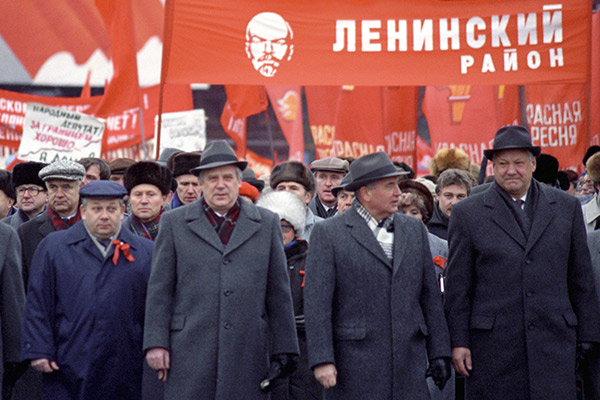
The most important unofficial member of the team was Raisa Gorbacheva, Gorbachev’s wife. This lady’s actions would later play a key role in creating a negative attitude towards Gorbachev. One of the members of Gorbachev’s team was Boris Yeltsin. In April 1985, Boris Yeltsin, the first secretary of the Sverdlovsk Party obkom and a candidate member of the Politburo, was summoned to Moscow by Gorbachev at the urging of Egor Ligachev and appointed head of construction department of the Central Committee. In December of that year, Yeltsin was promoted to the first secretary of the Moscow Party Gorkom (City Committee). Eduard Shevardnadze, First Secretary of the Central Committee of the Communist Party of Georgia, was elected Minister of Foreign Affairs. Shevardnadze did not speak Russian well and had no diplomatic experience. It seemed that Gorbachev wanted to play a major role in foreign policy himself.
After Gorbachev assembled his team, he began to purge the Politburo of conservative Communists. Grigory Romanov was dismissed in July 1985, Nikolai Tikhonov was packed off with his pension in September, and Victor Grishin in December. On September 27, Nikolai Ryzhkov was appointed Prime Minister (Chairman of the USSR Council of Ministers) to replace Nikolai Tikhonov (McCauley, 2007:403).
Gorbachev’s first reform
Although Gorbachev announced in 1985 that the party line formed by Andropov and Chernenko would be continued, he later embarked on reforms that would shake the foundations of the Soviet state. The first of the reforms was democratization. The first steps were taken at the 27th Party Congress in February 1986. However, there were strong enough conservative communists who opposed these steps. At the plenum on January 27, 1987, Gorbachev said that political reform would not be as simple as it had seemed at first, and that the problems were rooted in the depths of Soviet history. Gorbachev acknowledged that his democratization reforms had not yet reached the required level. Gorbachev believed in a renewed Leninism, saying that Lenin’s ideas had been completely distorted after his death. Gorbachev’s statement “We cannot retreat, there is nowhere to retreat” became the unofficial slogan of perestroika (Yanayev, 2009:114).
Gorbachev’s views received widespread support from the Soviet people. He said: “The problems which have accumulated in society are more deep-rooted than was first thought. That is why there is an urgent need to return to an analysis of those problems which confronted the Party and Soviet society in the few years preceding the April 1985 plenary meeting of the CPSU Central Committee, to understand the reasons for negative processes. The theoretical concepts of socialism remained to a large extent at the level of the 1930s-1940s when society had been tackling entirely different tasks.
Developing socialism, the dialectics of its motive forces and contradictions and the actual condition of society did not become the subject of in-depth scientific research. Lenin’s ideas of socialism were interpreted simplistically and their theoretical depth and significance were often left emaciated. Spurious notions of communism and various prophecies and abstract views gained currency. Comrades, we had been led to the conclusion on the necessity for perestroika by pressing needs that brooked no delay. But the more deeply we examined our problems and probed their meaning, the clearer it became that perestroika also has a broader socio-political and historical context. Perestroika implies not only eliminating the stagnation and conservatism of the preceding period and
correcting the mistakes committed, but also overcoming historically limited, outdated features of social organization and work methods. It implies imparting to socialism the most contemporary forms, corresponding to the conditions and needs of the scientific and technological revolution and to the intellectual progress of Soviet society. This is a relatively lengthy process of the revolutionary renewal of society, a process that has its logic and stages. Two key problems of the development of society determine the fate of perestroika. These are the democratization of all social life and a radical
economic reform. The purpose of the radical economic reform begun in the country is to assure, over the next two or three years, a transition from an overly centralized command system of management to a democratic system. In October 1917 we parted with the old world, rejecting it once and for all. We are moving towards a new world, the world of communism. We shall never turn off that road.” (Sakwa, 1999:424-425).
The anti-alcohol campaign
At a Politburo session in April 1985 devoted to combating alcoholism, Gorbachev spoke about the evils of alcohol and its impact on future generations. According to him, the production of alcoholic beverages had to be sharply curtailed. A commission was set up, headed by Egor Ligachev and Mikhail Solomentsev. Although Prime Minister Nikolai Ryzhkov said the campaign would do great damage to the economy, his opinion was ignored. The anti-alcohol campaign was officially launched by the decree of the Central Committee dated May 7, 1985. According to the decree of the Presidium of the Supreme Soviet dated May 16, 1985, drinking alcohol at work, in the premises of enterprises and organizations was punishable with a fine of 30 to 50 rubles.
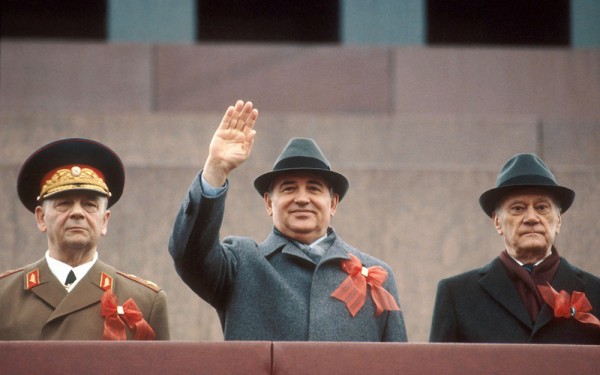
Ryzhkov’s proposal to expand the production of wine and beer instead of vodka was ignored. Distilleries were closed down wholesale. Vines in Armenia were ripped up. The same thing happened in Crimea, home to the famous Marsala wine. It had taken a century to develop them. So distraught was Professor Golodriga, a famous viticulturist, at the vandalism in Krasnodar krai that he committed suicide. Vineyards were cut back 30 per cent over the years 1985-88. The anti-alcohol campaign made moonshine, samogon, popular in the country. Sugar began disappearing from shops; so did sweets and tomato paste. Everything was being turned into alcohol. Hundreds of people died from samogon poisoning. The situation was so bad that some people drank eau de cologne instead. (McCauley, 2007:401).
The weakening of state institutions in the USSR since 1985 resulted in an unprecedented increase in crime. The Interior Ministry identified more than 3,000 criminal groups in the country. Gorbachev’s anti-alcohol campaign strengthened the Russian mafia. The mafia monopolized this area because vodka was not available and was expensive. Special establishments serving vodka were set up. Vodka was usually sold in tea glasses in Moscow cafes, where tea and coffee were served. Gorbachev’s initiative caused great discontent among the people. The people called him Minsek (mineral water General Secretary). As a result of this campaign, the budget lost one of its main sources of income. In 1985, the state’s income from the alcohol monopoly was almost 14% of budget revenues. During the years 1985-88, the loss of revenue as a result of the anti-alcohol campaign cost the USSR 67 billion rubles (Shumilov, 2008: 503) Overall, the budget deficit was 45.5 billion rubles in 1985 and climbed to 93 billion rubles in 1988.
Fight against corruption
Corruption became part of the political and economic culture of the USSR in the 1960s. Almost every official used his position for personal gain. Before Gorbachev, anti-corruption measures were usually aimed at removing political opponents. This time the fight took on a wholesale scale.
The first target of the campaign was the USSR Foreign Ministry. Employees of the USSR embassy in Japan bought interesting Japanese consumer goods for the youth market and shipped them to Moscow in containers. These goods were then sold at high prices on the black market. Diplomats in other countries did the same. Later, these diplomats began to sell technical goods abroad. The KGB was aware of all this, but did not take action due to the indifference of the previous leadership to these issues. When Gorbachev came to power, many diplomats were fired and arrested. Among those arrested was Deputy Minister of Foreign Trade Vladimir Sushkov. Sushkov was responsible for the purchase of machinery and equipment in Western countries. He was put in Lefortovo prison and accused of accepting bribes from Western suppliers. The KGB also received information about Foreign Trade Minister Nikolai Patolichev’s connections with Japanese intelligence. Patolichev was Brezhnev’s man, but Gorbachev did not allow his arrest because it was too early. (Pikhoya, 1998:412).
Another high-profile arrest was that of Gennady Brovin, Brezhnev’s reception secretary. A massive press campaign followed in which lurid details of his alleged corruption were provided. Brovin was arrested in the Central Committee building. The KGB threatened to shoot him without trial if he did not confess. Similar measures were taken in other Union republics. There were cotton scandals in Uzbekistan, Azerbaijan and Kazakhstan. The information provided about the cotton harvest was false and did not reflect the real situation. In January 1988, Inamzhon Usmankhozhayev, First Secretary of the Central Committee of the Communist Party of Uzbekistan, was dismissed due to a corruption scandal and replaced by Rafik Nishanov. Inamzhon Usmanhozhayev was sentenced to 12 years in prison in 1989. It was the first time a republican Party boss was arrested for corruption. Over the years 1984-88 about 58,000 officials in Uzbekistan were fired. This included roughly three-quarters of central Party cadres and 3,000 militia officers (McCauley, 2007:429). Interior Minister Vitaly Fedorchuk was also fired during the campaign.
After the 27th Party Congress, the editor of Ogoniok magazine accused several leading party bosses of corruption. This was the last straw. Until then, Soviet leaders had fired and punished for corruption only some district party secretaries. This time, the entire ruling elite was punished. Former leaders rewarded officials in all Union republics with money to strengthen their loyalty and obedience to Moscow. Now that elite was humiliated and sent to prison. Thus, the connection between the Union republics and the center weakened (Pikhoya, 1998:414-415).
In the late 1986, unprecedented nationalist tendencies began to rise in the USSR.
The Chernobyl tragedy
The explosion of reactor number four of the Chernobyl atomic power station in Pripyat, Ukraine, on April 26, 1986, was one of the heaviest blows to the USSR, both materially and morally. Gorbachev was informed about the incident at 5 a.m. A special commission of top scientists, headed by academician Legasov, was immediately sent there. However, this group was quite incapable of comprehending the seriousness of the situation. On April 27, all 43,000 residents were evacuated from Pripyat, 3 km from the plant. By then, they had been exposed to almost 48 hours of radiation. The Politburo met on April 28 to discuss the disaster. The area contaminated by radiation was estimated at 600 square km. However, the May Day parades in Kyiv and many other cities, within the zone of contamination, went ahead.
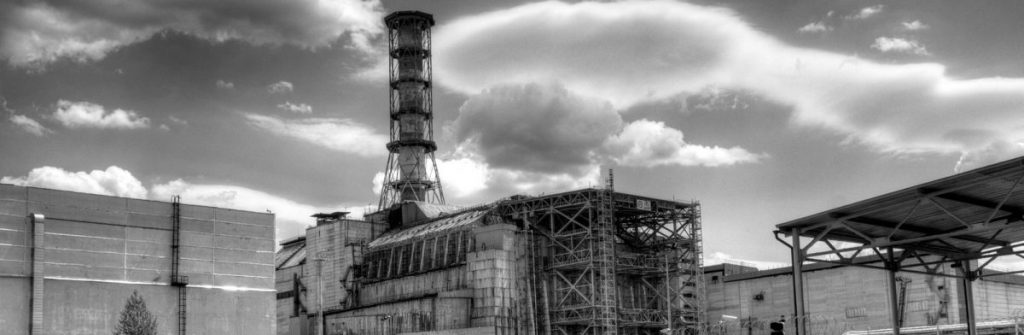
Ryzhkov and Ligachev visited Chernobyl on May 2-3 to assess the situation. On May 3, Ryzhkov ordered the evacuation of people from the 30-km zone around the reactor. Nevertheless, the main danger lay ahead. There was the risk of a second explosion in reactor number four. Radioactive magma was seeping through the cracked concrete floor. Were it to come into contact with the water table underneath, an explosion at least ten times as powerful as Hiroshima would devastate Europe. On May 13, thousands of miners began digging a tunnel under the reactor to prevent a leak. On May 14, Gorbachev finally appeared on television to inform the public about the situation. Thousands of troops were brought in to the area to liquidate the consequences of the tragedy. In September, radioactive graphite had to be removed by hand from the roof of the reactor. Because of the level of radiation, a person could only work 45 seconds. In November, the reactor was sealed in a concrete and steel sarcophagus. The Chernobyl tragedy cost the USSR 18 billion rubles and thousands of lives. Chernobyl also ended any belief in the country’s socio-economic growth. The Soviet budget deficit in 1985 was 17 billion rubles and in 1986 it was three times as much. (Pikhoya, 1998:438).
The economic reform
In the first year of Gorbachev’s rule, the socio-economic situation of the population weakened significantly. Higher prices for alcohol and meat caused great offence. One Leningrad writer criticized Gorbachev’s domestic policy as “too many words and no action.” The government was working on a new economic reform to gain the trust of the public. On December 11, Ryzhkov reported on the draft law on the socialist enterprise. This law permitted the election of managers and the setting up of workers’ collectives. The electability of the management broke the link between the ministries and the enterprise. Full self-financing and self-accounting were envisaged. This did not make much sense, given that prices were low and material inputs were decided by government. This draft law caused endless controversy over who should be manager. Confrontations broke out between management and workers’ collectives. It all contributed to a further decline in industrial production. This law was one of the most ill-advised economic reforms. Instead of solving problems it made them worse and revealed that Nikolai Ryzhkov, the Prime Minister, lacked a basic grasp of economics and finance.
Ryzhkov reported on the state of the economy to the Politburo in April 1987. The trade deficit was close to $4billion. Ryzhkov proposed cutting investment in housing and considering price rises, as economic growth had declined. Valentin Pavlov, head of the State Committee on Prices, pointed out that the oil, gas and coal sectors were operating at a loss. Under these conditions, it was impossible for these sectors to move to self-accounting. Despite the gloomy economic forecasts, Gorbachev informed the Bulgarian Prime Minister in April 1987 that 100% of output would be world standard by 1990. Gorbachev did not understand how enterprises would react to the reform. Predictions that the wage increase would create interest among the workforce did not come true. Prime Minister Nikolai Ryzhkov also admitted his mistake. He failed to link rises in wages to increased labor productivity. These examples testified to the economic naivety of the Soviet leadership. Dependency on grain imports increased during perestroika. The country was increasingly becoming dependent on foreign loans. This had its effect on domestic policy. The slogan of acceleration was abandoned in 1988 to be replaced by a new one: a strong social policy. The consumer goods sector was now given priority. (Mccauley, 2007:405-409).
Glastnost (openness)
Along with perestroika, Gorbachev’s policy of glasnost also played an important role in domestic politics. The driving force behind glasnost was Aleksandr Yakovlev. He wanted to cut through the lies which pervaded public life. According to Yakovlev, without glastnost, perestroika was doomed to fail. In the summer of 1986, he became responsible for the country’s mass media. After he appointed of Vitaly Korotich editor of Ogoniok magazine, great changes began in Soviet society. It was through Korotich that the Soviet people learned for the first time the awful truths about the past of the USSR, the terrible events that had remained secret until then. (Shumilov, 2008:504). Circulation of the magazine tripled in one year.
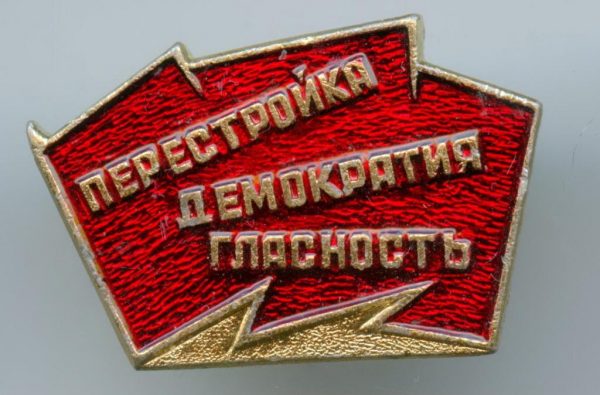
Alexander Yakovlev’s next step was to appoint Egor Yakovlev editor of the newspaper Moskovskie Novosti. The banned film Repentance by Georgian cinematographers was first shown to Soviet audiences with Yakovlev’s permission. The film, which allegorically criticized Stalinism, showed that the political trend in the Soviet Union had completely changed. Attitudes toward religion had also changed, with more than 400,000 churches, mosques, and synagogues in the country being returned to believers. The works of great writers and poets, such as Mikhail Bulgakov, Nikolai Gumilyov, Boris Pilnyak, Evgeny Zamyatin and Anna Akhmatova, who had been banned for decades, reappeared in print. In September 1987, the Politburo set up a commission on the rehabilitation of the victims of repression. This decision was important in terms of uncovering the dark truths about the past and according justice to those who had been wrongly treated. Such decisions were initially presented as a turning point in Lenin’s policy. However, the concept of freedom created by Yakovlev began to develop in a completely different form. For the first time, the writer Vladimir Soloukhin called Lenin “the father of the Gulag” and the German traitor. (Ogniov, 2003:4). Although open criticism of Lenin was punishable, Soloukhin received no admonishment. The socialist transformation now seemed to be slowly developing in a different direction.
Yakovlev tried to convince the Politburo that ending one party rule would strengthen socialism. In reality, by then, Yakovlev had already renounced Marxism. In that he was different from Gorbachev, who remained committed to socialist principles. In 1987, the state was already split into factions gravitating to three different development models (conservatives, centrists and radicals). Although the centrist Gorbachev supported anti-Stalin policies, he did not agree to unilateral criticism of him. The main struggle within the state was between the conservative Ligachev and the radical Yakovlev. An incident in May 1987 strengthened the position of the radicals. A German pilot Matthias Rust flew his plane into the USSR airspace from West Germany and landed in Red Square. The air force followed his plane but never opened fire. Immediately after hearing about the incident, Gorbachev arrived in Moscow from Berlin. Defense Minister Sergei Sokolov was dismissed and replaced by Dmitry Yazov. Yakovlev was involved in the cleanup of the army. 150 generals were tried or dismissed in military courts. The clean-up in the army destroyed the main strongholds of the conservatives. (McCauley, 2007:408).
The conflict with Yeltsin
After Yeltsin became head of the Moscow City Committee, he banned the demolition of historic buildings in the city for any purpose. As a result of the political freedoms brought about by the perestroika, defenders of old Moscow formed a movement. Proponents of innovation opposed them and created a counter-movement. Those movements became increasingly politicized. On May 6, 1987, about 500 people gathered on a demonstration in Moscow’s Manezh Square. This was an unprecedented event. They chanted “We demand a meeting with Gorbachev and Yeltsin.” As head of the city committee, Yeltsin had to decide how to react. Yeltsin invited the leaders of the demonstrators to meet with him and voice their demands. The meeting lasted over two hours. Among the complaints was the destruction of old Moscow and the Americanization of Russian life.
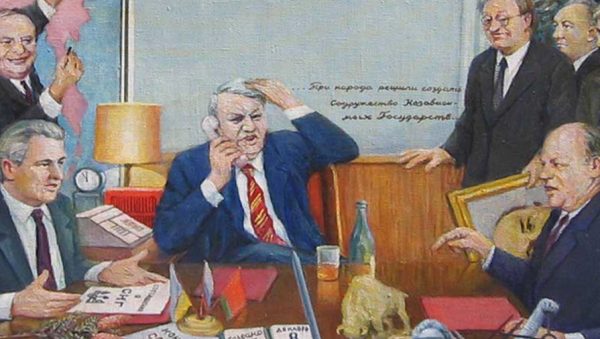
Yeltsin was taking a risk by receiving the protest leaders. The organizers of this demonstration were clearly members of the opposition (nationalist and anti-Semitic). An important confrontation took place at a Politburo meeting on September 10. Gorbachev was on holiday, and Ligachev, who chaired the meeting, criticized Yeltsin for permitting Moscow city council (Mossovet) to regulate the holding of meetings and demonstrations in the capital. If the Moscow rules were not applied to the whole country, it meant that city councils would decide any issue independently, without any official Party input. Thus began a smear campaign against Yeltsin.
On September 12, Yeltsin, outraged by this smear campaign, sent a letter of resignation to Gorbachev, putting the latter in a difficult position. Gorbachev was in Crimea putting the finishing touches to his book Perestroika. He summoned Yeltsin and suggested that he prepare a speech in his self-defense. Yeltsin’s case was to be discussed at the party’s next plenum in November. Yeltsin had not prepared a speech but the General Secretary insisted he speak.
The plenum, held in early November, was reminiscent of the 1930s. The members of the Politburo took turns slandering Yeltsin. Gorbachev spoke at the end and tore Yeltsin to pieces under the man’s shocked gaze. On the morning of November 9, Gorbachev was told that Yeltsin had attempted to commit suicide by stabbing himself in the chest with a pair of scissors. Yeltsin survived to be removed from his office with an administrative fine two days later and from the Politburo the day after that. Yeltsin’s removal was a political victory for Gorbachev. However, Yeltsin’s misfortunes did wonders for his reputation. He gave interviews to the foreign press and never missed an opportunity to trumpet the failure of reform and provide his own prescription for success. Gradually, Yeltsin became the unofficial leader of the opposition (Pikhoya, 1998:454-462).
References
Sakwa, Richard (1999) The Rise and Fall of the Soviet Union, 1917-1991
Mccauley, Martin (2007) The Rise and Fall of the Soviet Union
Yanayev, Gennadiy (2010) GKCHP protiv Gorbacheva: posledniy boy za SSSR [Yanayev, Gennady, GKChP Against Gorbachev: The Last Battle for the USSR]
Shumilov, Mikhail (2008) Istoriya Rossii: konets XIX-nachalo XXI vekov [Shumilov, Mikhail, History of Russia: Late 19th–Early 21st Centuries]
Pikhoya, Rudol’f (1998) Sovetskiy Soyuz: Istoriya Vlasti 1945–1991 [Pihoya, Rudolf, Soviet Union: A History of Power 1945–1991]
Ogniov, Aleksandr (2003) Protiv lzhi o Velikoy Otechestvennoy voyne: monografiya [Ogniov, Aleksander, Against the Lies about the Great Patriotic War: a monograph]