But the situation has radically changed following the 44-day Second Karabakh War allowing Armenian nationalists to give up their fantasies about a ‘Greater Armenia’ composed of eastern Turkey and western Azerbaijan (Karabakh), a goal which the Armenian Revolutionary Federation (ARF)/Dashnaks has long supported. The Dashnaks traditionally held a strong influence over the Armenian diaspora and continue to hold influence over Armenia’s Ministry of Foreign Affairs as seen its continued support for the right to ‘self-determination’ of the so-called ‘Republic of Artsakh.’
With Azerbaijan now in control of Karabakh and seven surrounding districts an opportunity has arisen for Armenia to negotiate a post-conflict peace treaty with Azerbaijan. The basis for this would be Armenian nationalists dropping their fantasies about a ‘greater Armenia,’ accepting Azerbaijani sovereignty over Karabakh and ending demands for ‘self-determination’ of the ‘Republic of Artsakh.’
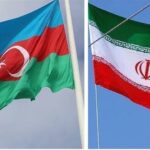
Since becoming an independent state in the early 1990s, Armenia has oriented towards autocratic and imperial Russia and theocratic Iran. 25,000 Armenians in Karabakh are holding three million Armenians to ransom. Both countries are under extensive international sanctions. Armenia pursued a pro-Russian foreign policy and joined Russian-led integration projects, such as the CSTO (Collective Security Treaty Organisation) and Eurasian Economic Union.
Armenia has no land border with Russia and overland trade must go through Georgia with whom relations have been poor. With Yerevan’s support for a ‘Greater Armenia’ through miatsum (unification of Armenia and Karabakh) it is not surprising Georgians are suspicious of separatist sentiment among its Armenian minority.
Armenia shares a small 44 km border with Iran with whom it has sought (unsuccessfully) to balance against over-reliance on Russia. Armenia’s much longer borders with Turkey and Azerbaijan have remained closed because of its occupation (until last year’s 44-day war) of a fifth of Azerbaijani territory.
Armenia should sign a comprehensive post-conflict peace treaty with Azerbaijan which would bring five strategic benefits to Armenia.
Firstly, Armenia could begin to pursue a balanced foreign policy between Europe and Eurasia, thereby reducing its reliance on rogue states Russia and Iran. Russia has no interest in seeing an economically prosperous Armenia as the Kremlin only views the country as part of its Eurasian sphere of influence and as a territory to locate Russian military bases.
Secondly, Armenia could participate to a far greater extent in the European Union’s (EU) Eastern Partnership which would be far more beneficial to its development than Vladimir Putin’s Eurasian Economic Union. Armenia has until now straddled between the Eurasian Economic Union, which it is a member of, and the EU. The normalisation of relations with Azerbaijan followed by that with Turkey would provide Armenia with increased opportunities to integrate into the EU’s Customs Union through the DCFTA (Deep and Comprehensive Free Trade Association).
Armenia should take its cues from Ukraine which has massively increased its trade with the EU since signing an Association Agreement in 2014. The EU accounts for nearly half of Ukrainian exports. Boosting trade is one important benefit but what are also important are other benefits to the Armenian economy, such as the EU’s demands for higher standards, less corruption, fewer regulations, and better-quality products.
Thirdly, the opening of Armenia’s borders with Turkey and Azerbaijan would massively boost regional trade and thereby economic growth. Armenia would be able to reduce the dominance of Russia and Iran in its trade by joining regional integration projects from which it has been hitherto excluded. Participation in these would greatly benefit the Armenian economy and reduce the outflow of its population seeking employment and a better life elsewhere.
Two million Armenians live and work in Russia. This is a huge number considering there are only three million people in Armenia.
Azerbaijan and Turkey have a combined population of 92 million which represents a huge potential market. Both countries are next door to Armenia and therefore exports to them would dramatically reduce transportation costs compared to trade with far away Russia and Iran.
Fourthly, reducing ties to Russia and Iran would improve Armenia’s poor international image. Armenia has voted, together with rogue states North Korea, Syria, Myanmar, Iran, Venezuela, and Nicaragua, against every UN resolution denouncing Russia’s occupation of Crimea. Armenian politicians of cues demand the right to the ‘self-determination’ of ‘Republic of Artsakh based on Russia’s discourse on ‘self-determination’ of Crimea.
Reliance on Iran coupled with a stagnant economy has given Armenia the temptation to assist Tehran to bypass international sanctions imposed by the US and other Western countries. Armenia has acted as an intermediary for Bulgarian arms to Iran which Tehran transferred to pro-Iranian terrorist groups in Iraq, and which were then used to launch attacks against US troops. Armenia has supplied biochemical equipment to an Iranian front company in the UAE. Armenia has assisted in deception schemes to provide aircraft which mysteriously undertake ‘emergency landings’ in Tehran and are then corporate raided into the country’s civilian airline fleets. Armenia has been sanctioned by the US government for providing air services and banking services respectively to the Iranian Revolutionary Guard Corps-Quds Force, designated a ‘foreign terrorist group’ by the US, and Iranian government.
Fifthly, Armenia would be able to participate in regional energy projects, such as the Southern Gas Corridor thereby negating Armenia’s reliance on imports of gas from Iran. Until now pipelines have bypassed Armenia by exporting gas and oil into Europe via Turkey and Georgia though the Baku-Tbilisi-Supsa, Baku-Tbilisi-Ceyhan, Baku-Tbilisi-Erzurum, and Trans-Anatolian pipelines.
The potential is enormous for Armenia to participate alongside its Azerbaijani, Turkish and Georgian neighbours in these expanding energy hubs, pipeline projects and exports.
The ending of Azerbaijan’s occupation of Azerbaijan territory in last year’s 44-day war has opened the potential for Armenia to escape from its reliance on rogue states Russia and Iran. Armenian politicians and nationalists should negotiate a post-conflict peace treaty which recognises the former Soviet internal republican boundaries as post-Soviet international borders. This would require relinquishing claims to Karabakh and support for the self-determination of the so-called ‘Republic of Artsakh.’
Armenia could choose to not sign a treaty but this would lead to a continuation of decades of economic stagnation and international opprobrium. Or Armenia could accept the new realities brought about by the end of the Karabakh conflict, become less reliant on Russia and Iran and boost its economy, standards of living and trade by participating in regional and European integration.
Professor Taras Kuzio PhD, Department of Political Science, National University of Kyiv Mohyla Academy and Non-Resident Fellow, Foreign Policy Institute, Johns Hopkins University.Member of editorial boards of Demokratizatsiya, Communist and Post-Communist Studies, Eurasian Geography and Economics, Central and European Migration Review and The Ukrainian Quarterly.
Eurasia Review