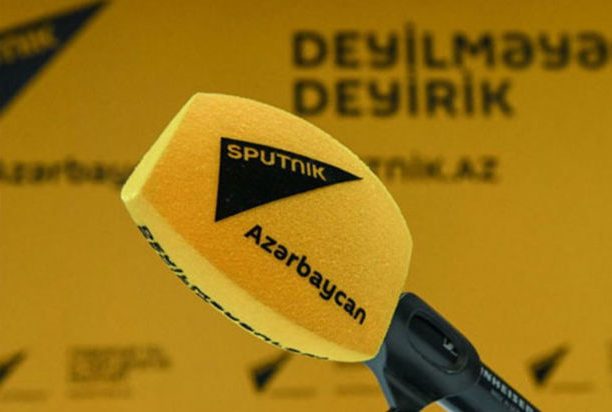
The decision by the Azerbaijani authorities to establish parity in the number of correspondents between Russia’s “Sputnik” in Azerbaijan and AZERTAC in Russia, which led to the closure of the “Sputnik” bureau in Azerbaijan, remains in the spotlight. Moreover, it raises serious questions about how Russian “Sputnik” entered Azerbaijan, who facilitated its establishment, and to what extent its activities adhered to, or rather violated, professional journalistic ethics. It is crucial to determine whether Azerbaijan has lost something valuable or has rid itself of a liability.
Let’s start from the beginning. The structure that eventually became the “Sputnik Azerbaijan” agency was introduced to the country by the well-known figures Ramiz Mehdiyev and Ali Hasanov, without consulting the top leadership. In 2006, the Russian news agency RIA Novosti began negotiations in Baku to open a local office. At that time, RIA Novosti was establishing similar subsidiaries in many countries. However, in Baku, the negotiations were conducted specifically with Mehdiyev and Hasanov. The talks concluded successfully, leading to the creation of “Novosti-Azerbaijan,” a subsidiary of Russia’s RIA Novosti.
In 2013, a reorganization of the Kremlin’s media structures took place. RIA Novosti was dissolved and replaced by the “media giant” MIA Rossiya Segodnya, with Dmitry Kiselyov as director-general and Margarita Simonyan as editor-in-chief. By 2015, “Novosti-Azerbaijan” was rebranded as “Sputnik Azerbaijan.”
By then, the Azerbaijani audience was familiar with regional branches of Russian publications, which had operated without major scandals. However, “Sputnik” immediately revealed the “guiding hand” of Margarita Simonyan.
For instance, the Yerevan office of “Sputnik” enjoyed almost unlimited freedom in waging an “information war” against Azerbaijan, resorting to propaganda, fake news, and insults. Meanwhile, the Azerbaijani bureau of “Sputnik” was heavily restricted.
A former employee of “Sputnik Azerbaijan,” who chose to remain anonymous, revealed that although the Baku office was managed from Moscow under Simonyan’s leadership, the local team consistently defended Azerbaijan’s interests. As a result, they frequently faced dissatisfaction and pressure from Moscow. Editors often demanded the removal of content deemed “offensive” to Armenians or damaging to their pride. For example, using terms like “Armenians” or “enemy” was forbidden, and they were instructed to say “Armenian side” or “Armenia” instead. Even identifying nationality was deemed offensive by the Armenian-led Moscow office. This censorship became particularly evident during the April 2016 clashes when the Azerbaijani team had to fight for every word in official statements from Azerbaijan’s Ministry of Defense. Conversely, the Yerevan office enjoyed complete freedom in their coverage.
Additionally, the Moscow office routinely deleted articles that presented the truth about the Armenian-Azerbaijani conflict following complaints from their Yerevan counterparts.
During the 44-day Patriotic War, “Sputnik” published almost no editorial content in support of the Azerbaijani army or the liberation of occupied territories. At best, the Baku office managed to publish official press releases from Azerbaijan’s Ministry of Defense, and even that required a struggle.
As a result, many conscientious journalists resigned from “Sputnik.” The departure of Metin Yasharoglu was a notable example.
The situation further deteriorated with Russia’s invasion of Ukraine in February 2022. Azerbaijan promptly declared its support for Ukraine’s territorial integrity. However, “Sputnik Azerbaijan” continued to publish pro-Kremlin narratives supporting the so-called “special military operation,” directly contradicting Azerbaijan’s official stance. Despite this, “Sputnik” operated unhindered, whereas Azerbaijani news portals like Minval were blocked in Russia by Roskomnadzor for their coverage of the war.
In March 2022, “Sputnik Azerbaijan” commemorated the anniversary of the fraudulent 1991 USSR preservation referendum, falsely claiming that 90% of Azerbaijani voters supported retaining the Soviet Union. This was a blatant attack on Azerbaijan’s independence and a complete fabrication. The 1991 referendum was marred by widespread fraud, was not held in Nakhchivan under Heydar Aliyev’s orders, and was rendered irrelevant by Azerbaijan’s December 1991 national referendum, where the vast majority voted for independence.
A particularly egregious incident occurred in July 2023 when the Russian embassy in Azerbaijan published an open letter accusing Minval of collaborating with Western intelligence. Minval promptly responded, but “Sputnik” published the embassy’s accusations while refusing to publish Minval’s reply, a direct breach of journalistic ethics and a betrayal of professional integrity.
Regarding staffing policies at MIA Rossiya Segodnya: Initially, “Sputnik Azerbaijan” was headed by Vugar Khalilov. However, for a long time, the agency was led by Aziz Aliyev, whose mother was of Armenian origin. While family background should not matter, Aliyev’s consistent alignment with the Moscow office’s pro-Armenian editorial line raised concerns. Azerbaijan repeatedly requested his replacement, including during meetings with Dmitry Kiselyov, but to no avail. Margarita Simonyan and her deputy Andrey Blagodirenko (Simonyan’s former husband) refused any changes.
Only in 2022 did staffing changes occur. Aziz Aliyev was replaced by Vitaly Denisov, a former military political officer and Russian intelligence colonel. Denisov graduated from the Lviv Higher Military-Political School in 1988 and, after the USSR’s collapse, moved to Moscow, where he joined the GRU (Russian military intelligence). Before coming to Azerbaijan, he headed “Sputnik” in occupied South Ossetia, where the agency engaged in disinformation campaigns targeting foreign audiences.
Denisov arrived in Baku with a clear agenda. By then, Russia expected a swift victory in Ukraine, sought to bolster its military influence in the region, and supported the separatist project led by Ruben Vardanyan in Karabakh, backed by Russian peacekeepers. However, Russia’s plans unraveled: Kyiv withstood the assault, Azerbaijan’s anti-terrorist operations in September 2023 dismantled the separatist regime in Khankendi, and Vardanyan was arrested and imprisoned in Baku.
Despite Russia’s failed ambitions, “Sputnik” remained a tool of propaganda and provocation. Azerbaijan had every reason to end the presence of this disruptive outlet on its territory.
Translated from minval.az