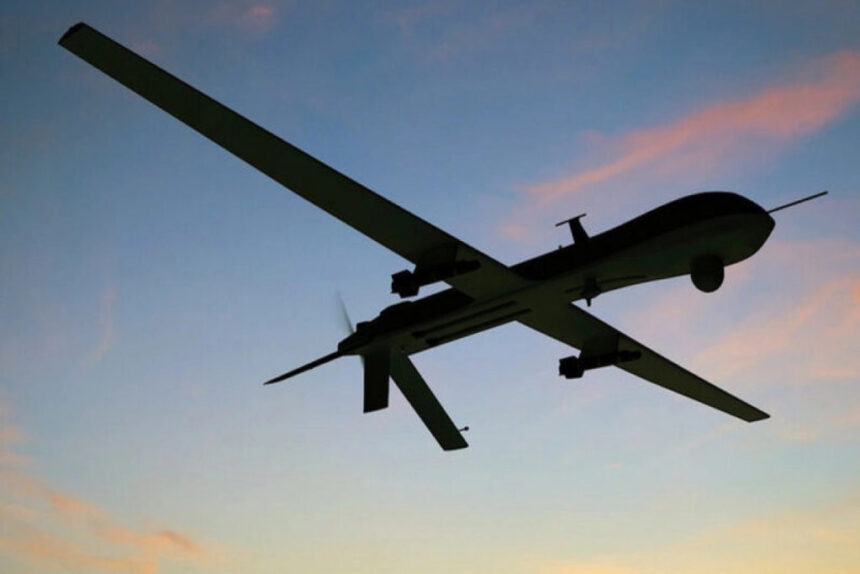
The attack by Iranian drones on the territory of Nakhchivan was, strictly speaking, not entirely unexpected given the strikes Iran had already carried out against the territories of states that were not involved in the escalation of the conflict in the Middle East. Our most cautious concerns proved justified, especially after an Iranian drone had earlier fallen on the territory of Türkiye.
That incident served as a signal for Azerbaijan, indicating that attempts might also be made to drag Baku into this dangerous adventure. Nevertheless, Azerbaijan continued to believe until the very last moment in Iran’s rationality and in the assumption that it would not dare violate the principles of good-neighborly relations or undermine all the agreements achieved to date. This expectation was reinforced by President Ilham Aliyev’s visit to the Iranian embassy in Azerbaijan, where he expressed condolences over the deaths of Iranian leaders. We hoped for the decency of our neighbor and wanted to believe in the sincerity of its assurances. After all, Azerbaijan itself acts honestly and honorably toward other states—especially toward its neighbors. As events have shown, however, this confidence proved misplaced.
For Iran, this was a grave political mistake. After such actions, Tehran has no moral grounds to reproach Azerbaijan. Following the attack, Baku made its position clear: there will be no more indulgence and no more leniency. Any hostile actions against Azerbaijan will be met with a decisive response. President Ilham Aliyev stated this directly during an emergency meeting of the Security Council.
Azerbaijan’s security structures have been placed on full combat readiness. Protection of the Azerbaijani-Iranian border has been reinforced. Shortly afterward, Iranian military units deployed along the border with Azerbaijan began to withdraw. Some units have been moved away from the border line, while the remaining forces have taken shelter in bunkers. Tehran clearly understands that Azerbaijan’s response could be firm and inevitable. The situation, in many ways, was of Iran’s own making.
It appears that Iran may not have fully realized the seriousness of the consequences these attacks would entail. In striking Nakhchivan, Iran effectively positioned itself not only against Israel and the United States, but also against Muslim Arab and Turkic states—the very countries from which it might have expected at least some measure of support in its unequal confrontation with Washington and Tel Aviv.
Azerbaijan has already begun to act. First, a decision has been taken to suspend the movement of freight vehicles across the state border with Iran. And second… well, that will remain a surprise. After all, Iran itself seems to favor sudden moves.
At the same time, these events once again demonstrated the high standing of Ilham Aliyev on the international political stage. The leaders of Türkiye, the United Arab Emirates, Kazakhstan, Pakistan, Latvia, Georgia, and Uzbekistan contacted the President of Azerbaijan to express solidarity. Other countries condemned the Iranian drone attack on Nakhchivan at the level of their foreign ministries, stating that Iran’s actions represent a clear violation of Azerbaijan’s sovereignty and of international law.
In particular, UAE President Mohammed bin Zayed Al Nahyan condemned the attack on Nakhchivan and wished the injured a speedy recovery. In response, Ilham Aliyev emphasized that Azerbaijan stands with the United Arab Emirates.
Baku is not accustomed to making empty statements. The country understands the responsibility attached to its actions and carefully weighs its decisions—unlike some actors who have turned diplomacy into a noisy marketplace. Azerbaijan has repeatedly demonstrated to the world its capabilities and its ability to maintain balance in a complex political environment. This is not a matter of luck but the result of persistent work in building relationships based on trust and honesty—qualities that are increasingly rare in international relations today.
Meanwhile, political analyst Elkhan Shahinoglu noted that Azerbaijan had earlier been concerned when Iran, under the pretext of the presence of American military bases in certain countries, launched missile and drone strikes on oil infrastructure located in those states. At that time, Azerbaijan’s Ministry of Foreign Affairs contacted the foreign ministries of the affected countries and expressed its concern. Now Azerbaijan itself has found itself in a similar situation: Iran has struck the airport in Nakhchivan. In this difficult moment, the leaders of the aforementioned countries have expressed their support for Baku.
“In reality, Iran deliberately seeks to damage relations with Azerbaijan. Ilham Aliyev has already stated that if Iran does not apologize and punish those responsible, relations between our countries will not normalize. Tehran has consciously chosen this path. Moreover, it is difficult to understand the logic of a theocratic regime—Azerbaijan is not on the front line of this conflict. This is a clear provocation, and they will have to answer for it,” Shahinoglu said.
Ramella Ibrahimkhalilova