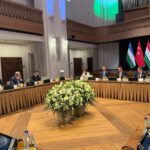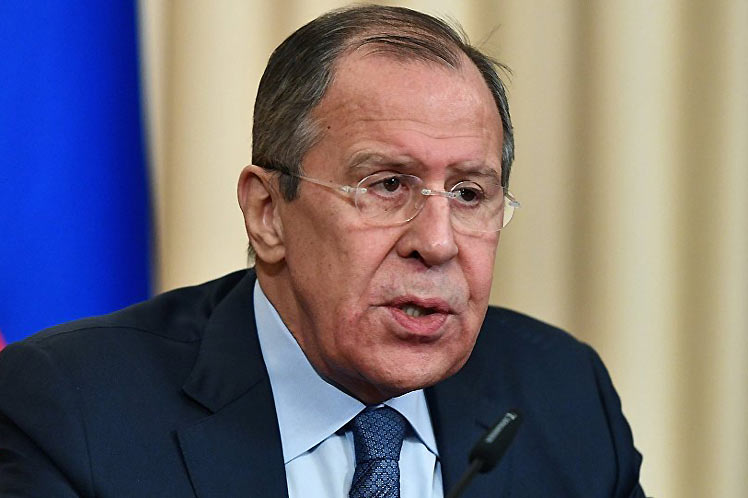
Russian Foreign Minister Sergey Lavrov once again decided to comment on the talks between Azerbaijani President Ilham Aliyev and Armenian Prime Minister Nikol Pashinyan in Washington, and on the agreements reached between Azerbaijan and Armenia with the participation of U.S. President Donald Trump. As Lavrov stated at a meeting with MGIMO students, the agreement between Azerbaijan and Armenia is their sovereign right. However, in his words, the main thing is “to see how it will work in practice.” Moreover, according to Lavrov, “the enthusiastic reactions in the U.S. after the announcement of the agreement were quickly replaced by skeptical assessments after the publication of the document.”
Frankly, it is neither royal nor ministerial business to dabble in petty fakes. No “skeptical assessments” have been voiced in the U.S. Especially not after the publication of the documents. If we believe Lavrov, it creates the impression that the U.S. at the presidential level prepared the meeting, invited the leaders of Armenia and Azerbaijan to the White House, drafted the text of the declaration signed by all three leaders, and then—when the signed documents were published—suddenly became skeptical? Pardon, but who exactly is this story supposed to fool?
Another matter is if, speaking of U.S. assessments, Sergey Lavrov had in mind the hysteria that erupted in organizations like ANCA—the Armenian National Committee of America. For Armenian lobbyists, the Aliyev-Pashinyan talks in the White House were indeed a “black day.” But should their reaction really be elevated to an absolute?
Still, one had to expect a certain “jealousy” from Russia regarding the Washington negotiations. Moscow was pushed out of the peace process between Baku and Yerevan far too harshly and demonstratively. Most importantly, the Kremlin lost its ability to manipulate the conflict—its favorite lever of pressure on both Azerbaijan and Armenia. Which raises the question: won’t Moscow try in one way or another to derail the implementation of the agreements reached in Washington? For Smolenskaya Square, that would be a convenient way to solve several problems at once: dramatically kick the U.S. out of what Moscow still considers its “backyard,” and once again obtain a powerful tool of influence over both Baku and Yerevan.
Moreover, Moscow has people to lean on in this far-from-noble endeavor. The first that come to mind are propagandists like Aram Gabrelyanov or political provocateurs like Konstantin Zatulin. But far more dangerous are the revanchists within Armenia itself.
Indeed, in Azerbaijan the Washington talks were perceived as a major diplomatic success—essentially, the diplomatic consolidation of a military victory. In Armenia, the situation is completely different. There are plenty of forces there that see the Washington agreements as “betrayal” and “treason.” Above all, this is the Russia-oriented “Karabakh clan” led by war criminals Robert Kocharyan and Serzh Sargsyan—the same ones who, at every turn, threaten new war, “return,” that is, renewed occupation of Azerbaijani territories, and so on. Closely tied to this Karabakh clan are various armed groups like VOMA and “Yerkrapah.” Most importantly, pro-Russian elements exist within the Armenian army. And in military circles, there are always those who never won and are eager for revenge. One way or another, by the 2026 elections and constitutional referendum, the revanchists with Russian backing may well try to “challenge Pashinyan.” How successful that might be is an open question.
But Azerbaijani President Ilham Aliyev warned for good reason: we made agreements not with Pashinyan but with Armenia. Translation: the Washington agreements will have to be implemented regardless. And the cost of trying to back out will be very high.
Nurani
Translated from minval.az