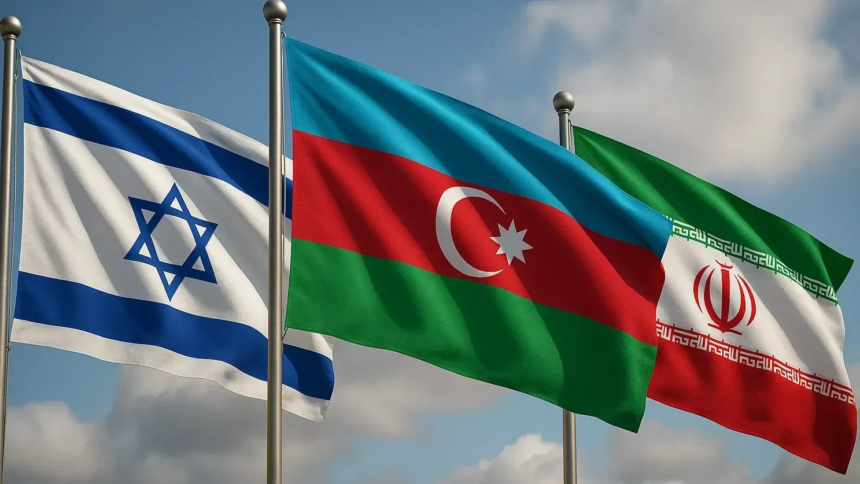
It has happened. On February 28, Israel carried out a preemptive strike on Iranian territory, marking what may be considered a transition to a new phase of the Israeli-Iranian military confrontation that began last summer. According to American and Israeli sources, the operation was coordinated in nature and agreed upon with the United States, whose forces also participated in strikes against a number of targets inside Iran. In the first hours, approximately 30 targets were hit, including intelligence infrastructure facilities, military command centers, and government institutions, including in Tehran. The scale and character of the strikes indicate a carefully prepared operation and signal a shift from indirect deterrence to a format of limited joint use of force, significantly raising the overall level of regional escalation.
These developments have confirmed the rationale behind the preventive measures taken by states neighboring Iran in recent weeks. One of the first to announce such steps was Türkiye, which strengthened control along its eastern border in advance by deploying additional units and expanding surveillance systems. Ankara acted not only in response to the risk of direct military incidents, but also in anticipation of secondary consequences, including migration flows, disruptions to border stability, and threats to infrastructure. Given the length of the Turkish-Iranian border and Türkiye’s involvement in regional security processes, these measures were preventive and systemic in nature.
Israel itself had also demonstrated signs of preparation for a possible expansion of the conflict. Several days before the operation began, the country’s Ministry of Health placed hospitals and medical institutions on a special operational regime. Such steps are typically based on long-term intelligence assessments and indicate expectations of potential military escalation.
In the South Caucasus, signs of heightened readiness were also visible in advance. A week before the strikes, Azerbaijan’s Minister of Defense, Zakir Hasanov, conducted an inspection of the combat readiness of the Air Force’s air defense units. Such inspections are aimed at assessing the capability to detect and track aerial targets, including missiles and unmanned aerial vehicles, as well as ensuring the resilience of airspace control systems. Azerbaijan’s geographical position, with its extended border with Iran and strategic infrastructure along the Caspian Sea, objectively requires a heightened level of preparedness amid growing regional tensions.
An additional indicator of attention to security matters was the continuation of active contacts with various external partners. A delegation of the Russian Aerospace Forces was present in Baku, reflecting ongoing practical cooperation in the field of military security. Despite persistent political disagreements between Baku and Moscow, practical military interaction continues to exist, particularly in matters of air safety and incident prevention. In the event of large-scale destabilization in the Caspian region, all littoral states, regardless of current political contradictions, have an objective interest in maintaining control over air and maritime space and preventing the spread of threats.
At the same time, consultative meetings were held with NATO representatives aimed at assessing the compatibility of certain components of Azerbaijan’s armed forces with alliance standards. This underscores Baku’s effort to maintain working channels of interaction simultaneously with different centers of power and to ensure the flexibility of its security system.
Overall, a regime of regional preventive readiness is taking shape, in which states directly adjacent to the conflict zone are strengthening air defense, border control, and mechanisms of international coordination. Even limited strikes against Iran create risks of further escalation, including possible retaliatory actions, disruptions to air traffic, threats to energy infrastructure, and rising tensions in the Caspian region.
In this situation, Azerbaijan occupies a particularly sensitive position. The country directly borders Iran and hosts key energy and transport infrastructure of regional significance. At the same time, Baku maintains working relations with all parties to the conflict, requiring careful balancing and the constant maintenance of defense readiness. The measures undertaken in recent weeks indicate systematic preparation for various scenarios and reflect a pragmatic approach aimed at preventing the conflict from spilling over onto its own territory while preserving strategic resilience amid mounting regional uncertainty.
Ilgar Velizade