In Armenia, the “political ghosts” of the past still hope to return in full form. They ignore both the new geopolitical landscape shaped by the 44-day war and the counterterrorist operation in Karabakh, as well as the internal sentiments of the so-called “country of stones.” Armenians have never held much respect for their compatriots who once lived in Azerbaijan. Even during Soviet times, when all republics were considered “brothers,” Armenians commonly referred to them with the derogatory term “shurtvatsy” (“turncoats”).
Particular disdain was directed at Armenians from Karabakh, who were “affectionately” likened by their compatriots in Armenia to “Karabakh donkeys.” The separatist movement initiated by the Armenian authorities in the late 1980s had nothing to do with alleged infringed rights of Karabakh Armenians—it had one goal: to place a destructive time bomb under the foundation of Azerbaijan’s statehood.
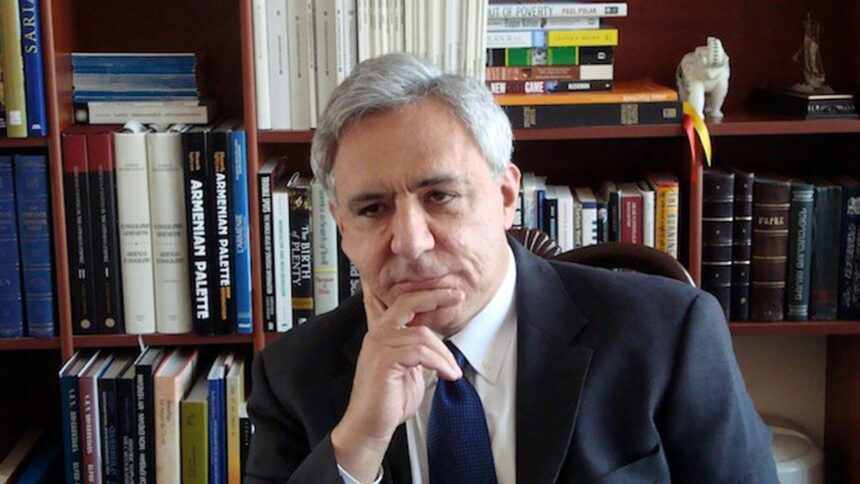
That criminal venture, which lasted for nearly 30 years, ended in total failure: Armenian separatism was eradicated at the root. However, the “political corpses” in the neighboring country, stuck in a 1990s vision of regional processes, continue to operate in outdated paradigms. They are desperately trying to force mismatched puzzle pieces onto the new geopolitical map. One such figure is former Armenian Foreign Minister Vartan Oskanian, who now presents himself as a coordinator of the so-called “Committee for the Protection of the Fundamental Rights of the People of Nagorno-Karabakh” (quotation marks here and further by Minval).
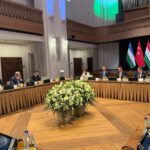
Before turning to his “epoch-making” speech during a session of the inter-party committee of 19 parliamentarians supporting the “Swiss Peace Initiative” in Bern, let’s examine the name of the group Oskanian represents—whether it’s a formal body or a mere gathering of marginal figures. First, Oskanian, who frequently cites international law (more on this shortly), should acknowledge that the administrative unit known as “Nagorno-Karabakh” no longer exists.
Second, following from that, there is no such entity as the “people of Nagorno-Karabakh.” There is only the Armenian population of the Karabakh region. Now let’s dissect the detached-from-reality statements of the former Armenian minister.
Oskanian claimed that the initiative aims to support Switzerland in “facilitating an open dialogue between representatives of the Armenian population of Nagorno-Karabakh and Azerbaijan under international supervision or in the presence of significant international actors to negotiate a safe and collective return of Armenians to Nagorno-Karabakh.”
What dialogue is Oskanian referring to, when such efforts were already undertaken in Yevlakh on September 21, 2023, after the counterterrorist operation? The only item on the agenda then was the reintegration of the Karabakh Armenians into Azerbaijan. The Armenians refused and voluntarily chose to leave the region.
As for the topic of “international control,” it should have been exhausted long ago—especially after Russian “peacekeepers,” exploiting their mandate under the trilateral agreement of November 10, 2020, facilitated the transfer of military equipment, ammunition, and troops from Armenia to Karabakh via the Lachin corridor. Yet Oskanian feigns ignorance, spinning the same broken record.
Indeed, in Armenia—which effectively functions as an open corridor for foreign interests—“international control” is well represented: the French, Canadians, and Germans on one side; the Iranians and Russians on the other. But Armenian political masochism is not fit for export, especially not to Azerbaijan.
Naturally, the ex-minister repeated the mantra of “150,000 Armenians of Artsakh,” allegedly forcefully displaced from their thousand-year-old homeland in 2023 under the threat of “war, ethnic cleansing, and genocide,” driven out from territory that “historically was never part of an independent Azerbaijani state.”
“The only time ‘Artsakh’ was under Azerbaijan’s control was during the Soviet years, and even then it had autonomous status,” he claimed.
Tales of the phantom 150,000–200,000 Armenians (the number varies based on the speaker’s imagination and “patriotism”), “genocide,” and “ethnic cleansing” have been written and spoken about endlessly. There’s no point in reiterating irrefutable evidence that debunks Armenian propaganda. However, the claim that “Karabakh was never part of an independent Azerbaijani state” demands a response.
Oskanian might be surprised (though he surely knows this well), but during the era of the Azerbaijan Democratic Republic, not only Karabakh but also Zangazur was part of our state. Nevertheless, Oskanian continues to shower the public with his “deep insights.”
“The return of the Armenians of ‘Artsakh’ under international protection could form the basis for a fair and lasting peace between Armenia and Azerbaijan. Without this, peace in the region is impossible. Azerbaijan has publicly stated that Armenians may return. Therefore, the following questions remain: how, when, and under what conditions?” he declared.
Azerbaijanis have a proverb: Xoruz banlamasa, sabah açılmaz? (“If the rooster doesn’t crow, will the morning not come?”). Oskanian’s logic seems to rest on this very saying. In other words, if the Armenians who voluntarily left Karabakh don’t return, then there can be no peace? That’s not just absurd—it’s outright foolish.
As for the “how, when, and under what conditions” that Oskanian asks, there’s only one answer: when the Karabakh Armenians come to their senses and accept Azerbaijani citizenship within our country. The ex-minister may dazzle the Swiss with his fiery rhetoric—but not the Azerbaijanis. We’ve seen it all before.
Fakhri Akifoglu
Translated from minval.az