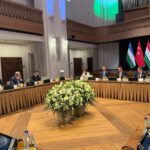
Perhaps the most widely discussed event in the region and beyond today is the upcoming visit of U.S. Vice President J.D. Vance to Yerevan and Baku. This is hardly accidental, as most assessments converge on the view that the visit will not be routine or purely protocol-driven and may open a new chapter in U.S. relations with the two South Caucasus countries. In expert circles, there is growing consensus that this is not merely about political signaling or a demonstration of Washington’s attention to the region, but rather an attempt to formalize a qualitative shift in the U.S. approach to the South Caucasus as such.
It is particularly significant that discussions planned during the visit are expected to place a special emphasis on concrete projects to be implemented with direct U.S. participation. In doing so, Washington signals its intention to move away from declarative policy and general formulas toward practical presence—economic, infrastructural, and institutional. In this context, President Donald Trump’s statement that for a long time Americans themselves viewed the South Caucasus as a zone of Russia’s predominant interests is especially telling. Today, this logic is clearly being reconsidered: the region is increasingly seen not as the periphery of someone else’s influence, but as an independent space where the United States is prepared to entrench itself through long-term projects and direct engagement.
This approach changes not only the format of the U.S. presence, but also the broader configuration of foreign policy expectations in Yerevan and Baku. In this sense, Vance’s visit is an element of a wider strategy aimed at institutionalizing the U.S. role in a region that—amid the transformation of the global security architecture and the weakening of former centers of gravity—is acquiring new strategic significance for Washington.
For understandable reasons, interest lies not only in the topics to be discussed in Baku and Yerevan during the visit, but even more so in the decisions that will follow. The issue is not a set of diplomatic statements or symbolic gestures, but concrete agreements capable of giving practical substance to the U.S. presence in the region. From this perspective, the U.S. vice president’s visit should be viewed simultaneously in two dimensions: as a process and as an outcome.
Earlier, President Donald Trump, in his messages to the leaders of Azerbaijan and Armenia on the occasion of their agreement to participate in the Peace Council, emphasized Washington’s interest in implementing a broad program of investment and even military-technical cooperation in the region. This statement alone goes beyond traditional U.S. rhetoric about “stability” and “dialogue” and points to an intention to move toward a deeper, more structured model of interaction.
In this context, it is critically important for Baku that the barriers which for decades have stood between the United States and Azerbaijan in implementing such an agenda are finally and irreversibly removed. First and foremost, this concerns the so-called Section 907 amendment, which for many years effectively constrained the participation of U.S. companies and institutions in projects in Azerbaijan and served as a political and legal limitation on the development of full-fledged bilateral cooperation.
Today, against the backdrop of Trump’s supporters in Congress raising the issue of its complete repeal, there are grounds for optimism. The very return of this topic to the practical agenda of U.S. politics indicates a reassessment of previous approaches and a recognition that they no longer correspond to current geopolitical and economic realities. Moreover, maintaining such a restriction objectively undermines the provisions of the strategic partnership charter currently being prepared between the United States and Azerbaijan, which is intended to establish a solid institutional foundation for the implementation of a bilateral strategy for years to come.
In this sense, the repeal of Section 907 takes on not merely symbolic, but distinctly practical significance. It becomes a key test of Washington’s seriousness in moving from declarations to a systemic policy toward Azerbaijan and the region as a whole, as well as a necessary condition for forming a truly sustainable and mutually beneficial format of strategic partnership.
Separate—and in many respects central—expectations are associated with agreements on the TRIPP route, in which the United States is assigned a decisive role. It can be said that this is the first infrastructure project in the post-Soviet space where Washington is not simply a participant, but effectively the principal stakeholder. Precisely for this reason, it is crucial for Azerbaijan that the project include clear guarantees of Armenia’s fulfillment of its obligations to ensure unhindered connectivity between the western regions of the country and its Nakhchivan exclave.
Among the parties’ intentions, a central place is also given to plans to expand military-technical cooperation, which takes on particular relevance amid persistent risks and threats to national security in conditions of global and regional geopolitical turbulence. As is well known, Azerbaijan has consistently been building its armed forces in line with NATO models and standards, making military-technical interoperability with leading Alliance armies not a political slogan, but a practical prerequisite for enhancing the combat and technological capabilities of its military. It is for this reason that the development of cooperation with the United States in this sphere is viewed in Baku as a logical continuation of an already implemented strategy of modernization and strengthening national defense.
Finally, the visit of U.S. Vice President J.D. Vance may contribute to the transformation of the entire regional security architecture, in which U.S. participation creates more robust and sustainable conditions for balancing the interests of all actors involved. The South Caucasus is not the “backyard” of any regional power, but a space where the interests of global and regional actors intersect. The presence of the United States within this balance adds an extra layer of resilience and durability—provided, of course, that the countries of the region themselves ultimately determine their own development strategies, consistently strengthening their subjectivity on the international stage.
Ilgar Velizade