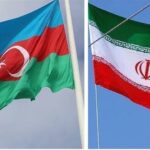
Indeed some issues remain – including the final status what is now a shell of the former USSR district of Nagorno-Karabakh still held by an increasingly irrelevant Armenian “separatist” area home to less than 40,000 people. Yet cut past the officialdom, and there is not much of a rush to “determine” the status of the district. There never was. Baku always regarded it – as did all countries – as part of Azerbaijan. Not even Armenia itself recognised the mountainous region, which though the remaining inhabitants, though self-identifying as Armenian, speak a dialect quite distinct from the standard Eastern Armenian used in Yerevan, or even Western Armenian, used among Armenians in Turkey and much of the huge diaspora.
30 YEARS OF CONFABS, GRANTS TO ORGANISED EXPERT GROUPS HARD TO PART WITH
Some analysts and a few bureaucrats still cling to what seems to be almost a warped hope that the conflict lives on. After all, NGOs professing to be dedicated to allegedly bringing the two countries closer together became haunts for conference-goer types. Some lived off the conflict for nearly three decades. Governments, foundations, and other entities wrote checks for a third of a century for all manner of exotic “conflict prevention and reconciliation” projects. The intentions may have been good. The results were either close to zero, and some say the security-oriented NGO gravy train merely perpetuated an industry of airy pronouncements and pontification – often by a “club” of people and “experts” who went to the same conferences and ran their exclusive “gigs” as just that – exclusive to them and mostly irrelevant – and more accurately – unknown – to average people in either country.
Meanwhile, usually smaller NGOs, those dedicated to helping the poor, improving access to water, assisting farmers or small businesses, never attracted the amount of funding or attention they deserved, their missions evidently too mundane for the high-flying club that for 30 years was too involved in more grandiose projects.
War, as they say, is good business.
Some “experts” on the region still seem hell-bent on emphasising absolutely understandable and normal post-war issues, like the complexity of re-opening transport between the two countries, diplomatic relations, and claims over reparations.
And, of course, what remains of the former Soviet Nagorno-Karabakh. Both Armenia and Azerbaijan as early as 2006 basically agreed the final “status” of the district might be put off for many many years, and despite routine language and rhetoric, the issue clearly is not a matter of any particular urgency to either. As mentioned, no country recognises Nagorno-Karabakh as anything other than a district, albeit estranged, of Azerbaijan. Though there are clear ethnic issues between Armenians and Azerbaijanis – 30-year wars and ethnic cleansings have a way of complicating friendships – the relationship cannot be “fixed” by the same “experts” attending important sounding conferences or showing up for Zoom calls of supposedly profound importance.
War indeed can be an excellent business for foreign conflict resolution NGO conference-goer experts in expensive suits.
But peace can be a bit more risky. Try and find a way to make a quick buck from it.
AZERBAIJAN OPENLY DARED TO SCOFF AT OSCE, UNFAZED BY REBUKES
Azerbaijan President Ilham Aliyev recently blasted the nearly 30-year Organisation for Security and Co-Operation in Europe (OSCE) with its so-called “Minsk Group” mediating effort, co-chaired by Russian, French and U.S. diplomats, as effectively having been a sham. His last broadside came in April. But Azerbaijan essentially stopped taking the effort seriously many years ago and viewed it as more as a welfare programme for bureaucrats who merely wanted to maintain a status quo that was illegal under international law according to four unanimous U.N. Security Council resolutions demanding that Armenian forces end their occupation.
Aliyev told military officials in Baku that both he and his father, former leader Heydar Aliyev, never had much – if any – confidence in the formalistic, plodding process. President Aliyev said Baku played along with the dog-and-pony show out of a lack of alternatives – all the while very openly amassing a huge pile of high-tech weapons.
The contingency plan for war was a secret to no one in the region or with those familiar with it. It was practically shouted about, and discussed. The Azerbaijani weapons purchases from around the globe were official budgetary expenses. Far from denied or hushed, they were widely publicised.
A 1994 “ceasefire” negotiated by the OSCE did help prevent Azerbaijan from losing more land to occupation, but the truce was never close to effective. There was no real international monitoring. Barely – and rarely – was there a day without skirmishes or violence of one sort or another, and inevitably, suffering – and too many young soldiers dying before they were even 20 years old.
In 2012 alone Azerbaijan reported over 10,000 “ceasefire” violations. Armenia counted less due to varying methodologies – but Yerevan also reported many ceasefire breaches. Often daily, and frequently deadly, crippling Armenia’s very weak economy, and forcing Azerbaijan to spend billions on weapons which, if not for the occupation, officials said could have been used for basic human needs.
The accompanying OSCE mediating mission did very little except – perhaps unintentionally – cement what Azerbaijan and almost everyone else agreed was an unsustainable status quo. Despite many hardworking diplomats from the organisation, it really had no mandate or power to do much beyond standard protocol or score the occasional pyrrhic diplomatic triumph.
And the territories which Armenian forces occupied and trumpeted as “historic lands” – and in the more delirious twistings – the restoration of an ancient Armenian empire dating to 2104 B.C. – were never developed or settled. Thus the vast, empty expanse, mostly devoid of life, was visited only by the odd diplomat or analyst or war journalists. The places were some of the most forlorn, scary, and eerie places on the planet.
The fact that the co-chair countries were Russia and the U.S. (hardly known for eager bilateral cooperation of late) and France (which Azerbaijan wanted to replace because even French diplomats said privately the large Armenian diaspora in the country was an issue Paris had to consider when its politicians ran for office), did not help propel it to diplomatic glory.
OCCUPIED TERRITORIES TAKEN APART IN UNIQUE AND PAINFUL WAYS
Armenian forces didn’t have to over-exert themselves in taking the seven districts that they occupied in 1993-1994.
At the time, Azerbaijan’s army was barely one, torn by regional divisions, outright treachery, mass evasions of obligatory military service by paying bribes as little as $10, incompetence, and greed.
Agdam was virtually undamaged in 1994 when Armenian forces overran outmanned, bickering, and often duplicitous Azerbaijani “commanders”. One, a half-literate wool merchant-cum-warlord by the name of Surat Huseynov even crowned himself a “Generalissimo” despite possessing essentially zero military acumen. His track record as a war-guru spoke for itself. Seven lost huge districts. If Huseynov had been a boxer instead of his unfortunate foray into his sage military tactics, he would have set a record for being knocked out in every bout.
In the process of taking the seven districts, Armenians ethnically cleansed more than 600,000 Azeris. Those who refused to leave (they were very few) were forced into slave-like labour, setting up shop for Armenian occupying troops – until the cut-rate forced toilers were no longer needed. Some were reportedly killed; others were just forced to leave the area – by foot – if they were lucky.
The utility of the occupied territories was simple: Cheap scrap metal and other stolen materials are competitively priced. Bricks were taken one by one, electrical wiring removed, trees felled to be resold in Armenia, and there was no effort in developing the massive amounts of lands, except to rename towns which evidently had some sort of deep, obscurantist meaning but was completely irrelevant in practice. There was virtually no ethnic Armenian presence in the seven occupied districts when they were occupied.
And lands regarded as part of “historic empires” are not generally subject to such wanton destruction, ecological damage, and with such disdain.
So that the horrifying eerie poster child city of Agdam, referred to as “Azerbaijan’s Hiroshima,” because it was so methodically looted – a town of 60,000 virtually carted away over 27 plus years – got a nice new name. (Old and historically meaningful, according to radical ultranationalists in Armenia who represent only a tiny sliver of the population there).
It was rechristened Akna, apparently referenced in some old manuscripts as such.
There was one problem.
The vaunted “Akna” as it was very temporarily renamed by Armenians in 2013 (Agdam) and its environs had a population of zero upon its glorious reincarnation and still was at population zero when Armenian forces left. Down from an original 60,000, when the Azerbaijanis fled. A decline of 100 percent, which to this day is a world record. Armenian forces didn’t even bother to set up a military outpost there once they were done pillaging. Perhaps because there were no utilities, no water, and no habitable buildings left to set up camp in.
A few local ethnic Armenian stragglers occasionally passed thru the macabre city, and if lucky to avoid booby-trapped remnants of dismantled houses, they might score the odd pomegranate or apple from unkempt gardens.
Armenia had no choice but to leave the thoroughly trashed, dismembered city as part of a Russian-brokered peace deal in late 2020 which saved what little ethnic Armenian forces still clung onto in the Nagorno-Karabakh district from an even worse fate.
ARMENIAN DIASPORA AND LOCAL ARMENIANS
The motivation behind most of the now-reversed Armenian “conquests” was actually driven by this idea of Armenia’s former “Empire”. And with any such issue, the huge Armenain diaspora – especially in the United States – was key. Often, led by iconic figures like an ethnic Armenian from the state of California, Monte Melkonian, who had never beore set foot in Armenia, it was driven by misdirected sense of regaining “historical Armenian lands” around Karabakh – and very little by military strategy.
Monte Melkonian, whose death has been the subject of all sorts of ruminations from death in battle to his alleged killing by his own “folk” – many of whom who resented his discipline and intolerance towards killing Azeri civiilians – wandered the globe seeking out “historical justice” for years.
But increasingly, Armenians who actually lived in Armenia had to deal with a slaughtered economy, the influence of the Karabakh Armenians – which otften they had little in common with – and especially the cash-spigot Diaspora.
This grew thin on locals in Yerevan. They might walk the walk, but if you hung around long enough, it was common to hear that the diaspora types knew nothing of the realities in Armenia and saw it as sort of “theme park” to be enjoyed in a fog of mythical euphoria for a couple of weeks a year.
Perhaps indicatively, the current Prime Minister, Nikol Pashinyan, has a support rating heading into July’s parliamentary electiions so enormous that even well known but now discredited figures – Karabakh Armenians or diaspora-inspired marginals – have effectively dropped out of the contest, so despised for 30 years of futility that they arent even putting up an electoral fight.
Pashinyan’s most radical detractors blamed him for the “war loss” – but his 10-1 advantage over all over rivals combined says loud and clear: Enough war. Bottom line: Armenians from Armenia wanted normal lives, no constant war.
TURKEY AS THE BOGEYMAN
As always, war losses, miscalulations, anything that brings about humiliation – these are to be blamed on “foreign forces”. In the given war, this was peredictable: Armenians protrayed the whole conflict as a battle – indeed a historical one – with not Azerbaijan – but Turkey.
Given the very bloody World War I history in the Ottoman Empire and the Russian Empire, which many local Armenians sided with and who fled the collapsing Ottoman greatness for a dry, sliver of territory under Russian imperial control, anything related vaguely to the present day Republic of Turkey to serious nationalists in Armenia – and the population therein – are Turks.
This particular misfortune in an area with no shortage of them was in some psychological sense – comprehensible. But Azerbaijanis often greatly resent being labeled as “Turks”. Though their languages are similar, Azerbaijani in fact is quite distinct from Turkish, heavily infused with Persian, Arabic, and Russian words. Its sing-song intonation is also very distinct from Turkish.
Azerbaijani culture has much association with Persian culture, in terms of everything from poetry to cuisine.
But from the very earliest days of the conflict, which began to brew anew as soon as the Soviet Union entered its dying days in the late 1980s, the local Armenians in the Nagorno-Karabakh district often simply referred to Azerbaijanis as “Turks”.
Azerbaijan, in the early 1990s a barely functioning country with an identity crisis, of course turned to Turkey when events becme so grave that the very existenice of Azerbaijan was a question mark. Once the “cease-fire” enabled the country to hold itslef together without further damage, it turned to Turkey, and thus began a long process of Ankara helping Baku build an army virtually from scratch.
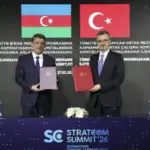
Even so, some commentators still had the audacity to express “surprise”, and scramble for alarm bells, horrified that NATO member Turkey was now a main player in the region. Surprise? Unless analysts were asleep for almost 30 years, this was no secret. The two countries have been declared and formal allies. Anyone even moderately curious could read in a local newspaper, on a website, or in more serious publications that Turkish military officers trained Azerbaijani units. Ankara openly helped Baku any way it could, and President Recep Tayyip Erdoğan was feted as the guest of honour at a December victory parade in the Azerbaijani capital. Somehow, however, analysts of various colours have feigned dismay or acted like the relationship was a big secret only unearthed now, so deep-cover that no one knew.
Everyone knew.
RARE CALL BY HIGH U.S. OFFICIAL
Perhaps as a result of Aliyev snubbing the OSCE and basically calling its mission a 30 year waste of time, and a fraud of little use – not only during the war – but moreover now, feathers in the OSCE’s plush and hushed HQ in Vienna flew like those of chickens in a wind tunnel.
So, evidently, as a demonstration that Washington was back on the international circuit after the Trump administration lost its atlases of the world for four years, U.S. Secretary of State Anthony Blinken made a rare call to President Aliyev.
The official statement explaining the rationale for the call out of D.C. said the exchange involved human rights, democracy, and the “important role” of the OSCE – which is now relegated to the occasional prisoner exchange or other details. The OSCE on Thursday trumpeted the release of three Armenian POWs who were released by Baku in a formal statement evidently aimed at emphasizing its continued “role”.
But Blinken, perhaps sensing Aliyev was being too vocal in his lambasting of an organisation that Washington and Moscow were instrumental in setting up in the early 1970s as a vehicle for trying to find some common ground, picked up the phone not long after Aliyev’s harsh criticism – many high ranking United States diplomats have served with the OSCE at one time or another. The pillorying of such an organisation – which even many in its own employ regard as dysfunctional, staid, and of increasingly questionable relevance – is not great for budding diplomatic careers.
The OSCE was at its inception in 1973 – then referred to as the CSCE – set up for a clear and vital purpose. To at least avoid more wars in the then Soviet-dominated countries of Eastern Europe or a modicum of coexistence between the old East Bloc and the West.
But despite the fact it was not mentioned in the State Department Press release – Blinken did indeed throw the Baku leader a bone not long after getting off the phone.
The day after the Blinken-Aliyev call, a senior US State Department official notified Congress that the Biden administration was extending the ban on what is known as “Amendment 907” to the Freedom Support Act to allow direct US assistance to Azerbaijan.
The powerful Armenian lobby in the US got that support suspended in 1992, and although now largely irrelevant as Azerbaijan is no longer a beggar-state, it has enraged Baku since it was put out as evidence of double-dealing, double standards, and corruption via expensive lobbyists and a congressional seat or two – as they saw it.
While symbolic and greeted positively in Azerbaijan, again, it means little – Azerbaijan is too affluent to any longer qualify for direct U.S. budget support. Still, the move was indeed welcomed.
It did have some real significance beyond window-dressing: the at least continued formal rejection of “907” was the second important decision that removed restrictions on cooperation with Azerbaijan, signed by Secretary of State Blinken over the past two months.
Regional specialist Irina Tsukerman said that the increasing death toll among Azeris returning to the former “occupied territories” as a result of mines laid by etrhnic Armenian forces may also be a factor.
“Given that this follows a top level meeting with President Aliyev, one could presume that we are talking about security aid package rather than the type of humanitarian assistance, which Azerbaijan does not require for every day purposes. Given the recent events, it could be plausible that the aid is related to land mine removal operations, which, as Azerbaijani analysts have pointed out in recent events, is a top priority both for the reconstruction of the Karabakh areas affected by these mines and for preventing further casualties,” she told the Tribune.
Azerbaijan has accused Armenia of deliberately witholding land mine maps of the formerly occupied areas. But experts say the alleged intransigence may also contain elements of downright incompetence, as in the last few years Armenia had greatly slipped in military power and capability, relying on World War II style trenches which the Azerbaijanis zapped at will. It was a shocking sight to see: Armenian young men essentially being sent to their deaths against impossibly high tech weapons.
“I think it is very likely that the specific issue of land mines and the need for international assistance in that regard was brought to Secretary Blinken’s attention, along with the criticism of Samantha Power’s comments given her position as head of USAID. I think the administration is concerned about being seen as completely unbalanced and does not wish to lose links in the region, given the strategic importance of Azerbaijan, and this is a diplomatic measure aimed at leaving the door open for cooperation in other areas, while under the guise of an issue tied to the specific controversial amendment and also to the administration priority in using humanitarian aid as soft power wherever relevant,” Tsukerman continued.
“However, if the administration is serious about US security interests, it will push for the removal of this measure (907) altogether so and to take steps to establish a stronger relationship with Azerbaijan on matters of mutual cooperation, rather than merely humanitarian aid, an issue that US and other countries have at times used as a matter of influence rather than bilateral benefit”.
In March Blinken signed another document allowing the United States, within the framework of the Law on Foreign Operations and Programs for 2021, to allocate funds to finance Azerbaijan, Georgia, Armenia, Moldova, Belarus, Kazakhstan, Kyrgyzstan, Tajikistan, Turkmenistan, Ukraine and Uzbekistan, which essentially was tantamount to putting Azerbaijan in an equivalent category with its former Soviet republics and ending any sense of perceived unequal treatment.
“The provision of funds under this decision is in the interests of the national security of the United States,” Blinken explained in his decision.