Nevertheless, considering the recent geopolitical developments in the South Caucasus after the Second Karabakh war and the growing role of Azerbaijan as both producer and transit hub for natural resources, one can assume that there is a prospect of growing uncertainties that may or already generate tensions. These tensions can be observed in the context of energy diplomacy, used as a strategic tool by both states to gain access to, and consolidate within external markets. This article summarizes the potential and existential rivalry perspectives between Azerbaijan and Russia in terms of integration to the EU energy market via their gas pipelines, particularly cleavages over the Trans-Caspian Gas Pipeline.
European Energy Union: Tendencies in the gas market
The concept of the ‘energy union’ has been developed during the presidency of Jean-Claude Juncker and extends to five dimensions. The following two dimensions are relevant in the context of relations with external markets: 1. Security, solidarity and trust; and 2. Energy efficiency. The former promotes cooperation between EU member states implying energy security and diversification of the energy sources. The latter, on the other hand, emphasizes the need to reduce dependency on imports and stimulate local growth in energy sectors. Both strategies consider a long-term perspective aimed at creating an independent and self-sufficient energy market within the framework of environmental standards. To determine whether these strategies managed to diversify and simultaneously ensure independence from external actors in the European gas market, let us recall the statistical data of imports and local gas production in the EU over the last years.
Tendencies in the EU energy market over the last couple of years, particularly in the sector of gas, reveal its high dependence on imports from abroad. Although the net gas imports fell by 7 per cent in 2020 amounting to 81 bcm, the overall EU production of gas fell by almost 23 per cent (16 bcm). According to the Quarterly Report of the Union, the local gas production in the first quarter of 2021 reached the second-lowest production rate over the last decade, falling by 11 per cent respectively. In this regard, the European internal energy market needs a sustainable supply of natural gas resources, mostly, for residential heating needs. Currently, about 44% of extra EU net gas imports are piped via Russian pipelines, 12% through Algeria, and 1,2% through TAP pipeline. Although import indicators suggest that Russia holds the dominant position in supplying the EU energy needs, the ever-growing gas supplies from Azerbaijan cause concerns on the part of Russian stakeholders. Accordingly, in 2020, Gazprom’s supplies to the Turkish market decreased by 72% compared to March 2019, the Russian RBK reports. Could the further steps of the official Baku on the European energy front challenge positions of the Russian energy giant Gazprom? To answer this question, it is necessary to briefly present the already launched and planned projects in which Azerbaijan is directly involved.
Azerbaijan’s ‘energy diplomacy’ and Russia’s counterstrategy
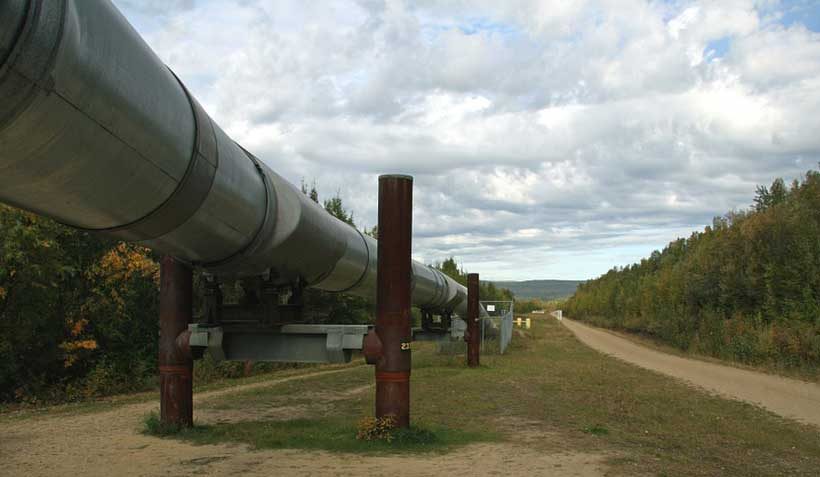
In 2020 South Gas Corridor (SGC) project officially started operating, connecting three sub-pipeline routes: South Caucasus Pipeline Expansion (SCPX), the Trans-Anatolian Pipeline (TANAP) and the Trans Adriatic Pipeline (TAP). The project aims to ensure commercial gas delivery from Shah Deniz field to Turkey, continuing to European markets and finally landing in Southern Italy (Melendugno). The initiative was supported by numerous financial institutions and stakeholders from Asia and Europe such as the Asian Development Bank (ADB) and the European Investment Bank (EIB). According to the estimates, the current gas supply via the corridor is amounting to 10 billion bcm.
At the 7th Ministerial Meeting of the SGC Advisory Council, the president of Azerbaijan Ilham Aliyev noted the necessity of strengthening bilateral as well as multilateral energy relations and mentioned the Memorandum of understanding between Azerbaijan and Turkmenistan: “[…] That will also be very helpful for future energy cooperation in the Caspian Sea and beyond”. President Aliyev has also emphasized that Azerbaijan already has become a reliable transit of energy resources from the eastern shores of the Caspian Sea. In this regard, the recent intensification of talks upon the realization of the Trans-Caspian Gas pipeline project is not surprising.
Within the framework of the Trans-Caspian gas pipeline project, natural gas will be delivered from the port of Turkmenbashi via the pipeline to the Sangachal terminal through the Caspian Sea with an annual capacity of 32 billion bcm. However, despite numerous attempts to bring the issue to the agenda both by the Western partners (EU and the United States) and Azerbaijan, there have been no significant steps towards the implementation of the project. The reason for the constant extension of negotiations over the last two decades may be both the reliability of the capabilities of the Turkmen natural gas resource pool, and external intervention in the negotiation process and attempts to discredit it by Russia and Iran.
Firstly, the credibility of the Turkmen gas supply capacity is quite questionable. After the Central Asia-China gas pipeline opened in December 2009, Turkmenistan has gradually become the biggest gas supplier to the Chinese energy market in Central Asia. Currently, Turkmenistan covers nearly 60% of China’s pipeline gas imports, whereas over 90% of Turkmenistan’s overall exports are gas exports to the Chinese energy market. Therefore the sufficiency of Turkmenistan’s gas reserves for the Trans-Caspian pipeline is still a matter of discussion. The official Ashgabat in the meantime refrains from specifying details on its capabilities.
Another challenge is posed by the joint attempts of Russia and Iran, circumvented by the pipelines, to prevent the realization of the initiative, to protect their local energy markets. Additionally, the Kremlin needs to eliminate any potential external supplier of natural pipeline gas to the EU, to sustain the status quo. Turkmenistan has already become the biggest gas supply hub in Central Asia and the prospect of its expansion towards Europe poses a strategic challenge to Russia.
“Along with the new Iranian gas pipeline, the Chinese export route gave Turkmenistan strong leverage that strengthened its ability to bargain with Russia. However, these export routes do not hurt Russian interests that much, since Moscow’s main objective at the moment is to keep Turkmen gas away from the lucrative European energy market”. (Vasánczki 2011).
Both Russia and Iran refer to environmental damage the pipeline could cause in the Caspian Sea, and recall the so-called Tehran Convention (the Framework Convention for the Protection of the Marine Environment of the Caspian Sea). However, the experience with the SGC and other pipeline projects in the region suggest no environmental crisis to be expected. On the other hand, there are allegations regarding the long-disputed Legal Status of the Caspian Sea. Moscow and Tehran are aligned in their concerns about the extraction and transportation of energy resources and believe that such issues should be resolved within the framework of five Caspian states.
According to Marco Marsili, the Russian energy strategy is inclined in a “Grand Strategy” aimed at re-establishing a sphere of influence in the area previously controlled by the USSR. As he further notes in his article: “If the Trans-Caspian Gas Pipeline comes to fruition, then it will also further enhance Azerbaijan’s status as both a producer and transit hub. Additionally, the pipeline will diminish Moscow’s influence in the region and circumvent both Russia and Iran. This is why Moscow is heavily opposing the project.”
When it comes to the European front Russian strategy faces various burdens. On the eve of the opening of the Nord Stream 2 gas pipeline, Russian-European relations are in a state of long-term crisis. The persecution and assassinations of political dissidents, the imprisonment of the head of the opposition movement Alexei Navalny, support for the authoritarian regimes of Lukashenko and Assad, as well as multiple attempts to interfere in elections within the EU, reduce the level of trust between the Kremlin and the West on energy security too. Furthermore, gas supply issues between Russia and Ukraine in 2006 and 2009 that caused the European energy crisis, exacerbated the situation and gave a signal to the EU to diversify its gas supplies.
Nord Stream 2 is a controversial 9.5 billion euros worth gas pipeline that will annually supply the EU with 55 bcm. According to sceptics, the new pipeline not only endangers the energy security of the EU, putting it in a dependent position from Gazprom but also causes dissatisfaction in Eastern European countries (in particular Ukraine). Germany and the US have already issued a joint statement in July to support Ukraine, European energy security and climate protection. Azerbaijan, in turn, is ready to provide the diversification tool needed and security of natural gas delivery to the European market without polarizing the European community on geopolitical issues.
Opportunities for Azerbaijan in the new era in South Caucasus geopolitics
After the second Nagorno-Karabakh war between Azerbaijan and Armenia, the power constellations in South Caucasus have drastically changed in almost 44 days. Azerbaijan has restored its territorial integrity and opened up new opportunities for economic growth, and increased mobility via the development of transport hubs and infrastructure rehabilitation projects. At the same time, Russia has deployed its peacekeeping contingent in the region, ‘formally’ securing its status as a regional power. Despite this, Azerbaijan, after almost three decades being focused on resolution of devastating conflict, can now set new forign policy priorities to provide energy security and strengthen its cooperation with the EU.
Conclusion
With the EU Strategy on Central Asia adopted in May 2019 and the intensification of negotiations between the Central Asian countries with the EU and with the Western hemisphere as a whole, there is a need for such projects as the Trans-Caspian Gas Pipeline. In these circumstances, Azerbaijan can play the role of a mediator both in the negotiation process and directly participate in the implementation of the project. Taking this into account, Russia fears the loss of its role as a hegemon both in its relations with Central Asia and within the South Caucasus. Also economically, it is in Russia’s interests to keep the monopoly in the hands of its state-owned companies to strengthen the leverage on the EU in cases of geopolitical collisions.
In any case, the growing competition on the EU energy market between the two former Soviet states could significantly diminish the sense of mutual reliability between them.
Rafael Ibadov
Modern Diplomacy