As you recall, yesterday, September 27, Azerbaijani border guards detained oligarch Ruben Vardanyan, who had renounced Russian citizenship and come to Khankendi to get into politics and support Armenian separatists.
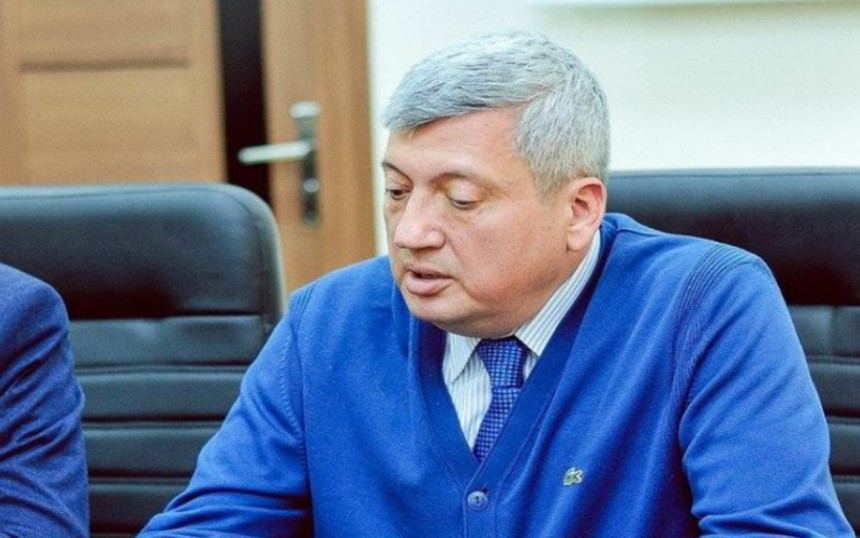
According to Tofig Zulfugarov, the processes will unfold in the following way: persons involved in war crimes will be detained, charged under the Azerbaijani legislation, and then tried in court.
“I think that this will not be a separate trial, but proceedings similar to the Nuremberg trials, where the ideology of Tsehakronism, which is essentially fascist, and which ideologically justified the “Miatsum” project, its further implementation, including total ethnic cleansing, will be condemned. Therefore, this ideology should be publicly condemned with the involvement of international lawyers,” Zulfugarov said.
He believes we should understand that this is not only about the aggressive actions against us, but also about the implementation of their ideology prevailing in Armenia and its diaspora.
“This is an opportunity to put this ideology on trial. And this trial will put the political stop to the project of their lifetime. The practical dismantling of this system is happening before our eyes, we can see that, having lost everything, they are trying to deceive the international community by calling what is happening ‘genocide’,” he added.
He said that now Armenians would try to use this to secure a ticket to the West for themselves.
“They will act there as fighters and victims, they will try to put on the mask of a long-suffering people, but few of them will remain in Armenia itself. Their second objective is quite obvious: they want to boil everything down to the impossibility of peaceful coexistence between Armenians and Azerbaijanis. That is why the Armenians have been shying away from the reintegration process and have done their best to prevent it from happening,” he emphasized.
According to him, some of the Armenians will remain in Karabakh, and Azerbaijan will insist that Armenia fulfill its international obligations on human rights issues, including the rights of ethnic minorities.
“At least the issue of expelling Azerbaijanis from Western Azerbaijan, from Zangezur and Goycha region, will not be removed from the agenda. So, I think this is the end of one stage and the beginning of a new one. Most likely, they will continue the conflict with us, but in a different form, in the form of non-existent ‘genocide’,” Zulfugarov said.
As for the possibility of amnesty, the expert said that amnesty could be granted only after a court decision.
“Without a court decision, where the degree of guilt is established, there can be no amnesty a priori. We must first wait for the results of the trial, their conviction, and only after that, if necessary, we can consider the issue of amnesty,” he emphasized.
According to Zulfugarov, Azerbaijan’s next goal will be to ensure uninterrupted communication with Nakhchivan.
“Securing conditions for communications and development of our economy, as well as working out the rules of interaction based on the principles and standards of international law. In particular, we must delimit and demarcate the borders, which must be recognized by both sides. This is a long process, so we will have a conditional border for some time,” he said.
Referring to the issue of a monitoring mission in Karabakh, Zulfugarov pointed out that it is a matter of interaction with the Office of the UN High Commissioner for Refugees, which was laid down in 2020.
“Azerbaijan is fulfilling its commitments. This is not a monitoring mission: Azerbaijan, as a member of the UN, will just be interacting with this organization. That is why UNHCR has been working with us all along,” Zulfugarov summed up.
Nijat Hajiyev
Translated from Minval.az