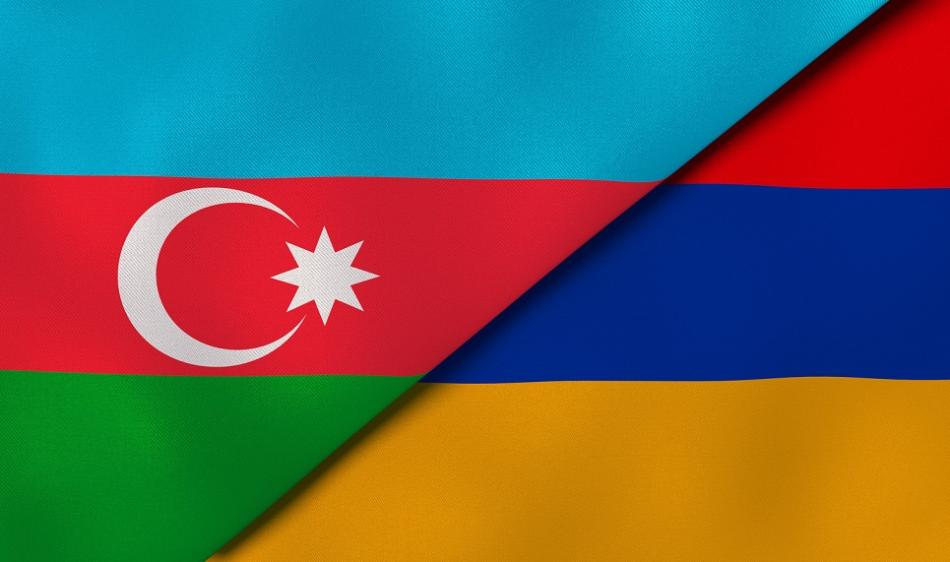
To date, there are certain stumbling blocks which divide Armenian and Azerbaijani societies, including the fate of Karabakh’s ethnic-Armenian population which occupies a particular place in the normalization of relations between Armenia and Azerbaijan.
First of all, the legacy of two devastating wars that left deep scars in the memories of these two nations should be highlighted. There are people from both sides who are directly affected by the hostilities and have experienced personal tragedy and loss. So far, some estimates put the number of deaths on both sides at 30,000 in the First Karabakh War and around 7,000 in the Second Karabakh War.
Today, Azerbaijan continues to carry out large-scale post-conflict reconstruction efforts in the liberated territories in order to return about 700,000 Azerbaijani IDPs to their homes in the coming years. However, the destruction is almost total and at least one million anti-personnel, anti-tank mines and other unexploded or abandoned munitions were left behind by Armenian forces. In fact, since the signing of the Trilateral Statement in November 2020, 290 people have become victims of landmines, of whom 51, including 3 journalists, were killed and 239 seriously injured.
Armenia also continues to plant mines on the territory of Azerbaijan, and in total, 2,728 landmines, made in Armenia in 2021, have been found in sovereign territories of Azerbaijan. These were transferred via the Lachin road, which is a flagrant abuse of the humanitarian purpose of this road, hence Azerbaijani demands to establish customs and border checkpoints at the entrance and exit into that part of Karabakh where the Russian peacekeeping contingent has been temporarily deployed.
In Armenia there is no consolidated vision about a peace treaty
Secondly, there are different motives and underlying needs of the conflicting parties towards the normalization of relations. Azerbaijan strives to sign a peace treaty with Armenia and submitted a proposal containing five basic principles for the normalization of relations to Armenia in March 2022. Azerbaijan assumes that Armenia must recognize the part of Karabakh where an Armenian population lives as an integral part of the territory of Azerbaijan, and needs to concentrate on its own internationally recognized sovereign territory in the future.
In contrast, in Armenia there is no consolidated vision about a peace treaty. There is opposition in parliament, in Armenian diaspora communities in the US and France, and in Karabakh separatist leaders who do not want to accept the defeat in the Second Karabakh War, and oppose any peace treaty between two states.
Initially, Armenia expressed its preliminary agreement with the above-mentioned five basic principles put forward by Azerbaijan; however, afterwards it responded with additional principles that included security and the rights of ethnic Karabakh Armenians. Moreover, Armenia later agreed to the draft of a peace treaty, submitted by Russia, that stipulates the postponement of the so-called Karabakh issue to the future and, thus, to prevent recognition of Karabakh as part of Azerbaijan by Armenia. Azerbaijan, however, refused this proposal.
Thus, there is a certain inconsistency in Armenia’s policy with regard to the normalization of relations with Azerbaijan. At a meeting in November 2022 with Dirk Schuebel, the European Union’s special envoy for the Eastern Partnership, Azerbaijani President Ilham Aliyev underlined that “statements from Armenia are very controversial. They say they recognize our territorial integrity and sovereignty. Not only say but they signed under that in Prague and Sochi.”
However, Armenia wants, at the same time, to incorporate issues relating to the Armenian minority in Azerbaijan into a peace agreement, to which Azerbaijan will not agree. Therefore, he thinks that “a very clear position from the Armenian government about their agenda” is needed. From President Aliyev’s perspective it is necessary to have two tracks: (1) on the Armenia–Azerbaijan normalization process and (2) on issues relating to the Armenian minority in the Karabakh region of Azerbaijan and concerning their rights and security.
There are geopolitical implications to consider
Thirdly, the geopolitical implications of the Second Karabakh War should also be taken into consideration. Today Russia has become a key regional peacekeeper due to its temporary peacekeeping contingent in a particular part of the Karabakh economic region, and facilitating the Armenia–Azerbaijan normalization process. In contrast, Türkiye has also recently increased its influence in the region with the establishment of a joint Russian–Turkish Center for ensuring the ceasefire and the cessation of all hostilities in the Aghdam district of Azerbaijan.
The change in the balance of power in the region has also led to a sharp increase in Armenia’s dependence on external actors. In fact, instead of persuading Armenia to abandon its revanchist aspirations, some of those powers are, in contrast, supporting Armenia’s vindictive behavior. This aspect has also gained particular importance against the backdrop of the war raging in Ukraine, which is accompanied by an unprecedented deterioration in relations between Russia and the West.
From the perspective of many Armenians the war in Ukraine has produced a vacuum of power in the South Caucasus and they think that Moscow no longer supports them as it would have before. Therefore, from a security perspective Armenia is keen to bring other external actors into the region and the recent establishment of a two-year EU Mission is a good example of this. Incidentally, Russia considers this as an attempt to undermine their position in the South Caucasus. Azerbaijan also expressed its concerns that this EU Mission can serve as a pretext for Armenia to evade the fulfillment of commitments of the 2020 Tripartite Declaration. Meanwhile, Armenia also tries to involve Iran, which is dissatisfied with the new geopolitical reality.
The road to an Armenia-Azerbaijan peace treaty is undeniably challenging
Thus, in a nutshell, the legacy of two devastating wars, different motives and the underlying need of the conflicting parties towards the normalization of relations, and geopolitical implications of the Second Karabakh War, act as stumbling blocks that complicate the overall peace process.
However, the recent provocation committed by the Armenian Armed Forces on the undelimited Armenian-Azerbaijani border which led to the death and injury of several Armenian and Azerbaijani servicemen once again demonstrates the necessity of the work on the delimitation of the state borders as well as the finalization of the Armenia-Azerbaijan peace treaty.
Today it is paramount that Armenia abandons its territorial claims against Azerbaijan and accepts Azerbaijan’s territorial integrity, including the recognition of Azerbaijani sovereignty over Karabakh. Azerbaijan, on the other hand, should continue its work to reach out to Karabakh Armenians in order to incorporate them into Azerbaijani society through attractive political, economic, social, and other developments in the coming years.
Dr. Gulshan Pashayeva is a Board Member of the Baku-based Center of Analysis of International Relations. She is also a former Senior Adviser in the Office of the President of Azerbaijan and Deputy Director of Azerbaijan’s Center for Strategic Studies.