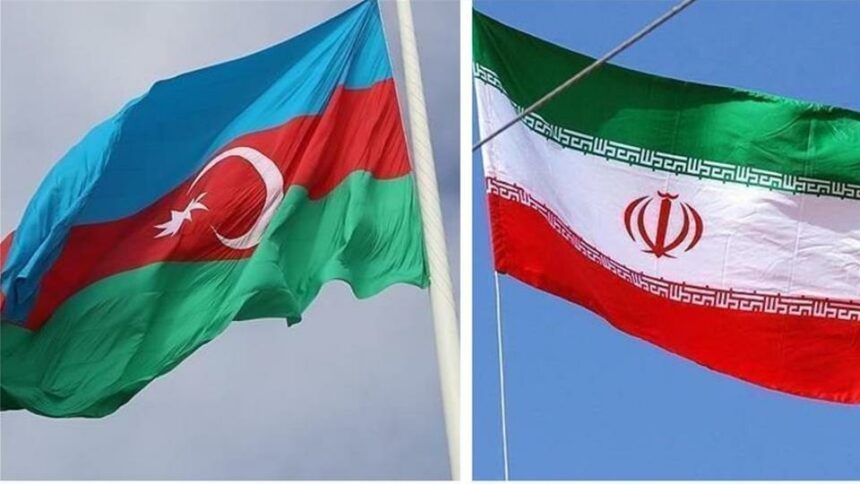
Back in April of 2023, 32 members of the Knesset sent a letter to the Israeli foreign minister urging him to provide international support to the independence movement of South Azerbaijan. The letter triggered an immediate negative reaction both from inside of Israel and the Jewish community of the US, following a protest from Prince Reza Pahlavi and the Diaspora political group Solidarity for a Free Iran. Leaving aside the political wisdom of the letter it would be fair to say that the very fact of its appearance indicates the rapidly shifting geopolitical balance in the region and the increasing importance of the South Caucasus in the future security system of the region that is being formed in front of our eyes. That future depends, to a large degree, on the political future of Iran. As with any multi-ethnic state, the political stance and aspirations of Iran’s ethnic minorities will play a crucial role in determining the path forward for the country.
The Azeri people are by far the largest ethnic minority of Iran. Although the official statistics regarding the country’s minorities have never been published, various estimates put its population between 20 to 40 million (In 2011 the then foreign minister of Iran Ali Akbar Salehi stated that 40 percent of Iranians speak Turkish).
A brief historical background.
The present border between Azerbaijan and Iran was established in the 19th century as a result of a series of treaties between the Persian and the Russian Empires. The first treaty, the Treaty of Gulistan signed in 1813, ended the Russo-Persian War of 1804–1813 and established a border between the two empires along the Aras River. The second, the Treaty of Turkmenchay was signed in 1828. It cemented the Russian Empire’s control over what is now modern-day Azerbaijan. The border has remained largely unchanged since then.
Unification as per International Law – the ideal world.
In the ideal world any possible unification process must take into account international law, which offers the guidelines and legal structure that the parties interested in this venture should follow. The fundamental principle of international law relevant to the issue of unification is the principle of state sovereignty. It declares that states have the exclusive right to determine their own political, economic, social, and cultural systems without interference from other states. As a result, unification would require the consent of the governments and peoples of Azerbaijan and Iran, as well as compliance with their respective legal systems and constitutional provisions.
The second principle relevant to the issue is the principle of self-determination, which grants people the right to freely determine their political status, pursue their economic, social, and cultural development, and dispose of their natural wealth and resources. It should be noted that at the time of its recognition as one of the principles of international law (in the 1960s), it was interpreted as a legal tool to assist the colonies to gain independence from their colonial masters. The rights of ethnic minorities within the people under colonial rule did not have the right to separate from the people/territory as a whole. Proponents of unification may argue that the Azerbaijani people in Iran should have the right to self-determination, including the right to unify with their brethren in Azerbaijan based on their shared culture, language, and history.
However, the principle of self-determination is not absolute and is subject to limitations, particularly when it comes to secession or changes to established borders. The United Nations (UN) General Assembly resolution 2625, which outlines the principle of self-determination, also emphasizes the importance of respecting the territorial integrity of states and the prohibition of the use of force to alter borders. Therefore, in the ideal world, any potential unification would need to be carried out following the principles of international law, including the respect for state sovereignty, the consent of the parties involved, and compliance with relevant constitutional provisions and legal systems.
Needless to say it would entail long, protracted negotiations between the governments of the Republic of Azerbaijan and Iran. The potential implications of unification on regional and global stability are of paramount importance. Changes to established borders can have significant geopolitical implications and will most definitely impact the relations between states in the region. Therefore, it would be crucial to take into account the potential political, social, and economic consequences of unification, and to engage in dialogue and negotiations with all relevant stakeholders to address any concerns or conflicts. The whole host of challenges such as border disputes, citizenship, governance, administration, etc., would have to be addressed.
Resolving these challenges would require careful legal and diplomatic efforts to ensure that the rights and interests of all parties involved are protected. This scenario, akin to the “velvet separation” of Slovakia and the Czech Republic replacing former Czechoslovakia, presumes the acceptance by the Iranian government of the will of the Azerbaijani people in Iran to unite with their brethren in the Republic of Azerbaijan. Not a likely scenario now or in the foreseeable future. It needs to be emphasized that regardless of Iran’s form of governance (current theological, secular, or even possible future monarchical) the government will use any means at its disposal to crush such unification attempts. The above-mentioned reaction of Prince Reza Pahlavi to the initiative of the Israeli deputies is the latest testimony to that statement.
The necessity of geopolitical turmoil as a precondition for unification – the real world.
The current geopolitical environment suggests that there are two plausible scenarios under which the reunification of the Azeri people could be possible – the collapse of the current theocratic regime of Iran under the weight of the internal socio-economic problems (not unlike the end of the Soviet Union) or a military strike by Israel, alone or with the direct participation of the United States, on Iran’s nuclear/military infrastructure and, possibly, vital government centers which would most likely result in chaos and crumpling of the economic and sociopolitical order.
Despite the economic difficulties coming as a result of sanctions imposed on Iran by the West and harsh social/political conditions in the country, the regime of Ayatollah seems to be able to maintain its general grip on the country. At this point, suggestions of the imminent collapse of the regime as a result of the popular uprising, at least in the opinion of this author, seem to be unlikely.
Regime changes as well as changes in border configurations and sizes are usually triggered by the geopolitical events of historic magnitudes. The Soviet Union collapsed as a result of its failed economic system and, as a result, its inability to meet the challenge of the US military build-up. On the other hand, external factors such as the Gaza conflict and a significant increase in global tensions coupled with rapidly shifting world balances could potentially result in dramatic internal changes in Iran.
Without going into a detailed analysis of Iran’s role in supporting HAMAS in its October 7 attack on Israel and its proxy war against the Jewish state, suffice it to say that a combined US/Israel military strike of Iran’s nuclear facilities and, as a possibility, against its highest political decision making centers, will most likely result in collapse of the entire political and administrative structure. Under this scenario, the mass uprising of the Azeri population, led by the nationalistic organizations currently active outside Iran, demanding the reunification of the divided people is not a far-fetched possibility.
Sevim Geraibeyli is an American expert with a rich experience spanning over 25 years in the fields of international business, law, and global security issues.