In essence, it involves the entirety of the territory and its creative resources. The significance of this historical moment lies in the full acquisition of sovereignty over all the capabilities of the Azerbaijani state, bestowed upon it by history and geopolitics.
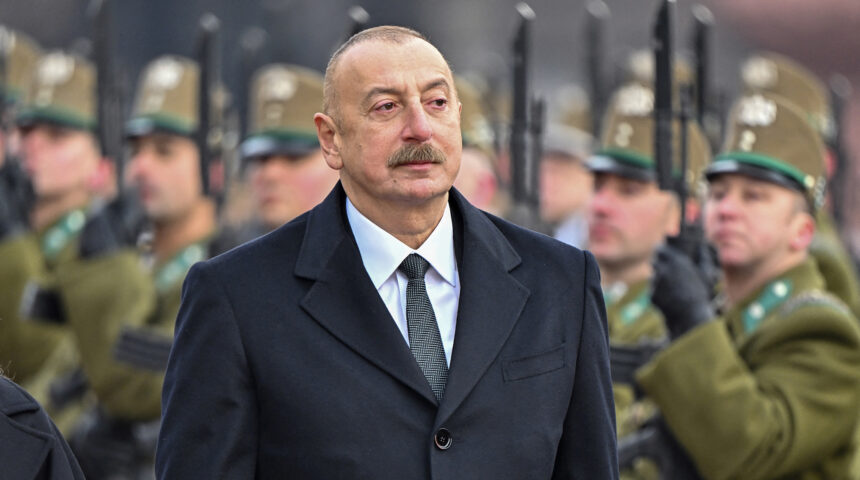
That is why, in the first part of his address to the Milli Majlis, Ilham Aliyev proposed a new perspective on Azerbaijan’s sovereignty.
The long road through the dunes
The journey from state independence to full sovereignty for Azerbaijan has been quite lengthy, spanning more than 30 years from October 1991 to September 2023. Along this path, there were many phases—periods of crisis, daring breakthroughs, and the acquisition of a wide array of tools such as the establishment of an independent and cautious oil export policy and a strong foundation of currency reserves.
Finally, there was the great historical achievement, which Ilham Aliyev accurately captured:
“For the first time in the history of our independent country, presidential and parliamentary elections were held across the entire territory of Azerbaijan. This is a historic event. The Second Karabakh War and the complete restoration of our sovereignty are events of global historical significance… The Azerbaijani state demonstrated its strength, and our people showed the world their indomitable spirit. That is why I am confident that 2024 will go down in history from this perspective.”
Sovereignty: From Regional to Geopolitical
It is highly symbolic that from now on, September 20 will encompass two national holidays—Oil Workers’ Day and now Sovereignty Day, commemorating the final operation to liberate Karabakh from the separatist regime.
These two phenomena are connected like a starting platform and the achieved goal. It is important to realize that the challenge of sovereignty, namely its presence or absence, is a problem that many post-Soviet countries have addressed in their own way and under different circumstances.
The first sovereignty (the fact of independence) was obtained as a result of the collapse of the USSR. However, not all nations received it as a granted inheritance. Azerbaijan had to endure wars, economic crises, and the challenging process of establishing responsible governance…
Sovereignty had to be defended, especially in the face of aggression from a neighboring state and the destructive response from parts of the security apparatus of the supreme Soviet metropolis. Strengthening sovereignty at the regional level, including border protection, especially in such a complex environment as Azerbaijan’s, which is under constant pressure from the historical claims of its neighbors, is not a matter of a few years. It requires a firm military backbone, balanced governance, a responsible leader, an effective government, and a capable parliament that can support the dynamic legislative changes necessary to keep pace with the executive branch.
The situation with second-order sovereignty—global positioning—is even more complicated. Like other small states of the world, Azerbaijan was often forced to limit its ambitions and legitimate interests to secure material benefits from Western donors. In an era when the flow of Western investments was invariably conditioned by political obligations.
The desire to move westward, into the “community of the wealthy,” was fueled by both illusions of a “wealthy and just life” and the real situation at home, plagued by numerous problems from the era of total decline. Unsurprisingly, the gap between the “golden billion” and the post-Soviet space remains unbridged to this day. In simple terms, sovereignty was sometimes traded for jeans and humanitarian aid. As Ilham Aliyev repeatedly emphasized, this paradigm deeply penetrated societal consciousness, hindering the development of national self-awareness.
It is worth noting that this situation suited the Western community quite well, which promoted illusions of integration into the Western world “in a secondary role” through the media, various centers, and non-governmental organizations in areas like education and human rights monitoring.
The issue of full sovereignty on the global stage was tied to the necessity of integrating into the Western-centric system, specifically into the information space of the West. This space serves as the main mentor, reflecting the value of any given country to the Western world, creating the so-called paradox of imposed competition. On one hand, it was publicly declared that all new post-Soviet states had equal access to public and media representation in the West. However, in practice, no real information pluralism existed. As a result, Azerbaijan was immediately placed into compartments of stereotypes and markers, occupying a humiliated position marked by labels such as “dynastic despotism,” “petrol state,” and “oppressor of the Armenian world.”
The winners in this so-called “information pluralism” competition were the small countries that had or somehow gained access to monopolists with the right to interpret anything and everything. In other words, access to the Western media machine through lobbyists, politicians, and the bosses of influential corporations.
As is well known, the Armenian community in the West gained this access at the beginning of the 20th century, essentially receiving an indefinite indulgence for any public assessments related to Armenian issues. This is the root of Armenia’s confidence, and even arrogance, in believing itself to be a “strong player” capable of emerging victorious from any competition with Azerbaijan, basing this belief on direct access to the core of “interpreting everything”—the politicians and elites of the United States and France.
In his address to the Milli Majlis, Ilham Aliyev clearly articulated these challenges:
“The countries behind Armenia, their actions, decisions, resolutions, and statements show that this dirty game against us is not over. Foreign circles, unable to digest our Victory, are preparing new plans against us. There is no need to dwell on this in detail. However, the information we have received confirms this. This is the purpose of the defamatory campaigns in the media—to keep this topic on the agenda constantly and to hope that if Azerbaijan stumbles or weakens, they can restart these dirty actions against us. We must be aware of this. The Azerbaijani authorities are aware of it. Our public should also be aware of it. Therefore, we cannot afford to relax.”
Azerbaijan’s Route
Thus, Azerbaijan, striving for development, was faced with a dilemma imposed upon it. The West subtly positioned Baku between sovereignty (the desire to regain full control over its lands) and development (the well-being of the country and its people).
We were told that the established globalized order implied that one must act with regard to many circumstances beyond one’s control. Azerbaijan was advised that it must take into account the opinions of the United States, the positions of transnational corporations, major international Western influencers, and the media, which shape dominant narratives, and align with them. However, in their perspective, Karabakh itself was perceived as an inherently Armenian land.
The situation was further complicated by the fact that only by accepting such a status quo was Azerbaijan promised access to the fruits of globalization, participation in international labor division, and the use of Western tools in international trade and financial flows…
It was clear that in such a semi-dependent position, the return of occupied territories was out of the question. Years were needed to, first, build up physical strength (military systems and human resources), second, reduce dependence on external donors and become a fully-fledged economic actor in the macro-regional scale, and third, gain the support of allies and partners from among other developing countries.
Today, this group of states is referred to as the “world of the majority,” the world beyond the collective West. This group can be divided into “close” and “distant” partners. For Azerbaijan, distant partners have included the large Islamic community and the Non-Aligned Movement. Key positions in the close group are occupied by Turkey, Russia, and the CIS/EAEU countries.
In fact, it is with this community of the distant and close “majority” that Azerbaijan’s most significant political achievements are associated, proving the need to break away from the imposed global order of priorities.
Translated from haqqin.az