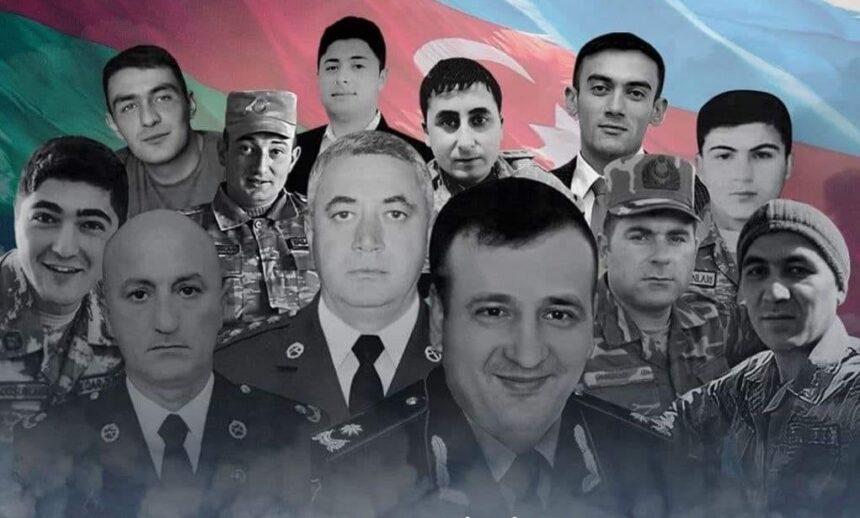
The battle for the Garagaya height, the death of General Polad Hashimov—who was posthumously declared a National Hero of Azerbaijan—turned those four July days into a period when the entire country lived through the frontline news.
Today, thanks to archived briefings from the Ministry of Defense and media reports, it is not difficult to reconstruct the timeline of events. As was logical, the July battles ended without significant territorial shifts. Azerbaijan repelled the attack but did not cross into Armenian territory—likely ruining Yerevan’s calculations that such a move would trigger CSTO intervention.
The clashes erupted hundreds of kilometers from Karabakh and the then-occupied Azerbaijani lands—on the official Azerbaijan–Armenia state border. This fact alone serves as compelling proof that Armenia’s actions were outright aggression against Azerbaijan—not any kind of “self-determination of Karabakh Armenians.” It is also noteworthy which section Armenia chose to attack.
Strictly speaking, the region had already known war since the early 1990s. The tragedy of the village of Baghanis Ayrum—referred to as the “Azerbaijani Khatyn” before the Khojaly massacre—and the promises of Armenian experts to repeat Khojaly’s fate in Azerbaijani villages were grim realities. But never before had the clashes reached such scale. And the reasons are clear. This is where Azerbaijani export pipelines and strategic railways to Georgia run closest to the border—through a narrow corridor between the frontier and a reservoir. Yerevan, it seems, was still intoxicated by its territorial gains of the 1990s. As subsequent events showed, they had learned little from the April 2016 clashes and believed they could achieve a strategic goal—cutting off Azerbaijan’s export routes—with minimal bloodshed.
By December 2020, the Southern Gas Corridor was set to go online, and Armenia’s well-known backers—who had no interest in Azerbaijani gas entering the European market—likely gave Yerevan the green light. Especially considering that Russian arms flights to Armenia began just before and during the July clashes. Later, Russian Foreign Minister Sergey Lavrov would be forced to admit that the clashes were sparked by Armenia’s attempt to advance about 15 kilometers. But it failed. Armenian aggressors could not break through the Azerbaijani defenses.
Yet perhaps the real consequences of the July battles played out elsewhere.
On July 15, Baku held farewell ceremonies for General Polad Hashimov and Colonel Ilgar Mirzoyev. That same day, the youth of Baku took to the streets, demanding an end to Armenian aggression and the occupation of Azerbaijani lands. A massive demonstration—despite the attempts of provocateurs to derail it, which, let’s be honest, did happen—marked a turning point. After July 15, enlistment in military reserve units began, as Azerbaijani youth made it clear: the new generation had no intention of tolerating the occupation. They were not just demanding liberation—they were ready to fight for it.
Of course, back in July 2020, Azerbaijan was not in a position to hand out rifles on the square and form volunteer brigades on the spot. The country had moved beyond that type of warfare. But the position shown by the younger generation in July 2020 would fully reveal itself just a few months later—in September—when, after failing at the border, Armenia still learned no lessons and launched a “new war for new territories.” And lost again. It would attempt a revanche—and be crushed decisively.
It became clear that the new generation—young men and women who had grown up never having seen Shusha, Kalbajar, or the Khudafarin Bridge—were ready to fight for these lands. That Azerbaijan did not just have exemplary units, but a truly professional and highly motivated army. And that the 1990s would not be repeated in the region.
Unfortunately, some realized this far too late.