
A look at modern hacking and hacktivism
“The question that most engaged pre-Protestant Church Fathers, in the wake of Augustine, was, Why did God create the world? From a pre-Protestant viewpoint, this was a genuine problem: logically, the pre-Protestant God would have valued leisure so highly that he would not have bothered to create anything.”
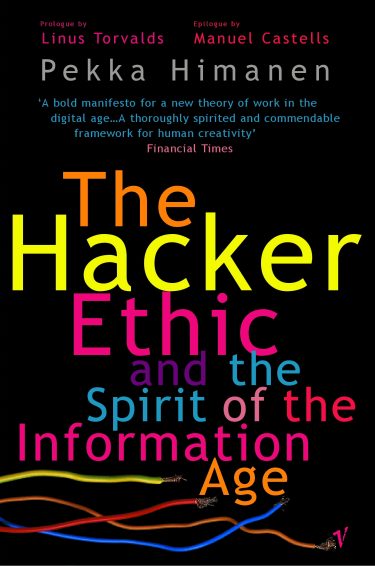
Written by philosopher Pekka Himanen and published in 2001, The Hacker Ethic and the Spirit of the Information Age offers an unexpected perspective on modern technological society and hacktivism.
I must admit that I have been interested in information technology for almost two years, and before reading the book I expected it to be a research paper with many examples of popular hacker attacks, complex technical terms, as well as an analysis of the ethics of all things hacking. But I have to say, I completely misjudged it. As the fragment quoted above shows, this book makes many references to religion, philosophy, politics and history, offering the reader not only intellectual pleasure, but also a broader perspective on hacking and hacktivism.
The scientific community in Azerbaijan in general is not very interested in the field of information technology from the point of view of scientific research. Although IT professionals provide the information needed for software to a small circle of programmers through small blogs or videos, but research and articles in this area are not widely available to the general public. In addition, the analysis of the social, psychological, and philosophical aspects of this field is not very common, and I have come across next to no analysis of these topics by social scientists. Since programming is seen by many as a practical, apolitical, and pragmatic field that “promotes” antisociality, we can detect a false approach to it in intellectual circles. Himanen’s book allows us to break down existing stereotypes and see a completely different world.
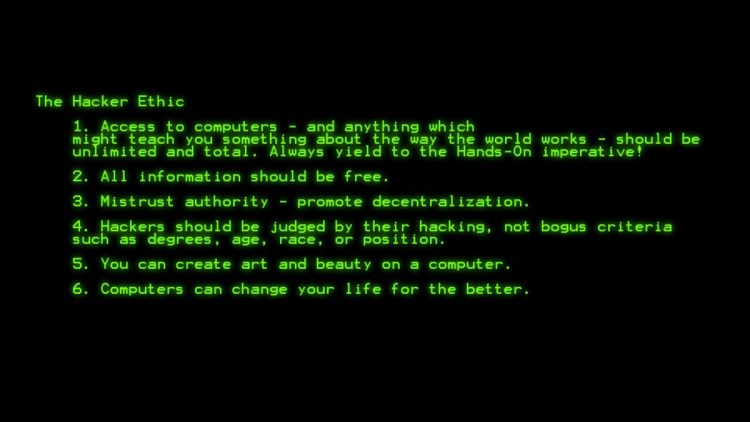
By “hackers” this book does not mean crackers, people often portrayed in black hoodies, against the digital rain background familiar to us from the movie The Matrix, those who destroy websites and technical systems. In modern times, the term “hackers” is very often incorrectly used to refer to cyber criminals. By hackers, the author means technology pioneers and enthusiasts who constantly contribute to the creation and development of open-source software, free and generally accessible technologies, and who see information sharing as a benevolent act. While this brief explanation of mine is not perfect, it does something to explain the broader concepts that the author covers when talking about hacker ethics.
The book elaborates on the seven values of the hacker ethic: passion, freedom, social worth, openness, activity, caring, creativity. Throughout the book, the author also draws a comparison between them and the seven values of the Protestant work ethic explicated by Max Weber. Weber, who saw the spirit of capitalism in Protestant ethics, focused more on the position of Protestantism, which brought human labor to the forefront, and explained the emergence of industrial and scientific revolutions by this factor. According to Himanen, this was completely different from pre-Protestant Christianity, because while the Protestant ethic celebrates Friday, pre-Protestant ethic celebrates Sunday and the Sabbath. More specifically, in pre-Protestant Christianity, Sunday was considered the day when God created the world, as well as the day when Jesus Christ rose from the dead and ascended to eternal rest in Paradise. This is why Sunday was considered the first day of the week in that period.
Before Protestantism, pious Christians described hell as a place of eternal torment and paradise as a place of permanent pleasure and rest, while Protestantism opposed this concept. Expulsion from Paradise was not considered a loss. God planted a forbidden tree there for a reason—the sweat of the brow was the most valuable gift and lesson given to human beings.
But hackers want neither eternal rest nor eternal toil. Eternal pleasure is as uninteresting as eternal work. According to Linus Torvalds, one of the co-authors of the book and the creator of the Linux operating system, the motives of entertainment and social life urge hackers to set out on a quest for a completely different path. Himanen, on the other hand, compares creativity to a lamp that illuminates this path.
Creativity is one of the main forces behind the success of the hacker community, and the joy that comes from this process motivates them even further. Hackers point to Genesis as an example of God’s creativity. If Paradise is quiet, empty and full of pleasures, it is not the best place for hackers. It is very likely that the information revolution, which began in the second half of the twentieth century, was led by a mindset that strengthened interest and encouraged creative pursuits.
In my opinion, one of the most important factors influencing the formation of hacker ethics is the socio-political situation of the period when the rapid technological development began. Open-source programming emerged with the left-wing ideology that was popular in American universities during the Cold War. Richard Stallman, the founder of the Copyleft practice against intellectual property rights and software licenses and one of the pioneers in the field of programming, could be considered a Marxist in the field of IT because of his radical leftist views. However, this did not mean that the hackers who supported these ideals were absolutely opposed to money and capitalist society. These people, who lived a good life, simply saw and see money as a means to protect their personal freedom, to do what they loved, and to benefit society. Himanen himself says that hackers who live according to the work, money and network ethics deserve the highest respect in the community and can fulfill themselves.
Finally, The Hacker Ethic and the Spirit of the Information Age is an interesting work that demonstrates the values of the hacker ethic and raises philosophical questions about the meaning of life. The book also seeks to dispel the widespread stereotype of hackers as sociopathic introverts who think only of coding. Contrary to this stereotype, real hackers are people who value collaboration for the common good, openness, care, and entertainment, and their role in shaping the work culture and socio-political change in the modern world is undeniable.
Aze.Media
Source: The Hacker Ethic and the Spirit of the Information Age by P. Himanen, 2001.