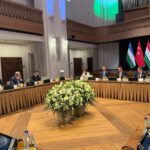
There is a harsh phrase in the theatrical world: the most pitiful sight is that of aging actors who have already left the stage. They still consider themselves leading stars, yet in reality they are capable only of creating a crowd in the theater foyer. Diplomats are rarely spoken of in such terms. However, the “fighters of the diplomatic front” who try to keep long-obsolete international formats afloat often create an even more pitiful impression — not on a personal level, but institutionally.
International politics is fundamentally pragmatic. This is also true when it comes to international cooperation formats. They are created under specific circumstances, based on shared interests, and they exist only as long as those interests remain relevant. When those interests disappear, the structures dissolve and are replaced by new ones. Yes, outdated formats may linger for some time, hosting meetings and negotiations, but this does not change the overall reality. One such outdated structure is the Commonwealth of Independent States (CIS).
Today, the CIS gives the impression of an amorphous formation capable only of organizing informal summits. Yet at the time of its creation, Russian state strategists had truly grand ambitions for the organization. Moscow actively pushed the idea of “unified CIS armed forces,” implying that the former Soviet republics would not create their own national armies. The Khojaly genocide, involving the participation of the 366th regiment, occurred at the peak of these discussions, and it is difficult to rule out the possibility that Moscow sought to demonstrate to Azerbaijan — and through Azerbaijan to other defiant republics — that national security structures would be unable to protect their citizens if needed. Plans also included a unified air defense system, a single currency, Russian border guards protecting “external borders,” and transparent internal borders. Today, little remains of these plans except Russian border guards stationed along Armenia’s borders with Iran and Türkiye.
In the 1990s, both Moscow and the West seriously considered the possibility that the CIS would become the framework under which the former Soviet republics would merge into a new confederation or federation. Publicly, the organization was presented as a “civilized divorce,” but in reality, repeated attempts were made to establish supranational structures within it. Even after closer integration formats such as the Eurasian Economic Union (EAEU) and the Collective Security Treaty Organization (CSTO) emerged — and the CIS itself effectively entered a vegetative state — Moscow continued trying to introduce supranational elements, even in seemingly harmless areas such as the teaching of the Russian language.
Perhaps most importantly, the CIS has long been perceived as a Russian “sphere of interest.” Or, as former Russian Foreign Minister Andrei Kozyrev once described it, a “post-imperial space” where international law operates with significant reservations.
Today, Moscow is witnessing deeply unfavorable outcomes in what it once considered its domain. Following Russia’s military aggression in 2008, Georgia withdrew from the CIS. Ukraine left after the annexation of Crimea. Moldova is preparing to exit. Kazakhstan has not yet reconsidered its participation in pro-Russian alliances, but tensions with Moscow are clearly rising, largely due to open territorial claims regarding northern Kazakhstan. Tajikistan has summoned the Russian ambassador to its Foreign Ministry and issued a protest note over the persecution of its citizens in Russia. In Uzbekistan — much to Moscow’s dismay — participants of the national movements of the 1920s and 1930s, once labeled by Soviet and Russian propaganda as “Basmachi,” are being rehabilitated.
Most importantly, diversification in both politics and economics is gaining momentum across the region. What can Moscow offer in response? Investments — amid sanctions and its own economic challenges? Hardly convincing. Security guarantees — after the failures in Ukraine and against the backdrop of threats to launch a second “special military operation,” this time against Azerbaijan and Central Asian states?
Meanwhile, other international actors are strengthening their positions. The Organization of Turkic States is gaining influence. China, the European Union, and the United States are cautiously but steadily advancing their interests. Russia’s influence is eroding at a pace resembling the collapse of a breached dam.
Against this backdrop, Azerbaijan also has much to consider. Until recently, neither officially nor unofficially did Baku speak about leaving the CIS. Today, however, the situation has changed. A watershed moment was the tragedy involving the AZAL flight reportedly shot down by Russian air defense. Air defense systems can make mistakes, but what defines a system is not the error itself, but the response to it. Moscow initially promoted false explanations involving “bird strikes” or an “onboard explosion,” later shielded key individuals from accountability, and ultimately closed the criminal case altogether. In response, President Ilham Aliyev has already refused twice to attend CIS summits.
There are also long-term strategic realities. Azerbaijan’s closest allied states — Türkiye and Pakistan — are not members of the CIS. Nor are many of Azerbaijan’s leading economic partners. The regional strategic cooperation triangle of Azerbaijan–Georgia–Türkiye functions successfully without CIS involvement, with two of the three countries not belonging to the organization. Azerbaijan and the Central Asian states have their own cooperation framework, which evolved from a “5+1” format into a fully developed “Six” platform. The Organization of Turkic States also remains an increasingly important structure.
This inevitably raises a fundamental question: what practical purpose does the CIS serve for Azerbaijan, especially given Russia’s enduring ambitions within the framework? And has the time come for Azerbaijan to leave this platform altogether?
A. Shakur