
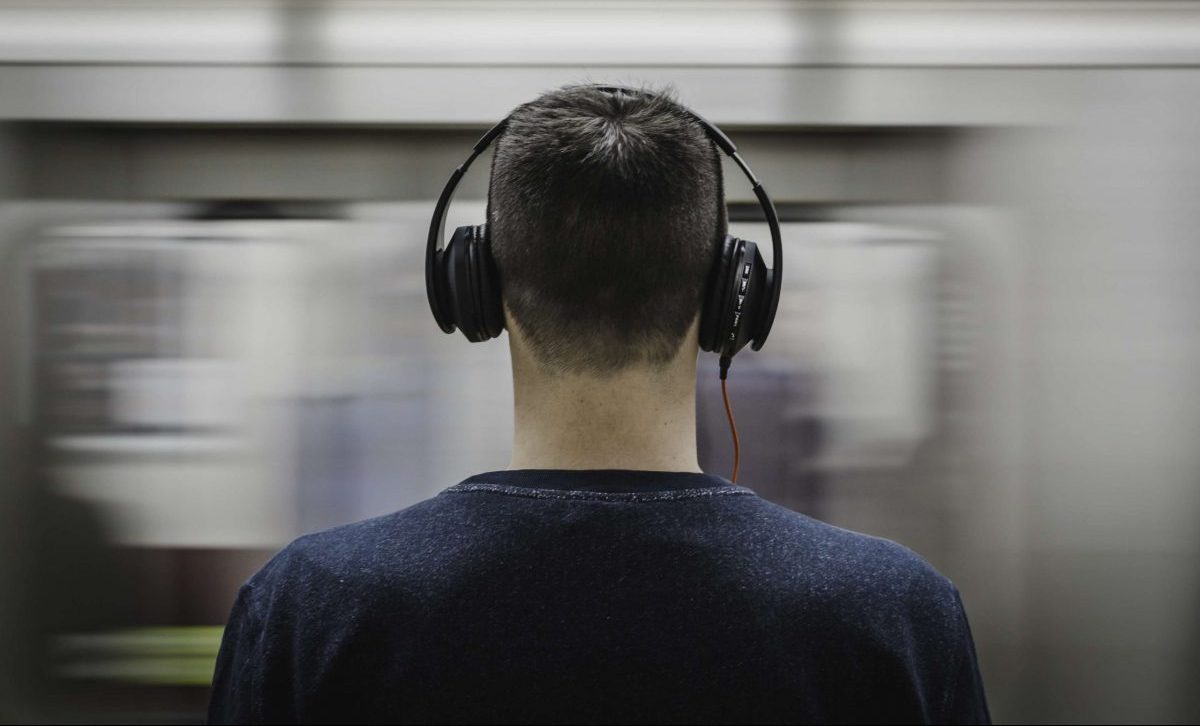
Scientists have been making observations and conducting research for centuries—not only in music, but also in physics, psychiatry, neurology, etc. There are lectures, videos and documentaries on listening to and perceiving music on the Internet. I would like to share a summary of what I remember from what I have read and seen and the opinions of reputable music experts, from my conversations with colleagues I know personally, and my own modest experience.
Let’s start with the fact that experts distinguish between passive and active music listening. However, some situations cannot be categorized like this definitively—it seems more accurate to call them an intermediate, “semi-active” state.
Passive listening is when we do not focus on the music, doing something else: sitting in a café while talking to someone, driving, or walking from shop to shop at a mall, and so on. Our attention is otherwise engaged, and music becomes a background for us. Since our brain receives and analyzes information that it prioritizes as more important, we do not pay attention to details about music that plays in the background. The roots of this possibly go back to prehistoric times. There could be cavemen in the Neolithic period celebrating a successful hunt with music and dance but not really thinking about music; perhaps many of them were like that.
However, since music was used in a very functional way in the lives of people from the beginning of civilization to the twentieth century, its use for purely background purposes could be considered an unimaginable luxury. After all, for such a long time, music existed only in the form of live performance; to listen to music, you had to get a group of musicians, and most could afford it only on important days, for festivities and other ceremonies. The upper classes, the elite invited musicians to listen to and appreciate music, while the lower classes mainly hired them to perform at festivities as dance accompaniment or, in some societies, at funerals and wakes.
But it is safe to say that the passive attitude towards music has always worried musicians and music lovers. Regardless of historical period, there have always been complaints about people’s lack of attention to music, deterioration of people’s tastes, and the lack of people who can appreciate music in general. However, if we look at the issue from a broader historical perspective, there have in fact always been those who can appreciate music and those who do not. Clearly, the ability to understand and appreciate music, like other skills, can be learned and refined.
In the twentieth century, the development and spread of recording technology, as well as radio and television, gradually made music accessible to all. It was now possible to listen to music everywhere. And as the years went by and the audience grew, it was possible to listen to music at increasingly higher volume, so people unavoidably listen to music more often than in previous millennia.
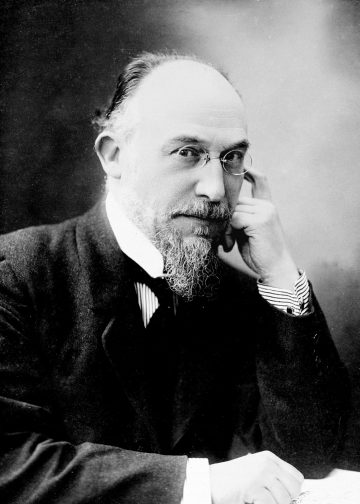
Let’s remember an event of great importance in terms of the impact of this process on the history of music. In the 1910s, when recording technology was new and considered a luxury, and the number of passive music listeners was still growing insignificantly, the French composer Eric Satie (1866-1925) decided to write music for passive listeners. Satie claimed that special music should be written for those who do not listen to music. According to him, the music he calls musique d’ameublement (furniture music) should become an integral part of interiors, just like furniture; salons, banks, shopping malls and other establishments, as well as meetings and events should have their own music.
He repeatedly demonstrated this idea. Rumor even has it that when the musicians in one of the Parisian salons began to play “furniture music” composed by Satie, the author was distraught to see that the people stopped talking one by one and paid attention to the music. He walked around the room, approaching everybody and saying, “Don’t mind the music. Keep talking.” Although Satie’s idea was considered extravagant at the time and was later forgotten, it can be seen as the composer’s prediction for the future of civilization.
The next person to bring this idea to life was the 20th century American composer John Cage (1912-1992). Cage learned of this idea through a friend of Satie’s in Paris in the 1950s, and since it coincided with Cage’s own view of music, he began to promote it. Now, as we know, ambient music that accompanies us everywhere is already an established genre; there is even a separate award category for it in many prestigious music competitions. Satie would probably smile sarcastically if he could see us being “supplied” with music wherever we go today.
What is said about the process of passive music listening can be concluded by emphasizing an important issue. Passive music listening does not mean that the listener has no respect for music or that the quality of the music is low. We have to listen to the music around us almost every day, especially in the last century, and it is beyond our control.
We can’t blame a customer in a café for disrespecting the music playing there, because they actually came there to talk to someone, which is more important to them. The music that acts as a background to their conversation may be a masterpiece, but it is played there according to the taste and decision of the person who compiled the playlist for the café. In cafes and other food outlets, background music is mainly used so that people would not hear people at other tables talking. At the same time, there is no doubt that when music plays in the background, it inevitably affects the mood of those in the place where it is played.
Before talking about the highest level of interaction between music and the listener, we need to touch briefly upon the “semi-active” state. One clear example of it is dance. The history of dance, one of the oldest human activities, is said to precede that of language. It is possible that people communicated with each other by dancing before they started using words. Experiments show that not only humans, but also many other living beings can be hypnotized by a constantly repeating rhythmic motif. In this regard, the roots of human dance instincts are incredibly deep. While dancing, one does not feel the need to go into the details of music as a listener. The main expectation is the ever-continuing pulse or rhythm. Thus, dance can be called “listening to music with feet”. Meanwhile, moving our toes (sometimes involuntarily) while listening to music can also be considered an element of dance. Of course, as in all other human activities, there are highly artistic forms of dance, including ballet, which meets the highest standards of both dance and music.

Finally, on to the most “elite” type of music listening—active listening. The process of actively listening to music is following the “events” within music with maximum concentration. It happens when the only thing we are doing is listening to music: not driving, not talking, not reading, not writing, not browsing the Internet, etc.—just listening. We are not even daydreaming. During active listening, we “read” music as if it were a book, or “watch” it as if it were a film. Our brain “scans” and “analyzes” music and “draws conclusions.” Just like in a book and a film, “events” in music are revealed gradually. Just like with a book or a film, we are surprised by twists and paradoxes, we accept convincing elements and do not believe less convincing ones, we get excited about certain “events”, and thus, as our listening experience grows, we get better at distinguishing between good and bad in music.
But since unlike literature, painting, film, and other forms of art, all these processes take place on an invisible, intangible plane, i.e., in our imagination. Many thinkers called music the highest form of art, and the pleasure we get from our brain perceiving music and recreating it in our imagination—the highest of aesthetic pleasures.
Can anyone be an active listener of music? Yes, virtually anyone. The first skill it takes is a sense of ordinary music, that is, being capable of distinguishing between different notes and, if necessary, reading those notes. Almost all people can do that; there are probably as many of those who cannot as colorblind people who cannot distinguish between different colors.
Also noteworthy is the influence of “native” and “foreign” genres on the listening process. For natural reasons, we can empathize more quickly with the music genres of a familiar culture. It is a kind of language skill: we quickly understand a language we know well, we partially understand closely-related and neighboring languages, but in order to understand foreign languages, we need to get used to them and learn them little by little. The timbre of the instruments also plays an important role here: music played on familiar musical instruments feels clearer to us than that played on foreign instruments.
Although I used the word “elite” for active music listening in quotation marks earlier, there are enough reasons not to use them. First of all, in contrast to doing other things with music playing in the background, or to dancing, active listening creates a higher level of contact between a person and music. Besides, as I already said, music is considered the highest form of art because it is an abstract art in itself that is enjoyable on an imaginary level. Finally, the third and most common reason is that historically, active music listeners belong to the elite.
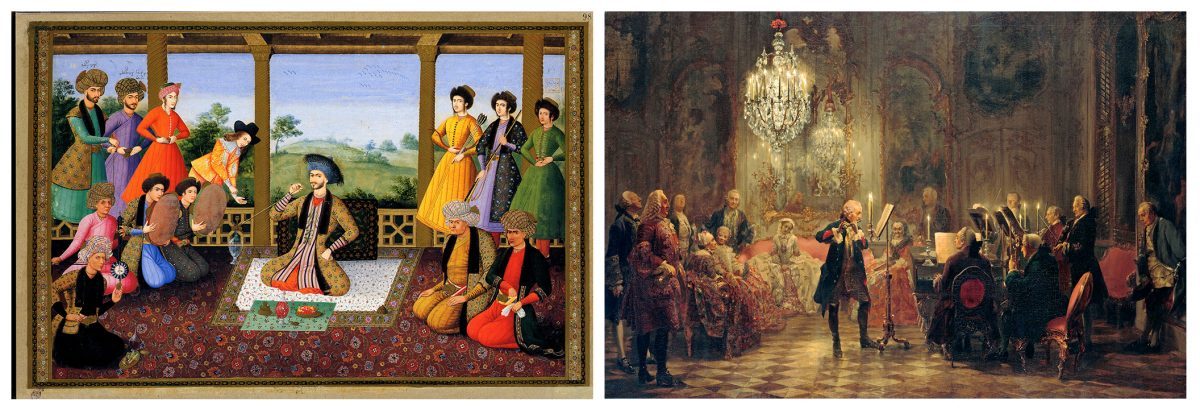
Historically, art in general has been the occupation of the elite. Aristocrats were able to get the best education, including education in arts, both in the West and in the East. It is their deep knowledge of various fields of science and art through this education that developed their understanding of what was important and valuable in these fields, and what was not. Michelangelo, Rembrandt, Kamaleddin Behzad, Mozart, Beethoven, Jabbar Garyagdioglu—all of them were the choice of the aristocracy of their time and geography. Aside from that, active music listening requires spare time, and, the lower classes, who had to work hard from dawn to sunset, did not have such a luxury. Even today, to many ordinary working people, music means, first of all, dance songs, songs based on simple musical ideas. Again, there have always been people in all societies who view music as an intellectual aesthetic pleasure, as well as those who are content with only the instinctive emotional impact.
Although there are many criteria for evaluating music in active listening, they can be grouped into two main ones: music and performance. There is music in all genres that can be evaluated by these criteria, but for clarity, let us take examples from only two: classical music and jazz. Since classical music is almost entirely “composer music”, the main evaluation criteria are the components that make up music: melody, harmony, form, etc. (There is a story that when asked about his profession at a border checkpoint, famous Russian-American composer Igor Stravinsky said that he was a “music engineer”.) Performance is certainly also important in classical music, especially considering that the degree to which we can become “friends” with new genres depends on how good the performance is. And when it comes to jazz music, melody, harmony, form and other components may be important, but the most essential of the genre’s requirements is improvisation, so jazz listeners focus on the performance aspect of the music.
In other words, if when we listen to classical music, it is as if we read a complete literary work, then when we listen to a jazz musician perform, it is as if we are talking to someone. In the first case, we usually evaluate the work, and in the second case, we evaluate how interesting our conversation partner is.
And finally, a couple of words about the “ritual” of active music listening. Listening to a good performer or band in a hall with good acoustics is believed to be ideal. Obviously, this is not a luxury one can have every day. But the development of electrical engineering and information and communication technologies, has made it accessible to many, like all other luxuries. It is possible to create these ideal conditions at home: all it will take is a quality sound system or headphones. Stationary—if we use a sound system—to ensure silence and focus our attention. I must say that most people who are able to appreciate music say that they prefer listening to music with their eyes closed. According to them, any information received by the brain through the eyes can interfere with the perception of music and the maximum connection with it.
And now, the question that probably everyone wants to know the answer to: how do we recreate music in our imagination? Since every person’s imagination is unique, there is no definitive answer. Obviously, it is relatively easy for professional musicians to answer this question: at least they can visualize the points where the notes are located on the instrument, and some (if they were fortunate enough to have a good solfeggio teacher) know how to write sheet music, can visualize it and pass to each other.
But the paradox is that perhaps because this knowledge in some sense fits the imagination of professionals into certain frames, a non-musician’s imagination recreates music in more unique and unexpected ways. From my conversations with non-musicians, it became clear that while listening to music, in the imagination of some of them, music is either “built” as a monument, or “drawn” as a painting, or “woven” as a carpet; some “watch” it like a film; the imagination of some shows unfamiliar figures, and so on.
There have always been attempts to visualize and materialize music, and clearly, that all this has been very subjective. One of the most prominent figures in this field today is the American composer and programmer Stephen Malinowski. He “shows” (classical) music with computer graphics and shares it on his YouTube channel. But since he approaches it as a professional musician, with a “logic of notes”, we cannot call this recreating music in the imagination. He simply visualizes the notes skillfully and tastefully, presenting the layers in the music with colored shapes. At any rate, the comments on the videos on the YouTube channel show that this “note-faithful” version of the visualization is an incredible help for even non-musicians to imagine music.
Here is a visualized version of a famous piece of music from Malinowski’s YouTube channel.
Aze.Media
If you want to contribute and have specific expertise, please contact us at editor@aze.media