“We wanted civil society but got NGOs,” International Alert’s Caucasus Director, Marina Nagai, quoted an Eastern European activist as saying in 2018, perfectly summing up the dichotomy between the sphere and the public it is meant to serve and represent. A 2013 briefing paper, How to Finish a Revolution: Civil Society and Democracy in Georgia, Moldova and Ukraine, by Orysia Lutsevych, Deputy Director of the Russia and Eurasia Programme at Chatham House, went even further.
“Western-funded NGOs form an ‘NGO-cracy’, where professional leaders use access to domestic policy-makers and Western donors to influence public policies, yet they are disconnected from the public at large,” it read. “New civil voices use more mass mobilisation strategies and social media, and are visible in public spaces. They are more effective in influencing the state and political society than Western-funded NGOs.”
Given the controversy surrounding the recent attempt to introduce a “foreign agents bill” in Georgia, criticism of Western-funded NGOs carries with it some risks, and while some fulfil their stated aims and objectives, many others do not. The point was particularly true prior to the 2020 Karabakh war and has become even more acute afterwards with some simply not visible at all and others even opposed to the terms of a long-anticipated peace agreement between Armenia and Azerbaijan.
South Caucasus Wacken Metal Battle
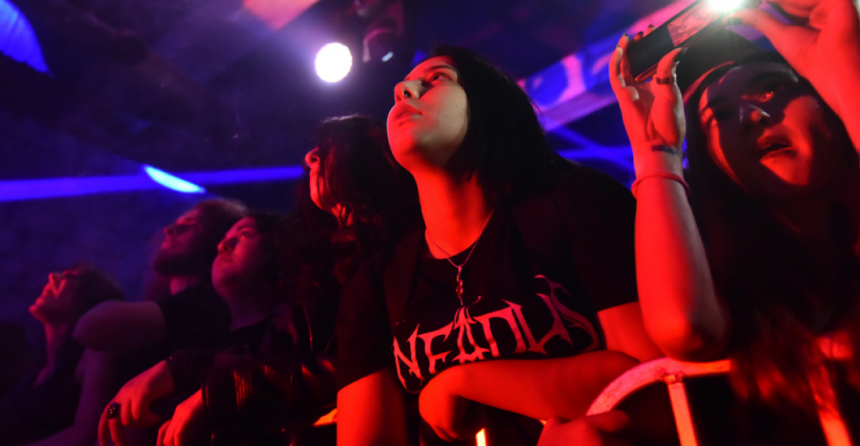
In a sense it has become a case of putting too many eggs in one basket and this reality was hammered home just two weeks ago in a very unlikely situation – an annual music competition that brings together heavy metal bands from Armenia, Azerbaijan, and Georgia together on one stage in Tbilisi. Hardly Eurovision, the Wacken Metal Battle has been held in the South Caucasus since 2012. The winner will represent the region at Wacken Open Air, one of the world’s largest heavy metal festivals held in Germany since 1990.
This year was the first time Turkiye also joined the competition.
“Metal Battle has successfully managed to unite people in the region without relying on grants or political slogans, unlike many other non-governmental organisations that have failed in their attempts,” Eric Hutchence, the organiser, wrote on Facebook on the eve of the competition held on 20 May. “Despite not having huge sums of money, Metal Battle has been able to bring people together through their music and shared passion for metal,” he continued.
“This serves as a reminder that true unity can be achieved by focusing on common interests and connections, rather than relying solely on funding or political agendas,” Hutchence opined.
This criticism might sound unfair given that there are some notable exceptions to the rule in the non-governmental sector, but too often NGO activity has become politicised and partisan, focusing not on what is likely or inevitable, or how best to explain or improve outcomes, but what individuals of certain political persuasions want to happen in order to fit in with often narrow ideological visions. The groups are non-inclusive and seem to never represent a cross-section of society.
“Music is also used to bring people together and foster greater understanding”
But could Track III diplomacy efforts that involve actual citizens and communities themselves compensate for this unfortunate reality? The recent Wacken Metal Battle Caucasia and Turkiye, along with some other non-politicised regional projects, demonstrate that they can.
“Music is also used to bring people together and foster greater understanding, that is, connect with people through music, public concerts, and interactive performances with local musicians,” read one academic paper, Processes Of Track Three Diplomacy In The Management Of Cross-Border Security Relations Between Kenya And Somalia. “There is also the use of a wide range of academic, culture, professional and sports exchange programs.”
Mihran Azraille Aghuzumtsyan, guitarist with Armenia’s Wacken entry, Perfect Legacy, appeared to agree and told me after the event that more were necessary so that people from all four countries could come together without the shadow of politics hanging over them. The band, incidentally, will perform at Peacecore Fest in Berlin in September under the banner of “Reconciliation, Peace, Friendship.” Greek and Turkish bands will also take part.
This was a theme I explored in a previous opinion piece here and Hutchence’s Metal Battle in Tbilisi reminded me of it once more.
A multi-track approach to the Armenia-Azerbaijan peace process needs to emerge in order to make any peace more sustainable
None of this negates the importance of traditional approaches to conflict resolution. Indeed, the only tangible progress in the normalisation of relations can arguably only come from Track I diplomacy with Track II diplomacy intended as a complementary process rather than an attempt to lead it. Sadly, that appears to have been forgotten over the past two decades and Track 1.5 initiatives also remain sorely lacking.
As movement towards an agreement between Armenia and Azerbaijan gathers momentum, a multi-track approach needs to emerge in order to make any peace more sustainable. Governments, local communities, and the non-governmental sector should be partners and not rivals. This was a point that also appeared to be made in an interview I held last month with LINKS Europe’s Dennis Sammut on the importance of a whole range of confidence building measures that should be implemented.
“We have been encouraging stakeholders, whether it’s the local government, whether it’s local organisations, whether it’s the international community, whether it’s foreign governments, whether it’s international organisations, to pick up these ideas and run with them,” he told me.
“Our approach is, yes, we work on bottom up, we’re not a government organisation, we’re not working with the governments directly, but as soon as we start working we build a channel of communication with the government, because we need to tell the governments what we’re doing – not to inform them but to influence them. […] Our message is that nobody is 100 percent in control of the situation and something can happen tomorrow and it will derail everything,” Sammut says.
“But also as a human being, you know, I open my computer in the morning and read an Azerbaijani soldier was killed here, and an Armenian soldier was killed there, and as a human being I feel a responsibility. We have to stop this.”
Onnik James Krikorian is a journalist, photojournalist, and consultant from the U.K. who has covered the Armenia-Azerbaijan conflict since 1994.