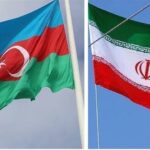
However, history is replete with examples where painstakingly negotiated peace treaties failed to bring about lasting peace, often leading to the resumption of conflicts. It is crucial to thoroughly consider this aspect in the present peace negotiations between Armenia and Azerbaijan. We need a peace treaty that addresses the underlying causes of the conflict, minimizes, if not eliminates, the chances for the resumption of hostilities, and, towards this end, includes monitoring mechanisms that should be established to ensure compliance and accountability from the parties.
Trust: once broken, it’s hard to restore
The relationship between Armenians and Azerbaijanis was not always marked by hostility. For a significant part of history, these two peoples lived in a state of friendship, often sharing familial ties. These friendly relations persisted during the period of the Soviet Union, serving as a testament to their shared past of coexistence.
A similar situation existed in the former Nagorno-Karabakh Autonomous Oblast (NKAO) and surrounding regions of Azerbaijan, including the Kalbajar region where my family lived until 1993, when the region was occupied by Armenia. Despite the fact that the Armenian population in the region was less than 1 percent of the total population during the Soviet era, local Azerbaijanis maintained amicable relations with the Armenians. I remember my parents recounting stories of how the Armenian craftsmen were highly regarded among the Kalbajaris, who frequently invited them to construct their homes and other structures.
These historically-rooted connections were the primary factors that led Azerbaijanis to be caught off guard by the Armenian nationalists who, first in 1987-1988, advanced a territorial claim to NKAO and then in 1992 launched a full-scale war to invade Azerbaijani territories. Indeed, most of Azerbaijanis in Karabakh and surrounding regions, including my parents in the Bashlibel village of Kalbajar, were not prepared to the Armenian assaults.
The residents of Bashlibel were uninformed of this situation in the first days of April 1993, because the villagers had not had a stable means of communicating with the outside world since the electricity supply was cut by Armenians more than a year ago in January 1992. Nor did they believe that their Armenian neighbors would take up arms, launch a war, and forcefully expel them from their homes. This was part of the reason that local Azerbaijanis continued to live in Kalbajar as if nothing had happened, even after the blockade of the Kalbajar region in the wake of Armenia’s 1992 occupation of the former NKAO and the cities of Shusha and Lachin.
On April 2, 1993, Kalbajar’s residents, then approximately 60,000 people, woke up to the horror of being surrounded by the Armenian armed forces. The Armenians gave local Azerbaijanis only ten hours to leave the area. The alternative was being killed or, worse, taken hostage. Not everyone managed or wanted to leave their homelands. Hundreds of people were killed, tortured, or taken hostage. The Kalbajaris paid a rather high price for their miscalculation of the intentions and territorial ambitions of Armenia.
“Duality of the Armenian consciousness” and security threats it poses to the neighboring countries
30 years passed since the occupation of the Kalbajar region by Armenia. The region was liberated in November 2020 in accordance with the outcomes of the Second Karabakh War. Soon after this war, Baku and Yerevan launched peace talks and started negotiations on a peace treaty which is going to be oriented around the principle of mutual recognition of each other’s territorial integrity. It is, however, imperative that the peace treaty goes beyond mere words on paper and has a practical impact on the ground. Thus far, too much attention is given to the rights and securities of Armenians in Karabakh rather than to concerns of Azerbaijanis. It is therefore essential to address the legitimate problems and security anxieties of the Azerbaijani people, particularly those who were displaced from the formerly Armenia-occupied territories.
One major reason for the security concerns of the Azerbaijani people is related with what the Armenian Prime Minister Nikol Pashinyan calls “duality of the Armenian consciousness”. Making critical comments about the coat of arms of the Republic of Armenia in a speech at the parliament on the 15th of June, he highlighted the irrelevance of some elements (e.g., the picture of the Mount Ağrı/Ararat [Armenian name of the Mount Ağrı] that is located in Turkey) on the coat of arms and the implications of such a discourse and public thinking for Armenia’s political future. “Looking at the center [of the coat of arms], there is Noah’s ark on Mount Ararat, today’s territory of the Republic of Armenia is under flood, a lion that has not lived here in natural conditions in Armenia for a long time. And this issue that we are discussing is actually about each of us, about that duality that exists in each of us, historical Armenia and real Armenia”, the Armenian premier said.
It is an apparent attempt by him to wake up the nation and urge them to discard dreams for territorial expansion of the modern Republic of Armenia to what they believe the boundaries of historical “Greater Armenia”. The reactions to his statement by some members of the Armenian public and expert community, however, demonstrate that these territorial claims to Azerbaijan and Turkiye are deep-rooted in their consciousness and run the risk of taking over the political rule in the Republic of Armenia at an opportune moment in the future. In particular, those from the Armenian diaspora, who called Pashinyan’s statement “anti-constitutional”, look for an opportunity to bring “more nationalistic” leader to the governance of the country.
In my personal exchanges with the Armenian political experts at international events, none of those experts dared to acknowledge or endorse the statement of the Armenian premier that Karabakh is part of the internationally recognized territories of Azerbaijan. Some of them do not shy away from publicly recommending the Armenian leaders to delay the peace negotiations as long as possible and wait for a better geopolitical situation emerge – in which Armenia’s bargaining power would be stronger. One senior member of the former Armenian government once told me at an international event in the presence of mediators from the EU and Organization for Security and Cooperation in Europe (OSCE) that “tell your government upon your return that we will abolish all the deals you now reach with the incumbent government in Armenia as soon as they are removed from power”.
Needless to say that almost no Armenian, including Nikol Pashinyan, who boasts his endeavors to build a democratic society, speak about the return and restitutions of the rights of Azerbaijanis who lived in Armenia before the conflict. Though, the mutual exodus of the Azerbaijani and Armenian populations from the respective countries occurred during 1987-1991, the fair and just resolution of the Armenia-Azerbaijan conundrum requires the comprehensive approach.
If no demilitarization, then robust monitoring mechanisms and security guarantees
History can suggest some insights into how to deal with the polities with territorial ambitions and records of violent aggressions while ensuring the practical implementation of the peace treaty. For example, following World War II, at the initiative of the Allied leaders, both Germany and Japan underwent demilitarization as part of broader efforts to promote stability and prevent future aggression. In the case of Japan, the demilitarization process involved the dissolution of the country’s imperial armed forces and the adoption of a new pacifist constitution, known as the Article 9 Constitution,” which renounced war as a means of settling international disputes.
Demilitarization of the Republic of Armenia would have been surely the policy options of the Allied leaders if they were in the present situation Azerbaijan is in. Under the present circumstances and due to the biased support of some countries, such as France, to Armenia, such measures are not on the agenda, though they would have been decisive with a real contribution to regional peace and security.
Nevertheless, a peace treaty should still address the security concerns of the Azerbaijani side. Above all, it should make sure that the territorial claims to Azerbaijan and Turkiye in the legislative documents and state symbols of the Republic of Armenia will be removed. The treaty should be built on the fact that the deep-rooted territorial ambitions in the consciousness of the Armenian nationalists and their threats against Azerbaijan necessitate robust security guarantees. Such a treaty should include provisions that not only facilitate the return of displaced Azerbaijanis to their homes, amongst others, by urging Armenia to cooperate in demining the region, but also guarantee their safety and security with assurances that no aggression will take place in the future. Additional mechanisms should be established to ensure compliance and accountability with the provisions of the peace treaty.
Dr. Vasif Huseynov is a senior fellow at the Center of Analysis of International Relations (AIR Center) in Baku, Azerbaijan.