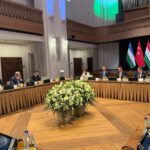
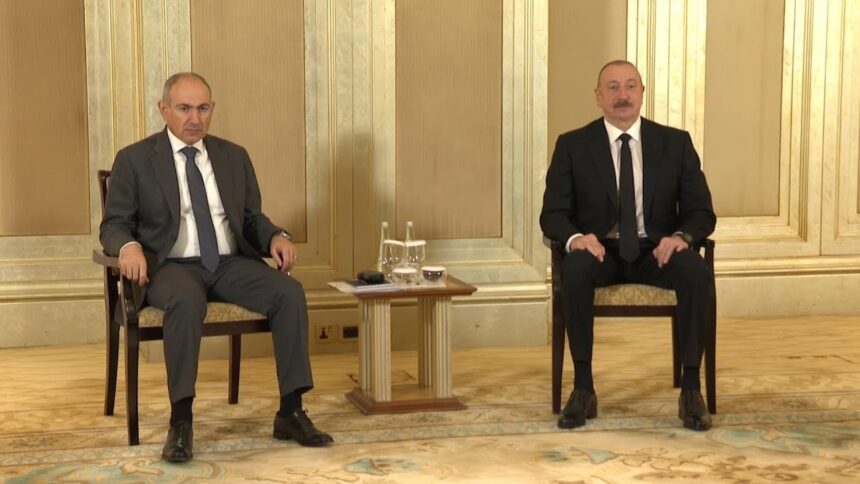
This was the first meeting between President Ilham Aliyev and Prime Minister Nikol Pashinyan in quite some time, indicating that even in the absence of high-level talks, contacts between Baku and Yerevan have not ceased. While few expected immediate or groundbreaking decisions, the very fact of the meeting — its participants and the scope of topics discussed — highlighted both sides’ willingness to move the peace process forward and achieve tangible results in the near future.
In matters of such importance, every detail matters. In this regard, the choice of location and timing deserves particular attention. The venue, proposed by Azerbaijan, is noteworthy. The UAE has hosted many key negotiations aimed at resolving regional conflicts. Moreover, Abu Dhabi is widely seen as a neutral actor — one that refrains from influencing the course or outcome of peace talks. This neutrality is essentially the UAE’s political trademark. At the same time, Abu Dhabi is considered a top partner in the region for both Baku and Yerevan. Azerbaijan enjoys strategic partnership with the UAE, while for Armenia, the Emirates represent one of its most important trade and economic partners, leading in bilateral trade statistics.
The trust both countries place in the host of the summit is a key indicator of the meeting’s potential success. Additionally, the relocation of peace diplomacy away from traditional international power centers toward a regional context suggests that Baku and Yerevan may be seeking to act based on their own national interests — rather than within the preferences of external players.
It is also important to note that the agenda of the meeting was proposed by Baku. However, this does not mean that Azerbaijan imposed it on Armenia. It is likely that Yerevan understands Baku’s concerns — including specific articles in Armenia’s constitution and the still-formal existence of the OSCE Minsk Group — and is ready to address these issues within the logic of the peace process. The sequence of how these issues will be tackled will likely become clear only some time after the meeting concludes.
A few days prior, Nikol Pashinyan, speaking at an event marking the 30th anniversary of Armenia’s Constitution, stated that the country needs a new fundamental law. He once again expressed the view that the constitution should reflect the “real Armenia” — i.e., Armenia as it exists today. In his characteristically ambiguous style, the Armenian prime minister implied: “This reality is as follows: the Republic of Armenia tells its citizens that the homeland and the state are no longer identical. Unlike all our previous history, our message must now be clear — and this message must be embodied in a new constitution, adopted through the free will of the Armenian people.” The implication here may be that the constitution should be limited to the territory of the Republic of Armenia and not reflect the interests of Armenians living abroad. By this logic, the revised constitution would omit any territorial claims against Azerbaijan. Whether this assumption holds true remains to be seen in Armenia’s future political actions.
The complexity of the negotiations lies in the broad scope of topics being discussed — including the most contentious one: the unblocking of regional transport routes.
Reports recently surfaced in regional and international media suggesting the possible involvement of an American private company in ensuring the security of the Zangezur Corridor — the strategic route intended to connect mainland Azerbaijan with its Nakhchivan exclave through southern Armenia.
These reports caused a stir in the region. The Armenian Prime Minister’s Office acknowledged that the matter was under review, though it refrained from commenting further. Azerbaijan, on the other hand, has maintained silence — signaling that Baku’s position on the matter remains unchanged. Azerbaijan has previously rejected any involvement of foreign companies in the security of the corridor, and continues to stress that such issues should be addressed without third-party participation.
This firm stance reflects Azerbaijan’s consistent view: the Zangezur Corridor is not merely a logistics project but a matter of national sovereignty and strategic security — and therefore cannot be subject to external oversight. The emergence of such reports may be an attempt at information pressure or a test of the parties’ reactions, particularly amid intensifying geopolitical competition in the region where Russian and Western interests increasingly collide.
In any case, the Abu Dhabi talks between the Azerbaijani and Armenian leaders represent an important step toward concluding a peace agreement. For the first time, the meeting took place without the involvement of external actors — in a neutral and symbolically significant setting. The key issues on the table — the status of the Zangezur Corridor, security, and a peace roadmap — underscore a readiness for bilateral dialogue. Both parties seem to understand that a successful outcome could mark a historic breakthrough for the entire South Caucasus. Azerbaijan has outlined its position, and Armenia has agreed to the proposed agenda. Whether Yerevan has the resolve to follow through and finalize the process remains to be seen — and the wait may not be long.
Ilgar Velizade