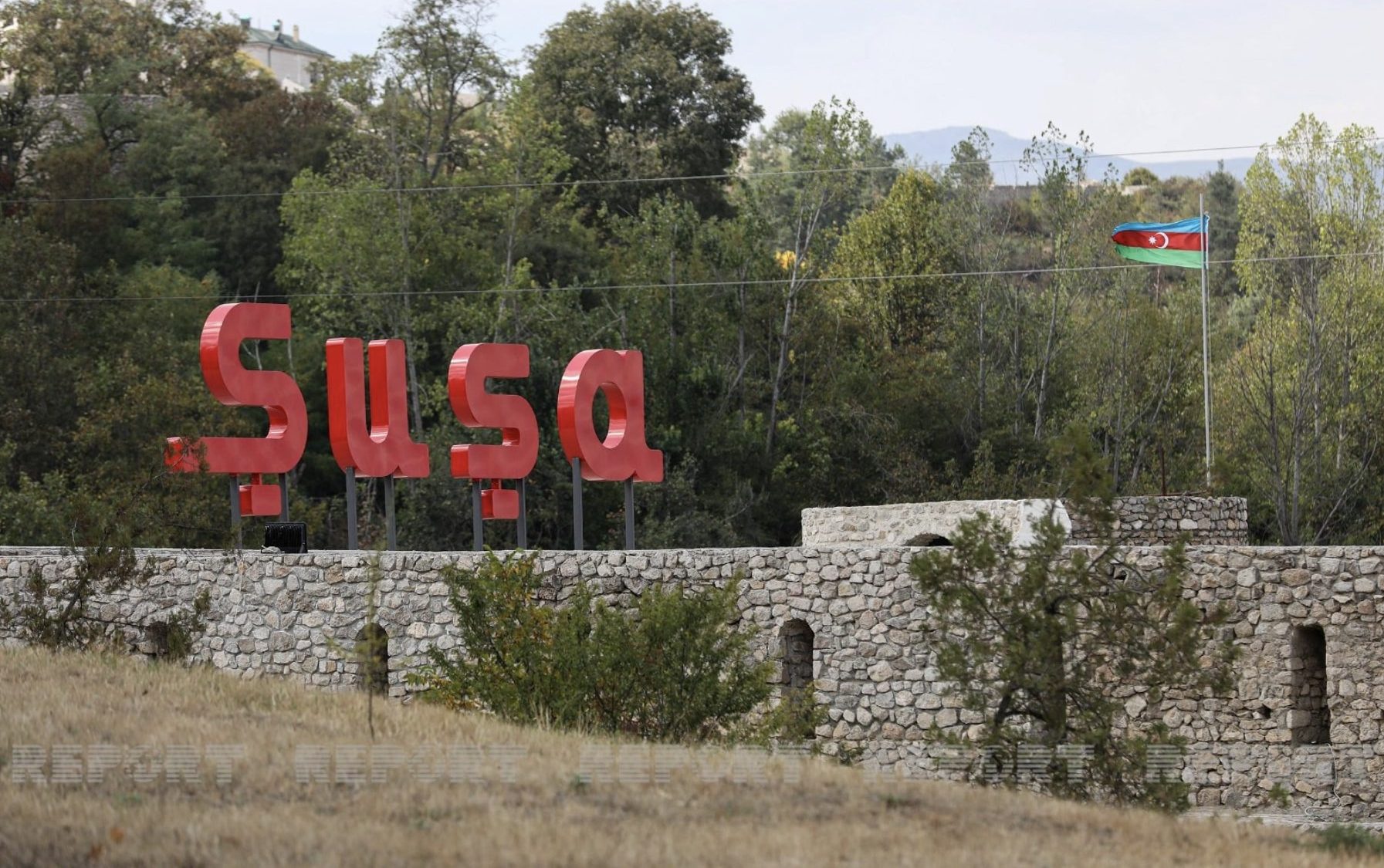
The road that connects Armenia with ethnic Armenians in Karabakh was temporarily closed to traffic by the temporary Russian peacekeeping mission on the site as a result of the protests by the Azerbaijani environment activists, non-governmental organization members, and volunteers against the illegal exploitation of mineral resources.
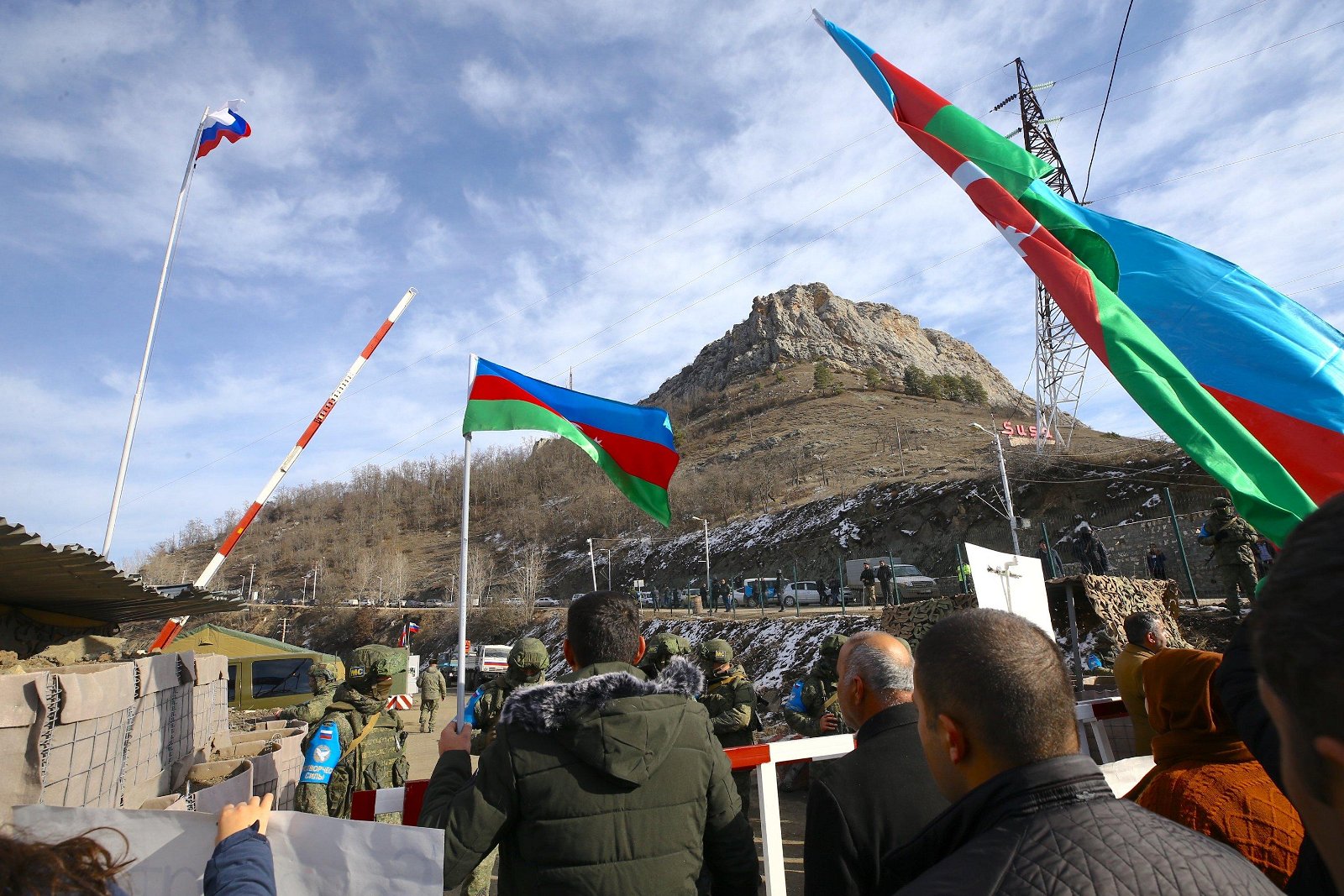
The two-day closure of the road catapulted mass hysteria among ethnic Armenians in Karabakh as they allegedly claimed being deprived of access to social services, as well as energy and food supplies which severed the life for “120,000 Armenians” currently residing in the region.
At first sight, the number could seem reasonable. However, looking back on events during and after the 2020 war between Armenia and Azerbaijan in the latter’s Karabakh region could put it under question.
When the Azerbaijan Armed Forces liberated the Azerbaijani territories once occupied by Armenia in the autumn war of 2020, the ethnic Armenian population, largely in the Karabakh region, resorted to mass exodus toward Armenia. Shortly before the end of the war on November 10, 2020, following the liberation of the Shusha city in Karabakh by the Azerbaijani forces, the mass departure gained a fiery momentum.
A Polish journalist, Witold Repetowicz, filmed a crowded road leading out of Khankendi [Stepanakert] on November 7 saying “thousands of cars were driving … to the mountains,” i.e. to Armenia since the surrounding territories have already been retaken under control by the Azerbaijani army. In the final days of the war, Khankendi was seen all but emptied with the last residents hastily preparing to leave.
Tysiące samochodów kierowało się wczoraj wieczorem ze Stepanakertu w góry. Tragedia tysięcy rodzin. To jest prawdziwy obraz wojny. pic.twitter.com/5cHSO5p0uV
— Witold Repetowicz (@WitoldRPL) November 8, 2020
Back then, the self-designed leader of the Armenian separatists in Karabakh, Araik Harutunyan, claimed that more than 50,000 Armenians left the region. However, he later denied his words. When the Azerbaijani troops recaptured Shusha, Harutunyan and his accomplices evacuated to the village of Veng (Vank) in the Kalbajar region, which was reclaimed by Azerbaijan on November 25, 2020, and those few who remained in Khankendi were given machine guns.
Various reliable sources published different numbers for the departing Armenians from Karabakh. The United Nations Sustainable Development Group (UNSDG) reported that nearly 90,000 ethnic Armenians left Karabakh for Armenia. As of May 2021, according to UNSDG, roughly 37,000 of them did not return back. The United Nations High Commissioner for Refugees (UNHCR) confirmed in July 2021 the same number of Karabakh Armenians (36,989) settling primarily in Armenia’s capital Yerevan and the other 10 provinces in a “refugee-like” situation.
Meanwhile, after the war, the temporary Russian peacekeeping contingent reported that more than 50,000 fleeing Armenians have been returned to Karabakh. However, the figure was argued by Azerbaijan’s President Ilham Aliyev who said it was not more than 25,000.
“We have fairly extensive and detailed information about the processes taking place there. We knew what was happening there even before the war … The actual number of residents there is 25,000. Other figures were also mentioned, suggesting that more than 50,000 people had allegedly returned there after the war. Possibly, but returning does not mean staying there,” President Aliyev said in July 2021.
“They have returned but then went back. Secondly, we have various technical means, satellites. We know the number of cars there. We see the movement of people. There are other objective means available to us, and if we take this as a basis, we know precisely how many people live there – a maximum of 25,000.”
In the meantime, some independent resources claimed that a certain portion of the Armenian departees from Karabakh refused to return to post-war Karabakh as they either stayed in Armenia or moved to a third country. The reasons for their respective reluctance could be sought in Azerbaijan’s irreversible stance on reasonable refusal for granting a status for ethnic Armenians in Karabakh, as well as the socio-economic situation that surfaced after the war.
While the Azerbaijani authorities rolled out massive projects for the reconstruction of the liberated lands, life in the Armenian-populated parts of Karabakh under the temporary patrolling of the Russian peacekeepers become economically untenable.
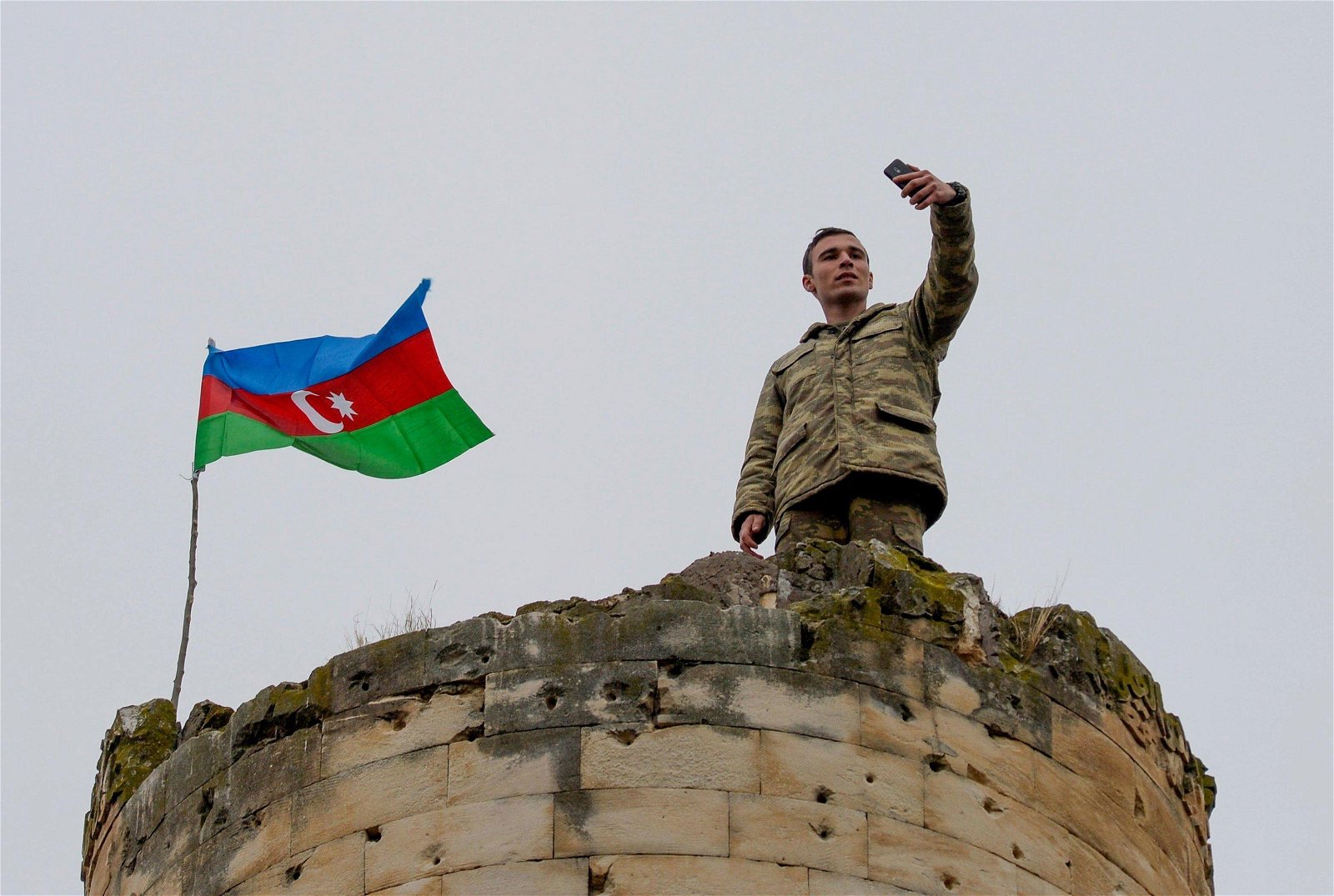
As a result of the war, the territory of Karabakh populated by ethnic Armenians reduced by 80 per cent leading to the loss of 75 per cent of arable land and half of the total livestock. These swathes of land were reclaimed by the Azerbaijani army after a 30-year-long occupation by Armenia. Eventually, the volume of agricultural production decreased by 54 per cent. Electricity production fell almost 3.5 times. Also, the Armenians in Karabakh lost control over the sources of the Terter and Khachynchay rivers, which provided 98 per cent of all the water needs of the region.
So, given the aforementioned facts and the reigning socio-economic situation in the parts of Karabakh resided by ethnic Armenians, the narrative about “120,000 Armenians” living there sounds like fiction rather than the truth similar to fabricated “1.5 million Armenian deaths” during the Ottoman period. The only truth is that the minority ethnic Armenian population in Karabakh are the citizens of Azerbaijan and their future is linked only with this largest, strongest, and wealthiest country in the South Caucasus.
Armenians’ appearance in Karabakh
Since we are talking about the Armenians in Karabakh, let’s take a brief tour of history to see how they suddenly appeared in this historical region of Azerbaijan.
Historical sources demonstrate that ethnic Armenians did not exist in the Karabakh region until after the Russian Empire made a decision to relocate them to Azerbaijani territories from Iran and Türkiye in the wake of a war between 1804-1812. After Russia won the war over Iran, northern parts of Azerbaijan, except Iravan (modern-day Yerevan) and Nakhchivan were incorporated into the Russian empire. Another war, lasting from 1826 until 1828, resulted in Iravan and Nakhchivan, the entirety of northern lands, being occupied by Imperial Russia. Southern territories fell under Iran’s control.
Under the post-occupation administrative division, northern Azerbaijan was divided into the provinces of Baku, Yelizavetpol (Ganja city in the west of Azerbaijan), and Iravan. The Karabakh region was part of the Yelizavetpol province. One of the ways the Tsardom of Russia used to expand its colonial policy in the occupied territories was to relocate people within the borders of the South Caucasus, including Azerbaijan.
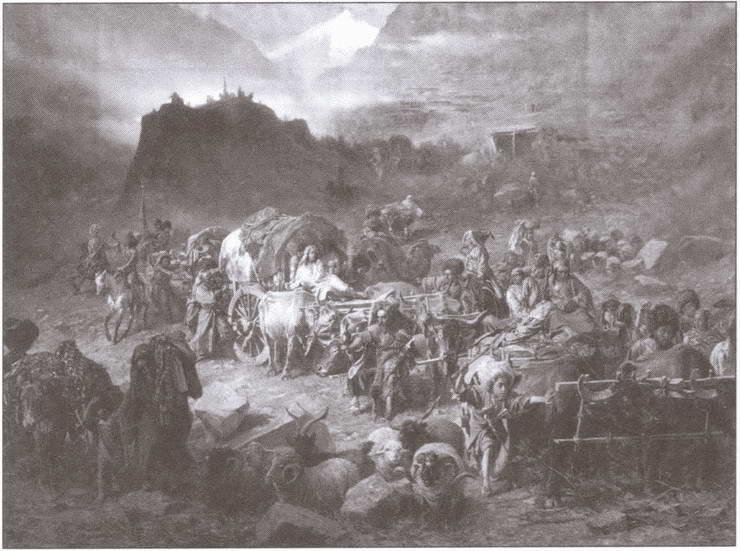
The first option was to relocate Armenians due to several reasons, including their lack of an established state and reportedly being submissive compared to others. A special commission was established to deal with the deployment of Armenians from the Ottoman and Iranian territories to the South Caucasus. As a result of the relocation, the number of Armenians in the Karabakh region reached 18,000 between 1828 and 1829 and hit 34,606 in 1843.
Nikolai Shavrov, a military administrator who was involved in the relocation, wrote that 84,000 Armenians from the Ottoman were placed on the best lands in the Yelizavetpol and Iravan provinces of Azerbaijan, where ethnic Armenians practically did not exist. The mountainous part of Yelizavetpol, which is the modern-day Karabakh region, and the coasts of Lake Goycha on the western edge of Azerbaijan received the largest part of Armenians relocated by the Tsardom of Russia. Shavrov has further noted that over one million of around 1.3 million Armenians living in the South Caucasus did not have any connection to the indigenous people and had been settled by the Tsarist regime.
The next wave of deployment of Armenians into the South Caucasus by Russia lasted from 1904 to 1915, when over 260 thousand ethnic Armenians were placed there. Despite protests, 130 thousand of them were relocated in the provinces of Iravan and Yelizavetpol.
The placement of Armenians in the territories belonging to Azerbaijan ignited what were ethnopolitical contradictions. Boris Pisarski, chief of the special department at the Caucasus province, wrote to Russia’s Frontier Commissioner in Iran in 1915 that the reason why Armenians and Azerbaijanis were on the edge was the relocation of Armenians.
Meanwhile, in 1978, the man-made “Maragha-150” monument once installed in the modern-day Tartar (previously Aghdara) region of Azerbaijan was unveiled to honour the 150th anniversary of the relocation of Armenians to the South Caucasus, namely to the Karabakh region of Azerbaijan.
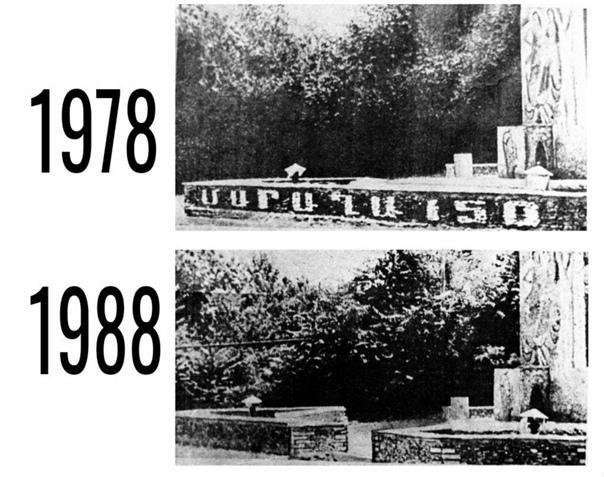
The relocation of Armenians has ultimately led to the establishment of the modern-day Republic of Armenia in the historical lands of Azerbaijan known locally as “Western Azerbaijan”. Nearly two million Azerbaijanis were displaced from their homelands in the 20th century in the wake of the premeditated deportation policy pursued by Armenia and the Soviet Union. Deportation of Azerbaijanis from their homeland took place in three phases: 1905-1920, 1948-1953, and 1988 -1993.
The most recent disastrous phase of confrontation which was expressly motivated by ethnic hatred and ethnic conflict rekindled by the Armenian leadership, erupted in the early 1990s when Armenia kicked off a military aggression against Azerbaijan to occupy the Karabakh region. The aggression succeeded in realizing the plot of Armenians, but you know how justice was championed in the autumn of 2020.
Mushvig Mehdiyev
Caliber.Az