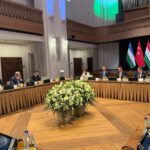
Despite the finalisation of a draft peace treaty between Azerbaijan and Armenia on 13 March 2025, the formal conclusion of hostilities remains elusive. Entitled the “Agreement on Peace and Interstate Normalisation”, the text has garnered broad international support, yet behind the apparent consensus lies a complex array of structural and legal impediments.
These obstacles are not embedded in the treaty’s wording but rather emerge from deeper systemic conditions and constitutional uncertainties that complicate its enactment. Therefore, it is worthwhile to explore the key factors delaying ratification.
Perhaps foremost amongst these is the issue of the Preamble to Armenia’s Constitution. This preamble references the country’s Declaration of Independence, which asserts the former Soviet-era territory of Nagorno-Karabakh as an integral part of Armenia. Baku regards this formulation as encoding latent territorial claims and has demanded that Yerevan amend its Constitution to remove the contested language.
From the Azerbaijani perspective, this is not merely a symbolic concern but a structural vulnerability. Baku fears that under future political pressures, Armenia could weaponise this constitutional ambiguity to undermine the treaty retroactively. Accordingly, Azerbaijan insists that constitutional reform—specifically the amendment of the preamble—be undertaken through a national referendum. This referendum is scheduled no earlier than 2026, thereby introducing a systemic time delay that hinders the otherwise advancing momentum of the peace process.
The Armenian government contends that the Declaration of Independence is a historic rather than operative constitutional document. Armenia’s Constitutional Court has already determined that agreements recognising Azerbaijan’s territorial integrity would not contravene the Armenian Constitution. In legal terms, once a treaty is ratified by parliament and affirmed by the Constitutional Court, it cannot be overturned through judicial challenge.
However, the preamble is not without operational effect. It was previously invoked to enable Robert Kocharyan—whose political origins lay in Nagorno-Karabakh—to stand for the presidency in 1998, despite not having appropriately resided in the Republic of Armenia. The courts’ interpretation effectively equated residency in Nagorno-Karabakh with residency in Armenia, granting legal traction to the irredentist claim. This precedent demonstrates that the preamble is more than rhetorical; it has legal teeth. Unless revised, it may serve to justify territorial claims under altered political circumstances in the future.
Azerbaijan’s concern, therefore, is gnoseological rather than merely juridical. It does not question the treaty’s present legality but anticipates a future institutional configuration in which ambiguous constitutional language might be mobilised to undo the agreement. Baku seeks both ratification and closure, which can only be guaranteed through constitutional reform. Given that such reform requires a referendum, no immediate resolution exists. Some in Yerevan have even suggested that 2027 is a more realistic time frame than 2026.
Another point of contention is the institutional legacy of the Organisation for Security and Co-operation in Europe’s Minsk Group, once the principal framework for mediating the conflict. Baku insists upon its formal and irrevocable dissolution. The group, already defunct in practice, retains residual institutional presence. Azerbaijan wishes to preclude any future reactivation of multilateral mediation mechanisms. Russia—one of the former co-chairs—has expressed agreement with this stance, while Armenia has indicated informal assent. Yet no formal step has been taken. Azerbaijan remains adamant that this should be addressed before, and not concurrently with, the peace treaty’s signing.
Then there is the matter of border delimitation and demarcation. Delimitation refers to the process of legally and cartographically describing borders, while demarcation concerns the physical placement of border markers. Of the nearly 1,000 kilometres of shared frontier, a mere 12.7 kilometres have been precisely mapped. The remaining stretches are undefined, leading to mutual accusations of ceasefire violations and instability in frontier regions.
The matter of transport corridors is equally delicate, particularly the link between mainland Azerbaijan and the Nakhchivan exclave through Armenia’s Syunik province. Often referred to—controversially—as the “Zangezur Corridor,” the term has fallen into disuse owing to allegations from Armenian commentators that it implies extraterritorial ambitions. In keeping with the November 2020 Trilateral Statement that halted the Second Karabakh War, Azerbaijan insists upon “unimpeded” access, understood as transit free from Armenian checks or regulatory control. Armenia, however, insists that all transit routes passing through its territory must remain subject to national jurisdiction.
Negotiations across these domains—peace treaties, border delimitation, and transit arrangements—have evolved in parallel but distinct tracks. This procedural decoupling has fostered a fragmented diplomatic landscape in which movement on one track does not necessarily yield progress on another. The absence of a unifying mechanism to synchronise these elements has introduced further uncertainty into the process.
Broader geopolitical realignments compound this three-way complexity. Russia’s diminished regional role, owing to its entanglement in Ukraine, has opened space for other actors—principally Turkey—to assume new strategic configurations. Baku and Yerevan have each adjusted their foreign policies accordingly. As the bilateral framework increasingly replaces multilateral oversight, the negotiating space has become more malleable and less predictable.
From a legal standpoint, the draft agreement conforms to the classical typology of a peace treaty. It enshrines mutual recognition of sovereignty, territorial integrity, and non-interference in internal affairs. These provisions are anchored in the December 1991 Almaty Protocols, providing a normative spine for bilateral normalisation. Nonetheless, Azerbaijan maintains that constitutional reform in Armenia must precede the treaty’s activation. In its view, ratification alone is insufficient unless the structural ambiguities are resolved.
In sum, the peace process between Azerbaijan and Armenia is neither derailed nor entirely on track. It occupies a liminal space, shaped as much by legal nuance and procedural complexity as by the shifting logic of regional power politics. While the treaty text is a robust framework for normalisation, its entry into force depends on factors extending beyond diplomatic drafting.
Until constitutional ambiguities in Armenia are resolved and institutional redundancies are dismantled, the process remains vulnerable to reversal. The unresolved tensions are thus less a question of political will than of systemic structure. In such a context, even a finalised treaty must be regarded not as the end of a process, but as the beginning of a still-contingent new equilibrium.