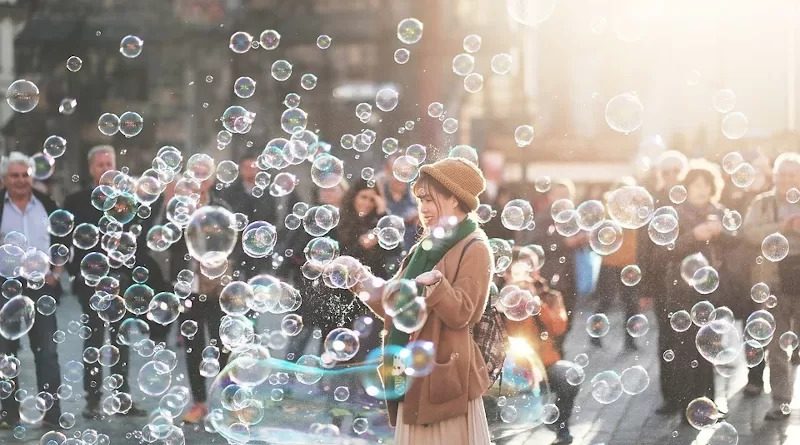
This picturesque scene is the weekly Queens Night Market, epitomising the melting pot that is NYC. Vendors set up stalls to sell their carefully recreated culinary memories from their home countries. These people are migrants. They have settled into their new country but have at no point forgotten the heritage that guided them there. The Night Market has been constructed on the collective understanding that a multicultural society is a richer one.
There are many reasons that a person will choose to immigrate. Some are seeking jobs, better education, new culture, or to reunite with family. Others are, sadly, forced to. But regardless of where they come from and reasons for immigrating, they all have something in common. They bring with them a wealth of culture and identity that enriches society and makes it a profoundly better place.
As a member of the Azerbaijani diaspora, this is all too common to me. Out of the 50 million Azerbaijanis in the world, it is estimated that 10 million live abroad—1 million in the USA and 30,000 in the UK. Yet even though we assimilate into our countries of residence, our cultural roots keep us grounded no matter where we reside in the world. When we leave our mother country, we pack up our cultural identity and bestow it on our new homes.
Increased tolerance
Multicultural societies breed tolerance. When different groups of people co-exist in a community, they enrich it with a wealth of culture, tradition, perspectives, and lived experience. Living amongst people from such a variety of backgrounds forces the community to engage with the customs from far-away lands. It propagates an understanding of different people in different circumstances, allowing both the native population and their new neighbours to live together in harmony.
NYC is a case study for this reality. One need only to take a stroll through Brooklyn to see the thriving, diverse set of people. On Ditmas Avenue, a small Azerbaijani restaurant sits alongside a Chinese restaurant, a Mexican supermarket, and an Italian pizzeria. It is hard to imagine such different groups of people living so close together so peacefully, without the existence of a multicultural society.
Of course, there is always more to be done in terms of tolerance. Across the world, even in multicultural societies, various groups are discriminated against by natives and foreign nationals. This is wrong on all accounts, and we must fight for better, more inclusive societies. This begs the question of how to go about it.
The German model of integration
One way of answering the question draws on the German experience. In 2015, German Chancellor Angela Merkel made her famous ‘Wir schaffen das’ (‘We can do it’) speech. In it, she spoke about the challenges of welcoming asylum seekers into Germany—a number that totalled around 1.2 million for 2015 and 2016. Her assertion that Germany could ‘do it’ was premised on an expectation for refugees to integrate into German society. While a vague, undefined expectation, it shaped German policy to focus on the integration of migrants.
Part of the German policy’s success concerns employment. As of mid-2020, 360,000 refugees were fully employed, 55,000 were enrolled in training programmes, and 10,000 were studying at university. While this was all well and good, 65 percent of the new refugee population remained unemployed. Of course, employment doesn’t necessarily entail integration, but it tends to be a good indicator of it.
Perhaps an even better indicator of its success is the increase in refugees’ language skills. When the refugees first arrived, just 1 percent were judged to have ‘good’ or ‘very good’ German language skills. Fast-forwarding three years to 2018, German policy upped this figure to 44 percent. Again, the remaining 65 percent cannot simply be ignored, but it would be wrong to overlook the positive gains.
What the German model has aimed at is integration. Rather than creating new homogeneous communities, the government has aimed to craft a multicultural society within which a Syrian will work alongside a German. The policy’s goal is to foster cohesion among different groups with different backgrounds. Its success is obviously up for debate, but it seems fair to say that it has had some positive impact. There is a long way to go but integration can certainly be a tool for reducing division.
Retaining identity
What I am advocating is not a rejection of the past, it’s rather to the contrary. When an economic migrant or refugee moves to a new country, we cannot seriously expect them to set aside their customs and solely embrace their new society and we shouldn’t. Working alongside the native population and speaking their language is very important, but—as the Queens Night Market shows— the diversity of people, food, and customs can be a very influential way of bettering society and reducing divisions.
Governments facing problems surrounding migration should take note. Different does not mean worse. People, cultures, religions, and identities may differ, but it is not an inherently bad thing. Governments should be taking a pragmatic approach. Learning from the German model, they should aim to integrate the new members of their society into work, their language and culture. Rather than rejecting the new cultures in the process, governments should support them, protecting the multicultural society and all that comes with it.
Tale Heydarov is the Chairman of Gilan Holding, Founder of the European Azerbaijan School, Azerbaijan Teachers Development Centre, Libraff bookstores network, TEAS Publishing House, and until recently served as the President of Gabala FC football club (Azerbaijan Premier League) and Gabala Sports Club
Eurasia Review