The Kulevi terminal owned by Azerbaijan’s State Oil Company (SOCAR) has been included in the European Union’s forthcoming 20th package of sanctions against Russia, a source in Azerbaijan’s energy sector told haqqin.az.
According to the source, a new oil refinery has been operating in Kulevi since last year, processing Russian crude oil. Petroleum products refined from this crude are then shipped via the terminal. It is precisely this scheme, the source explained, that served as the basis for the port’s inclusion in the sanctions list under the draft 20th EU package.
“Including the Kulevi port in the new EU sanctions package is essentially a signal to Tbilisi to abandon the use of Russian oil,” the source emphasized.
Price dynamics were cited as a key factor. Russian crude is sold at Black Sea ports for around $37–40 per barrel, making it particularly attractive for the Georgian refinery. At the same time, the enterprise has effectively not purchased Azerbaijani oil, despite understandings reached last year regarding potential supplies.
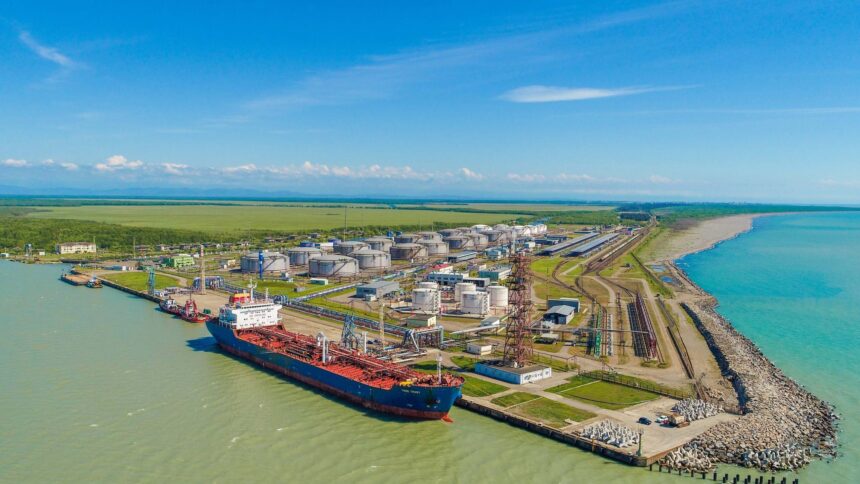
The SOCAR terminal in Kulevi has a designed annual throughput capacity of up to 10 million tons of petroleum products and petrochemical goods, making it one of the region’s major logistics hubs.
Last week, the European Union announced its new, twentieth sanctions package against the Russian Federation. Presenting the measures, European Commission President Ursula von der Leyen adopted an uncompromising tone: “Russia understands only the language of force.”
According to von der Leyen, the new package logically continues the previous nineteen and focuses on three key areas: energy, financial services, and trade.
EU High Representative for Foreign Affairs and Security Policy Kaja Kallas articulated Brussels’ logic even more bluntly: “Russia responds to diplomacy with missiles. We intend to make this choice extremely costly,” she said.
Presenting the sanctions, Kallas noted that the new restrictions deal a tangible blow to Russia’s economy and consistently undermine its military potential. In her assessment, Moscow is far from the image of an “invincible power”: the front has effectively stalled, while Russia’s domestic economy is under mounting pressure. Intensifying sanctions in coordination with partners, alongside expanding military assistance to Ukraine, could, in Brussels’ view, help bring the war closer to an end.
SOCAR’s Kulevi Terminal
Particular attention has been drawn to the regional dimension. The oil terminal in Kulevi on Georgia’s Black Sea coast has been included in the sanctions list. According to EU explanations, the facility appears in the chain of reception and transit of Russian oil. The terminal is operated by SOCAR, has an annual capacity of up to 10 million tons of oil and oil products, and is a significant node in regional logistics.
The 20th sanctions package will enter into force after formal approval by EU member states.