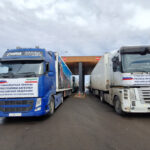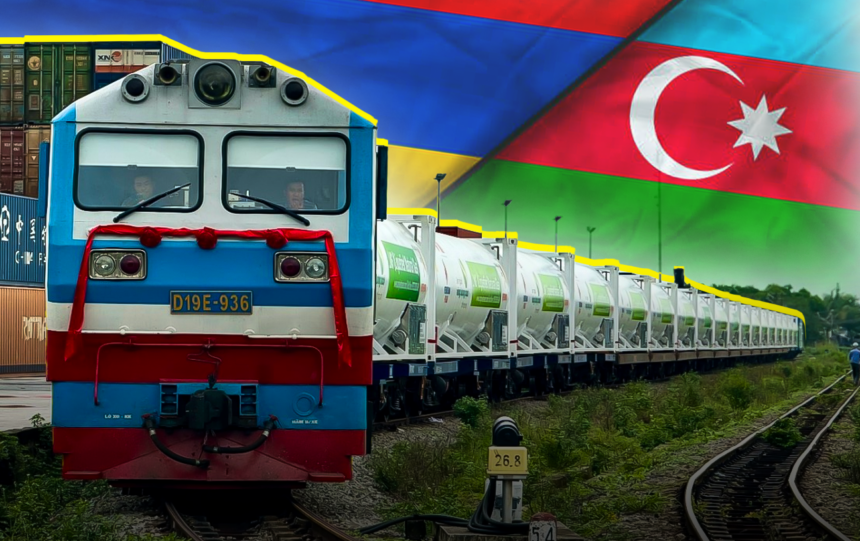
On January 27, Armenian Minister of Economy Gevorg Papoyan announced that Armenia and Azerbaijan had reached an agreement on the rail transportation of liquefied gas and bitumen through Azerbaijani territory. This step can be seen as another concrete confirmation that the peace agenda steadily taking root in the region is not a set of declarations, but a consistent series of practical measures aimed at transforming the system of relations between the key actors of the former conflict.
In terms of practical significance, the expected impact is first and foremost in construction and road infrastructure, where bitumen is a core input. For this sector, not only price but also the regularity of supply is critical. The seasonality of works makes any delays costly, as they “eat into” the construction window and raise contract costs. The emergence of a rail route via Azerbaijan increases the predictability of supply and reduces the risk of shortages on the domestic market during peak demand periods.
Notably, back in the early 2010s Armenia built a bitumen production plant from heavy residue in the Ararat region, but it never reached stable commercial volumes. Production was not properly established, effectively leaving the country without its own processing base for bitumen — a key component for road construction and infrastructure projects. In 2023, the Armenian government managed to agree with Russia on duty-free bitumen supplies, which partially eased price pressure. However, logistics, transport costs, and dependence on a limited number of routes continued to undermine supply stability, especially during peak construction seasons.
In this context, the current decision looks like a rational way out, since it involves not only more streamlined transit schemes through Azerbaijani territory, but also the possibility of sourcing bitumen directly from Azerbaijan, which is objectively more advantageous both in logistics and in actual production costs.
It is also important that Baku gains an additional export market in the near term, creating incentives to expand production. According to official statistics, in January–November of last year Azerbaijan exported about 4,360 tons of petroleum bitumen worth approximately $1.137 million — 3.7 times more than in the same period of the previous year — indicating a noticeable expansion of external deliveries and diversification of refined product exports.
Armenia’s liquefied petroleum gas (LPG, propane–butane) market has also shown growth in recent years, while the bulk of imports traditionally comes from Russia and Iran, creating the risk of critical dependence. Rail transit via Azerbaijan adds not so much a new source of gas as a more manageable and resilient delivery channel capable of smoothing logistical bottlenecks. Public reports have repeatedly highlighted disruptions on routes through the Upper Lars checkpoint, which for businesses means price spikes and supply interruptions. Stable operation of the new corridor will allow companies to reduce downtime risks and improve cost predictability, directly affecting end prices and competitiveness in the domestic market.
Moreover, more stable LPG supplies mean lower price volatility for fuel used by commercial transport and gas-based services. According to the International Energy Agency (IEA), more than 70 percent of Armenia’s vehicle fleet runs on compressed natural gas (CNG), especially in Yerevan and major cities — one of the highest shares globally. Under these conditions, the reliability of gas fuel supply directly affects not only business transport costs but also the broader social sphere.
Agriculture, greenhouse farming, and agro-processing also stand to benefit, as gas is widely used for heating and technological processes. Any disruptions in LPG supply during cold seasons or peak processing periods quickly translate into product losses or price increases. The new route via Azerbaijan reduces the likelihood of logistical bottlenecks and strengthens supply resilience, which at the macroeconomic level supports domestic market stability and dampens inflationary pressures.
Finally, the investment and institutional effects should not be underestimated. The launch of a functioning rail supply route reshapes business risk perceptions and contributes to a more predictable economic environment. Even with limited initial volumes, the mere existence of a regular supply channel calms the market and strengthens expectations. Given LPG production in Azerbaijan, it cannot be ruled out that in the foreseeable future Armenia may also receive this fuel directly from Azerbaijan, as is already the case with gasoline and diesel.
Taken together, these developments suggest that the regional peace agenda is not merely declarative but is being implemented through concrete economic decisions. Such pragmatic and mutually beneficial steps are the most convincing response to forces seeking to slow normalization and return the region to a logic of confrontation. In this context, Baku once again demonstrates a willingness to act in good faith, prioritizing practice over rhetoric, and there remains hope that Armenian society will recognize this opportunity and appreciate its significance for the region’s future.
Ilgar Velizade
Minval Politika