It is the most recent and clearest example of how Russia’s southern neighbors gradually are carving out a more independent stance on the current war.
Since Russia invaded Ukraine, most countries have made their positions fairly clear. Western nations have unanimously condemned Russia and pledged financial and military support to Ukraine. Japan and South Korea have done the same. By contrast, China has remained aloof, while signaling that it won’t let the war harm its relations with Moscow.
By contrast, the states on Russia’s southern border have been more ambivalent. Exposed to Russian pressure and fearful of being next in line if Russia succeeds in its efforts to dominate Ukraine, they have gone out of their way to maintain subdued rhetoric regarding the war. This has naturally led to criticism from some corners, but it’s necessary to understand in the context of their precarious positions: These states lack any real protections for their security, and they fear that no one would come to their assistance if they become Moscow’s next targets.
The resulting silence should not be taken as support for Russia, however. Quite to the contrary, it reflects widespread fears of their former colonial overlord. Clues to the real stances among Russia’s southern neighbors can be found in what they have been doing, rather than what they have been saying. For, in spite of their connections to Russian economic and security institutions, none has followed the example of Belarus and provided support to Russia’s war effort.
In fact, whatever support has been provided by those governments has been for Ukraine. The stronger states — Uzbekistan, Kazakhstan, and Azerbaijan — have taken the lead. All three have sent planeloads of humanitarian aid to Ukraine, with Azerbaijan also dispatching aid to Moldova to deal with refugee flows there, while providing Ukraine with petroleum assistance to help its agricultural sector from collapsing.
Furthermore, while regional states have not joined Western sanctions on Russia, all have made clear they will comply with them. Moreover, in recent weeks, they have also begun to articulate a clearer stance on the war.
Uzbekistan was the first country to articulate a critical position. Already in mid-March, long-time Uzbek foreign minister Abdulaziz Kamilov told the country’s parliament that the government supports Ukraine’s territorial integrity and would reject any notion of recognizing the Russia-supported Donetsk and Luhansk republics in eastern Ukraine. Soon after, however, Kamilov was reported to have fallen ill and to be receiving treatment abroad, before being transferred to the National Security Council (which some have taken to be some sort of reprimand). But Uzbekistan’s government has not rescinded his statement, indicating that Kamilov’s words stand.
Kazakhstan, too, has carved out a significant position. Just this January, the country was forced to call upon the Russia-led Collective Security Treaty Organization to help quell serious domestic unrest. But, to Moscow’s dismay, this earlier aid did not cause Kazakhstan to fall in line with Russia with regard to the war. Quite the opposite, in fact; an assistant to Kazakhstan’s president made it clear that Kazakhstan does not “want to be placed in the same basket as Russia,” while a deputy foreign minister stated that the country wants to avoid being behind a new iron curtain. Kazakhstan also announced it would not hold the annual celebration of the Soviet Union’s victory over Nazi Germany this year, a clear indication it does not want to be associated with Putin’s planned military parade for the occasion.
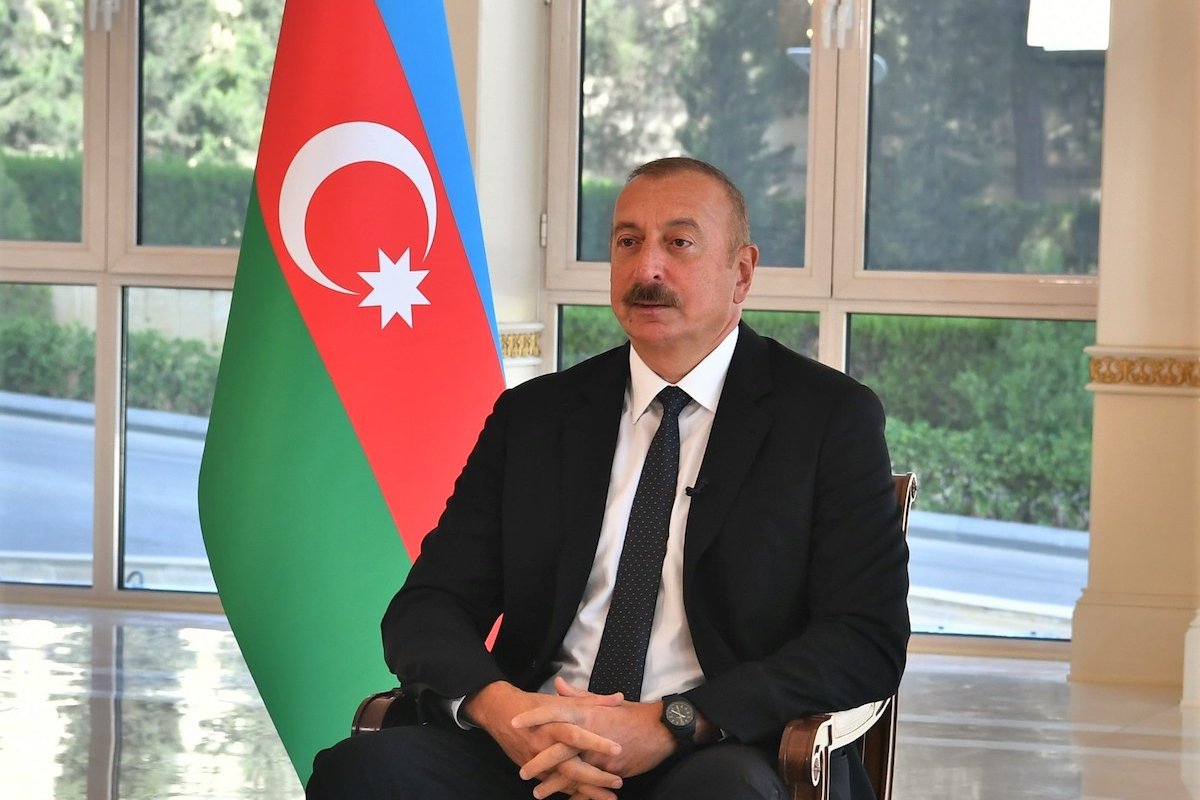
Azerbaijan, on the other side of the Caspian Sea, has relied on Moscow as a peacekeeper in the wake of its 2020 war with Armenia, in which it liberated large territories that Armenia had occupied in the 1990s. And while Azerbaijan signed a treaty of cooperation with Russia just days before the invasion of Ukraine, it has been unequivocal in its support for Ukraine’s territorial integrity. On April 29, Azerbaijan’s President, in response to a question from a Ukrainian lawmaker during an international conference in Baku, did not mince words. After reiterating Azerbaijan’s support for Ukraine’s integrity, Aliyev urged his Ukrainian counterparts “never to agree to the violation of your territorial integrity.” He further urged Ukraine to “rely on your own resources,” and cautioned against depending on the resolutions of international organizations, which “have no value.”
It is perhaps natural that Azerbaijan was first to express a critical position. Its own painful experience of occupation and ethnic cleansing clearly predisposed the country to side with Ukraine. More important, perhaps, is the fact that Azerbaijan is the only regional state with some security protection, having signed a mutual defense treaty with NATO ally Turkey last June.
Looking ahead, the United States and its allies will need to figure out a strategy for the long-term containment of Russia.
The states of Central Asia and the Caucasus will, along with Turkey, be a critical southern bulwark in any such effort. These states are understandably cautious, and (especially after the U.S. withdrawal from Afghanistan) unsure to what extent they can rely on America. But they are clearly rattled by Russia’s aggression, and looking for ways to protect themselves against the same in the future. For Washington, their worries provide an opportunity for reassurance — and to rebuild ties that have been badly frayed by recent policy.
Svante E. Cornell is Director of the American Foreign Policy Council’s Central Asia-Caucasus Institute.