The consideration of such cases in international courts, as well as the preparation of the lawsuit itself, is a very lengthy process. However, political conclusions and consequences can already be outlined today. This decision by Azerbaijan raises, so to speak, the level of distrust towards Moscow to a new stage—at least regarding the investigation of the AZAL Baku-Grozny flight disaster. And this is due to Moscow’s own actions, which now faces a “new MH17″—a precedent of legal proceedings in international instances over an air disaster for which the Russian side bears responsibility.
It is highly unlikely that the Azerbaijani Embraer was shot down by accident—there are simply no visible reasons for such a mistake. However, criminal negligence and responsibility for it cannot be ignored, nor can the consequences of attempts to evade this responsibility.
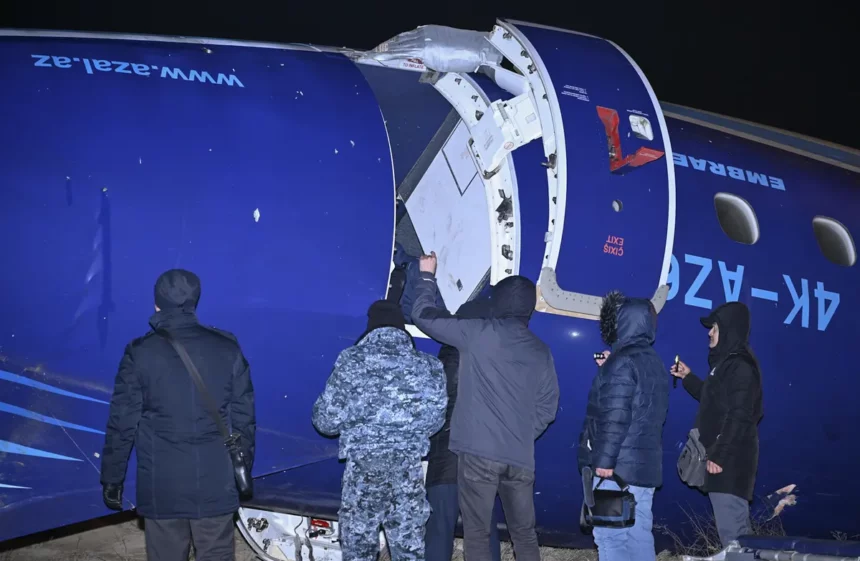
Let’s remind once again: even in the first hours after the Azerbaijani flight was downed, the Russian “aviation authorities,” including Rosaviatsiya, could not have been unaware that the plane was hit by an anti-aircraft missile. Moreover, after the emergency landing in Aktau, this was already evident to both Azerbaijani and Kazakhstani officials. It is simply impossible for an expert to mistake the perforation from missile shrapnel with traces of a “bird strike” or a “gas cylinder explosion.”
However, Moscow continued to insist that the Azerbaijani aircraft “collided with birds” or that a “gas cylinder exploded” onboard. At the same time, Moscow pushed for the investigation to be conducted by the Interstate Aviation Committee (IAC) of the CIS. What was this? Overconfidence? Outdated imperialist thinking? An excessive belief that some “former southern republic” would not dare challenge Moscow?
Azerbaijani President Ilham Aliyev made his position clear in an interview back on December 29, 2024:
“From day one, Azerbaijan insisted that this case should be handled by a group of international experts. The Russian side officially proposed that the investigation be conducted by the Interstate Aviation Committee. We categorically refused. And the reason is clear. It is no secret that this structure consists mostly of Russian officials, and it is headed by Russian citizens. The objectivity of such an investigation could not be fully ensured. If we had seen fair and adequate steps from Russia immediately after the disaster, we might not have objected. But we saw obvious attempts to cover up the case.”
In other words, Baku expected Moscow to abandon absurd theories and conduct a serious investigation. Had this happened, the IAC might have been involved. Moscow, however, did not seize this opportunity. As a result, the investigation was taken over by international institutions, with Azerbaijan, Kazakhstan, and Russia participating.
According to many indicators, this was Moscow’s last chance to avoid a confrontational scenario. Aviation experts remind us that an investigation is not about blaming someone. Moreover, there is no doubt that Russian officials were already aware of both the black box data and the presence of foreign objects in the aircraft’s body before the preliminary report was published. Yet, once again, Moscow failed to provide an adequate response.
Now, however, the black boxes have been decoded, and the preliminary report is ready. It fully confirms Azerbaijan’s position: the aircraft was subject to external impact.
First, its communication and GPS were jammed from the ground (it has now been established that this was done using electronic warfare systems). Then, the civilian flight was targeted by an anti-aircraft system. This is confirmed not only by perforations in the fuselage but also by foreign objects found in the aircraft’s body.
A full forensic examination is still ahead, but Baku has already confidently stated that the aircraft was struck by a missile from a Pantsir-S system. There were no “birds” or “gas cylinder explosions.”
After the preliminary report was published, Russia had another opportunity to change its rhetoric—to acknowledge its responsibility, issue an apology, and, most importantly, initiate a transparent internal investigation. But this did not happen.
Russian media have selectively reported on the investigation, omitting any findings that are inconvenient for the Kremlin. Russian official institutions remain silent—not just Rosaviatsiya, but also the military prosecutor’s office and the Investigative Committee, which is far more serious. Apparently, Moscow does not consider it necessary to determine who launched an anti-aircraft missile at an Azerbaijani civilian plane.
Political Aftermath
As news analysis shows, Baku has consistently given Moscow chances to avoid an escalation.
At the start of the investigation, Azerbaijan waited several days before officially rejecting the IAC and turning to international institutions. Now, over 40 days have passed since the crash, and only after the publication of the preliminary report has Azerbaijan announced its intention to go to international court.
In other words, Azerbaijan provided Moscow with time and an opportunity to adjust its rhetoric and adopt a reasonable stance. Moscow failed to take advantage of this opportunity once again. Now, Azerbaijan has no choice but to turn to international legal institutions.
Letting the investigation of our aircraft and our citizens’ deaths fade into obscurity is not an option for Azerbaijan. And this changes everything. Before the report was published, Russia had every opportunity to resolve the situation without major damage to bilateral relations. But now, that chance has been lost.
Once the case reaches international courts, the issue is no longer aviation safety. It becomes a matter of guilt and responsibility. And not just of individuals, but of an entire state.
Too many structures were involved in what happened to the Azerbaijani flight—air defense, air traffic control, and more. Even more institutions were involved in concealing the real causes of the disaster. Now, much will depend on the specific legal arguments presented in court—and, realistically, on how Moscow chooses to respond this time.
It is about time Russia understands that its old imperialist assumptions—”where else can they go?”, “they won’t dare,” “they wouldn’t risk it”—do not work with Azerbaijan.
Nurani