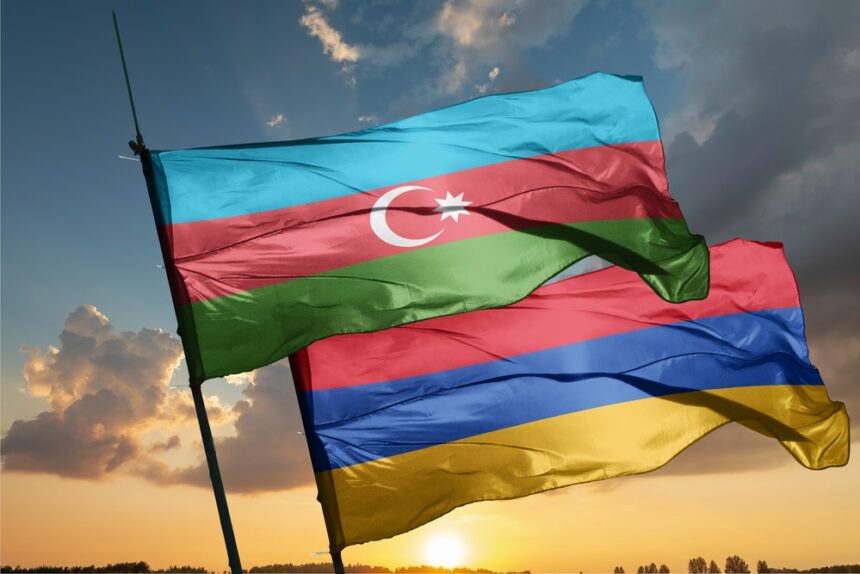
On 13 March, the Azerbaijani Foreign Minister, Jeyhun Bayramov, announced that Armenia had agreed to the last two of the total 17 provisions of the draft “Agreement on the Establishment of Peace and Interstate Relations between Azerbaijan and Armenia”—meaning that, currently, the final text of this document has been approved by the parties. This result was unexpected, even though talks have been ongoing since early 2022, when Azerbaijan initiated this process and proposed the famous ‘five principles.’ Thus, it took three years to reach this outcome. However, there are two additional conditions proposed by Azerbaijan that must be agreed upon before the parties can sign the negotiated agreement.
The first condition relates to an amendment to the preamble to Armenia’s constitution, which contains a reference to the Declaration of Independence of Armenia, signed on August 23, 1990. This declaration refers to the joint resolution of the Supreme Council of the Armenian Soviet Socialist Republic and the National Council of Nagorno-Karabakh of December 1, 1989, “About the Reunion of the Armenian Soviet Socialist Republic and Nagorno-Karabakh,” which was, in fact, a serious violation of the constitutional norms of the USSR, and which, in a resolution passed on December 7, 1989, the Presidium of the Supreme Soviet of the Azerbaijan Soviet Socialist Republic deemed inadmissible interference in the affairs of the Azerbaijan Soviet Socialist Republic and territorial encroachment. There are also several normative acts of the Republic of Armenia that violate the territorial integrity of Azerbaijan. Therefore, Armenia must withdraw its claims against the territorial integrity of Azerbaijan and make corresponding amendments to all the above-mentioned documents.
The second condition relates to the fate of certain institutions, such as the OSCE Minsk Group, the High-Level Planning Group, and the personal representative of the OSCE Chairperson-in-Office, all of which are now completely irrelevant. Owing to the fact that Azerbaijan restored its sovereignty and territorial integrity and the Karabakh conflict is now irrelevant, there is no longer any need to keep these institutions—nor is their funding by the OSCE justified. Therefore, it is expected that Armenia should also support Azerbaijan and request the dissolution of these institutions. By jointly applying to the OSCE and supporting this process, this initiative could also act as a confidence-building measure in the move towards peace.
At the same time, another important matter is related to the trials, currently underway in Azerbaijan, of former Armenian separatist leaders Arayik Harutyunyan, Arkadi Ghukasyan, Bako Sahakyan, Davit Ishkhanyan, Davit Babayan, Lyova Mnatsakanyan, and others, as well as Ruben Vardanyan. They are accused of committing crimes against peace and humanity; war crimes, including the preparation and conduct of a war of aggression; acts of genocide; violation of the laws and customs of warfare; terrorism and the financing of terrorism; forcible seizure and retention of power; and numerous other crimes as a result of Armenia’s military aggression. The victims, their legal heirs and representatives, prosecutors supporting the state prosecution, and other officials have also been attending these trials.
The trials reveal Armenia’s state responsibility during the course of the Karabakh conflict. It has become clear from documents, intercepted communications, and recent testimonies of separatist leaders that Armenia was not a bystander but a driving force of this conflict. During the trials, it has been established that these crimes were committed with the political, military, and material support of the Armenian state, and the orders and instructions came from Armenia’s political-military leadership.
It was, in reality, obvious for years that, without Armenia’s support, the so-called separatist entity established in the occupied Azerbaijani territories could not survive. At the same time, Armenia’s significant troop presence in Azerbaijani territory constituted a clear violation of international law and standards, and it was unchallenged for years. Only after Azerbaijan’s decisive victory in the 2020 Second Karabakh War and the subsequent localized anti-terrorist measures implemented on September 19–20, 2023, did justice prevail as the territorial integrity of Azerbaijan was finally restored.
Thus, the ongoing trials break a “syndrome of impunity” regarding the state responsibility of Armenia. These trials are “a public affirmation of Azerbaijan’s sovereignty over its internationally recognized territory, a sovereignty that Armenia sought to undermine for over 30 years through both overt and covert support for the separatist regime.”
According to the Assistant to the President of Azerbaijan, Hikmet Hajiyev, Armenia is currently conducting a propaganda campaign against these trials, and he thinks that instead of resorting to propaganda, “the Armenian government should cooperate with the judicial process to help restore transitional justice and lasting peace in the region. A genuine intention for peace and a fresh start in relations with Azerbaijan, among other things, would be demonstrated by Armenia’s willingness to acknowledge its responsibility and hand over those accused of war crimes, especially those who are currently hiding within Armenian territory.”
Thus, these trials play a crucial role in terms of proving that war criminals have no safe haven and should be punished for their wrongdoing. Moreover, they are “demonstrating a unique judicial practice in ensuring the rights of innocent victims of aggression, delivering justice, and holding individuals and states accused of military aggression, crimes against humanity, and war crimes accountable. This judicial experience serves as an important precedent for the international community in preventing future military aggressions, war crimes, and crimes against humanity.”
Today, Armenia and Azerbaijan are slowly moving towards rapprochement, a process that demands bold political decisions as well as a clear vision for reconciliation. We should not only return to our roots but also find new ways of interaction. However, there is a very low level of trust between the leaders and the peoples of these two states. The former Karabakh conflict led Armenians and Azerbaijanis to live in parallel realities for more than 30 years. It is apparent that “in light of the recent past, we cannot soon reconcile our different narratives. It is a long process; however, reconciliation is not only an outcome; it is also a process. Although the gestation period might be long, the process of reconciliation itself can be extremely rewarding.”
Gulshan Pashayeva