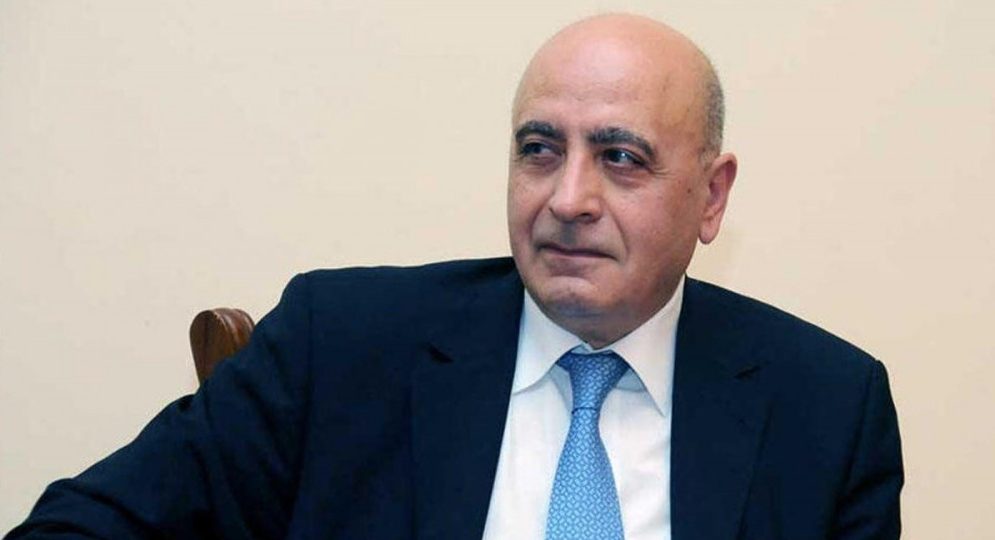
Russia’s problem is that in the 21st century its president sees his mission in the territorial expansion of the state, says political scientist and member of the Milli Majlis Rasim Musabayov. The MP believes that if Russia’s plans to dismember Ukraine and seize at least a part of its territory come to fruition, it will significantly increase the risks for its neighbors.
You must have heard what President Putin said about how he sees his actions. Putin is only a humble historical follower of the reformist tsar. He decided that it was his mission to follow in the footsteps of Peter the Great and “return and strengthen”. What does it mean? Does it mean that the current “special military operation” against Ukraine should only be seen as a stage in the process to reclaim territories formerly under the control of the Russian state? That is what it sounds like. Azerbaijan and all post-Soviet countries were also part of that empire. Is this the fate Putin has in store for us? Forcible annexation to Russia, through war and blood?
Russia’s problem is that in the 21st century its leader lives with ideas about the world and his mission that belong in the 18th and 19th centuries, that is, he sees his mission in the territorial expansion of the state. An imperial ideology is pernicious in the modern world of technology and global information and economic integration.
Putin would do well to come out of his reckless invasion of Ukraine with minimal losses before considering and preparing the subjugation of the South Caucasus in practice. I have read his ideological revelations in which Putin claimed that the annexation of the former territories of the USSR and the Russian Empire where the Muslim population lives is inexpedient because, in his opinion, this would entail major demographic challenges given the plummeting birth rate of the Russian population. But if Putin’s plans to dismember Ukraine and seize at least part of its territory come to fruition, the risks for Russia’s neighbors will increase significantly. Azerbaijan is better prepared for negative scenarios because it has insurance in its modern, effective army, a strong state structure, and in the reliable allied relations with fraternal Turkey.
During the visit of the Russian Foreign Minister to Armenia, protesters with anti-Russian posters and Ukrainian flags took to the streets of Yerevan. They were chanting the well-known slogan “Putin khuylo!” (“Putin is a dickhead!”), followed by another novelty: “Lavrov is a bitch!” The authorities can easily intervene at the right moment and prevent any undesirable protest under some plausible pretext. Of course, the authorities have informers in all walks of life, and they must have known about the prepared chorus of insults aimed at Putin and Lavrov. Of course, Moscow easily picks up on and understands all of this. I wonder how this incident will affect Moscow’s attitude to Pashinyan’s team in the future. What can it lead to?
As for the anti-Russian protests in Yerevan during the visit of Russian Foreign Minister Lavrov, there is nothing unexpected about them. There are many people in Pashinyan’s government who used to actively participate in this kind of events. This is a signal to Moscow that even though Pashinyan is still following its policies with gritted teeth, he is extremely dissatisfied with the level of support he is getting from Russia. The Armenians are particularly concerned about Moscow’s willingness to listen to Turkey’s and Azerbaijan’s positions and to reckon with their interests. Recall that Lavrov arrived in Yerevan from Istanbul, where he held important talks with his Turkish counterpart, Çavuşoğlu.
The issue of the motorway route from Nakhchivan to mainland Azerbaijan has been raised for some reason. This was announced by Russian Foreign Minister Sergey Lavrov in Yerevan on Thursday. One might ask: what is there to talk about? Back in Soviet times, there were two parallel routes, a railroad and a motorway, running along the Araz River on the border through West Zangezur (Syunik). They connected mainland Azerbaijan with Nakhchivan. But Lavrov is being somewhat vague about the motorway, as if the route could be different. So, do we now have to come up with new motorway routes, when there is already this tried and tested shortest route that was used for decades?
In Soviet times, the railroad ran along the bank of the Araz and the Meghri section was even part of the Azerbaijan Railroad. Baku appointed personnel and provided financing. However, although there was a narrow motorway along the border, because of the strict border regime there, it was another road, Sisian–Goris, that was mostly used for transportation. I assume that this is the road the Armenians want to restore. But then they would have to invite Russian border guards to provide security on this route as well, as it is stipulated in the Trilateral Statement of November 2020.
I cannot rule out the possibility that the Armenians will try to involve the Russian peacekeeping contingent to provide security along the Sisian–Goris–Lachin–Khankendi route, thereby pushing for the peacekeepers’ longer stay in Azerbaijan (Karabakh), i.e., beyond the agreed upon 5-year period.
Samir Ibrahimov
Translated from Minval.az