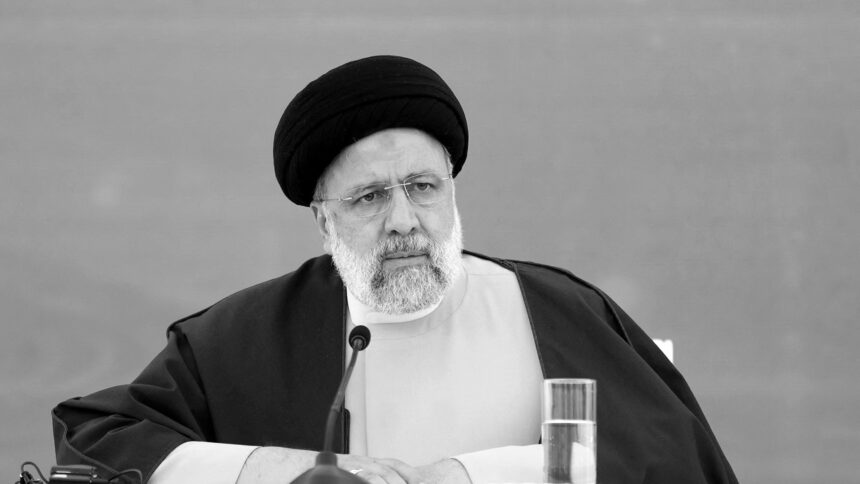
However, few expected that the first to leave this world would be the 63-year-old Ebrahim Raisi, who many saw as the successor to Iran’s Rahbar.
Sometimes bad weather, technical malfunctions, or pilot error are just that. But the public mind resists simple explanations. Already, social media is buzzing with theories about the non-accidental nature of the helicopter crash.
Within Iranian society and beyond, various theories are being discussed, ranging from an “Israeli plot” to an internal conspiracy by his rivals vying for the position of Supreme Ayatollah. Some speculate he was deliberately killed to blame Israel and provoke a war. I’m sure more theories will emerge soon, each gathering its own “support group,” regardless of their distance from the truth. The truth may not be known for a long time, if ever.
In any case, the event is extraordinary and stressful for Tehran. New elections must be prepared, governance structures reorganized, and public reactions closely monitored, as Iran’s socio-political situation remains quite tense.
According to the Iranian constitution, this responsibility now falls on the shoulders of the first vice president, 70-year-old Mohammad Mokhber, a native of Khuzestan who has long managed the largest financial funds of Ali Khamenei and his personal office. Importantly, he lacks political ambitions and is a typical executor and bureaucrat to the core.
He will have to address the primary risk of the day: possible mass protests by Iranians who see Raisi’s death as a signal to take to the streets. However, I would not overestimate this danger. Raisi was far from the most charismatic president in Iran’s history. Notably, during the significant protests a couple of years ago, chants of “Death to Raisi!” were not as common as “Death to Khamenei!”
Iranians understand well that their president is just a cog in the system, albeit a significant one. His death does not evoke the kind of emotion that could stir Iranian society. After all, it wasn’t the Rahbar who died, and a change of president doesn’t drastically alter Iranian politics. We can discuss potential changes after the upcoming elections in 50 days.
These elections will serve as a dress rehearsal for the power struggle among Iran’s political clans. The main prize in this struggle is the position of Supreme Leader of Iran.
Furthermore, Raisi’s death has already shifted the balance of power among Iran’s political clans, offering them a chance to slightly rework the current system of checks and balances. For some, this will mean elevation, while for others, less fortunate, it will mean a road to the margins of Iranian politics.
Ikram Nur
Translated from haqqin.az