
The rapid development of next-generation technological solutions and their application in various industries, including the introduction of artificial intelligence and the 5G wireless technology in various areas of human life, has been made possible by increased interest and investment in research projects of laboratories owned by numerous public and private corporations around the world.
The race for quantum supremacy, which in the context of the hybrid cold war had become one of the key fronts in the technological and ideological struggle between the United States and China, also entered a new phase after Chinese physicists unveiled the world’s fastest photonic quantum computer, Jiuzhang, in December of 2020. 100 trillion times faster than conventional computers, this computer is the result of 20 years of hard work by the country’s top specialists. Note that quantum processors are based on two different systems, photonic and electronic: room temperature is sufficient for photon-based quantum computers to work efficiently, while electron-based superconductor quantum devices require a rather low temperature. Basically, the Jiuzhang processor, designed to perform functional operations of quantum chemistry, is also an optical quantum computer based on photonic technology with a rather complicated operating principle.
In general, quantum technology, designed to be used in quick and accurate solution of fundamental and complex problems in medicine, chemistry, logistics, finance, physics, communication, pharmaceutics, climate, ecology, space and dozens of other fields, creates enormous opportunities, in particular in navigation, financial optimization and drug production to accelerate relevant tests and processing of their results.
Operations that take conventional digital supercomputers hundreds of thousands of years can be performed by new-generation quantum computers in a matter of seconds. Incidentally, because of strategic importance, privacy protection and security measures, quantum research has been increasingly entrusted to military institutions in recent years. The Pentagon also launched a program to develop quantum supercomputers starting in the first quarter of 2020. At the first stage, the Pentagon administration plans to upgrade atomic clocks and quantum sensors used for military purposes. Quantum atomic clocks and inertia sensors can play an extremely important role in accurate navigation and timekeeping, which is vital in military missions. They are expected to be an alternative to the traditional GPS navigation system, something ground forces cannot do without in regions with challenging terrain. Therefore, there is a need to adapt the vast majority of existing laser, optical and other components to the new technology, which leads to additional costs and loss of time.
Official Washington, which for the last decade has been working on the development of quantum technologies on domestic budget, last August through the US National Science Foundation announced $625 million over the next five years to establish five research centers under the Department of Energy for the next five years. In addition to experiments, these centers will focus on the production and application of quantum networks, sensors, computing, and relevant materials and components. The laboratories, which will operate in a coordinated manner, are expected to contribute to a multidisciplinary, efficient and competitive nationwide ecosystem, recycling industry and supply chain in quantum technology. The National Quantum Initiative Act, which took effect during the Trump administration in 2018 and has a total budget of $1.2 billion, is working toward this goal. In addition, in April of this year, two quantum-related bills, The Quantum Network Infrastructure and Workforce Development Act of 2021 and QUANTUM for National Security Act of 2021, were introduced in the US Senate during the 117th Congress.
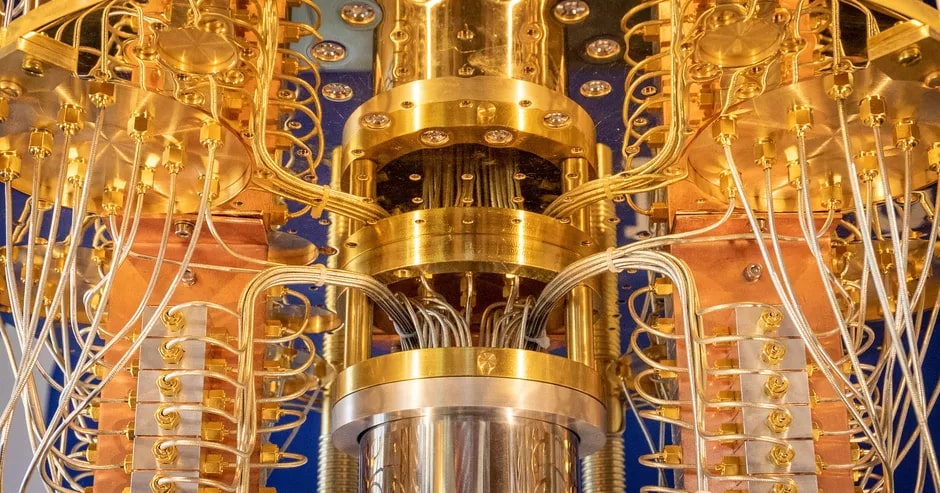
In the private sector, key players include such giants as IBM, Google, Rigetti, Honeywell, Amazon, and Microsoft. The Sycamore programmable superconducting qubit processor created by Google engineers in 2019 is considered one of the first and most powerful in the field.
As for the biggest rival of the US—the People’s Republic of China, the next (14th) five-year plan launched in last March under “China 2035”, the project of modernization of socialism, a special place is given to the development of local innovative technologies. Thus, along with the development of semiconductor microchips, quantum technology is one of the priority goals in the country’s 2025 state plan. Last October, the Hefei National Laboratory for Physical Sciences at the Microscale of the University of Science and Technology of China unveiled the Zuchongzhi 2.1 programmable quantum computing system. According to data published by the Chinese, the Zuchongzhi 2.1 quantum computer is 10 million times faster than the most powerful supercomputer to date. Thus, its computing power is 1 million times greater than that of Google’s Sycamore superconducting quantum processor. Zuchongzhi 2.1, which performs operations that would take a conventional computer 30 trillion years in about 1 millisecond, has greatly increased China’s advantage over its competitors in quantum technology, paving the way for it to become the world leader in both superconducting quantum computing technology (Zuchongzhi 2.1) and photonic quantum computing technology (Jiuzhang 2.0) for the first time. In 2016, China’s National Space Agency (CNSA) launched the first quantum artificial communications satellite, Micius, into low-Earth orbit. Micius can transmit intercontinental messages and information faster and more securely using quantum encryption.
It seems that the rapid development and effective adoption of ultra-fast quantum processors, which will hopefully have an impact on many areas, from the mapping of molecular structures and chemical reactions to the multi-aspect application of complex algorithms, the building of artificial intelligence capabilities, Big Data processing, and improving the computational efficiency of complex statistical data, will take an important place among long-term national strategic interests and goals of both the United States and China.
Thus, we are witnessing the transition of the quantum from the domain of science to the military-strategic sphere race on the background of complex political maneuvers. This technology, which is beginning to occupy a central place in international relations, national security, economics and geopolitics, will continue to be one of the main subjects of struggle in the fierce competition for leadership in the field of high technology between the United States and China in the coming years.
Translated from Topchubashov Center
Aze.Media