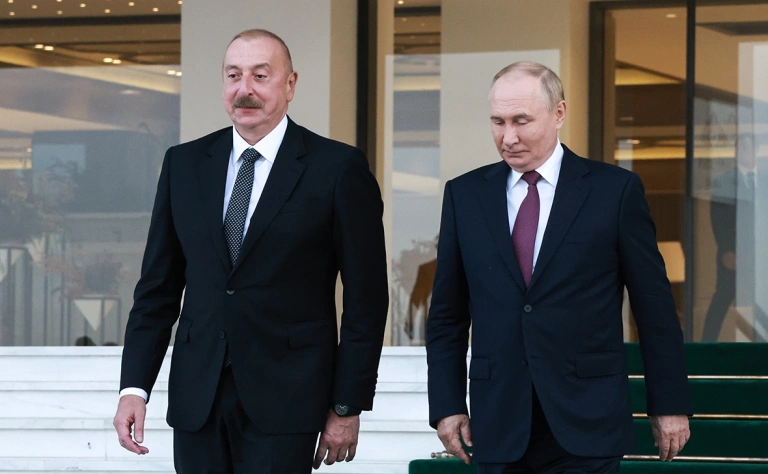
Russian President Vladimir Putin stated that there was no crisis in interstate relations between Moscow and Baku. According to him, what happened can only be described as a “crisis of emotions” caused by the tragedy following the crash of the Azerbaijani aircraft.
“I wouldn’t say we had a crisis in interstate relations,” Putin noted. “It was a crisis of emotions, and understandably so: we were faced with the loss of an aircraft, and we needed time to sort things out.”
The President emphasized that the investigation into the tragedy required complex technical examinations, decoding of the black boxes, and analysis of data received from air traffic control services and the Ministry of Defense.
“I hope that we have turned this page and will move forward, strengthening trust and partnership between our countries,” Vladimir Putin added.
The Russian leader also noted that Azerbaijan can be considered a Russian-speaking country, highlighting the strong humanitarian and cultural ties between the two nations. “Azerbaijan is a Russian-speaking country; the Russian language is studied practically everywhere there,” the Russian President said.
Russia continues to remain one of Azerbaijan’s key trading partners. According to the State Statistics Committee, in the first seven months of this year, Russia accounted for 10.6% of Azerbaijan’s foreign trade, making it the country’s third-largest partner. In the trade structure, Russia represents 4.7% of Azerbaijan’s exports and 17.2% of imports, second only to China.
Economic cooperation is particularly significant in the non-oil sector: 34.3% of Azerbaijan’s non-oil exports go to Russia, making it the country’s largest partner in the non-oil economy.
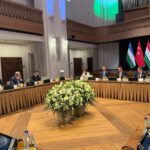
The meeting in Dushanbe opens new opportunities to strengthen economic ties between Azerbaijan and Russia. The improvement of bilateral relations will create additional business prospects and enhance economic cooperation. However, despite these positive trends, Azerbaijan continues to place great importance on diversifying its foreign trade. Expanding export markets remains a national priority, contributing to the country’s overall economic resilience.