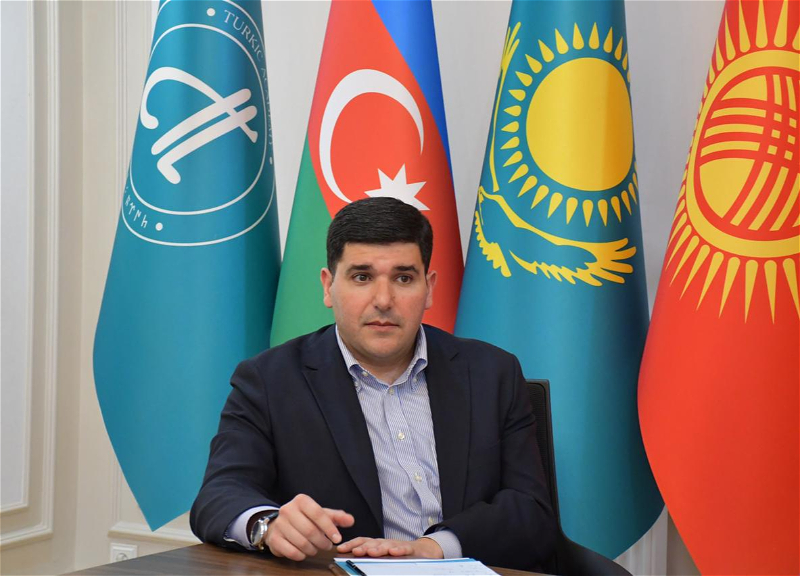
Political analyst Farhad Mammadov, Director of the Center for Studies of the South Caucasus (CSSC), shared his views with Minval Politika on the speech delivered by Azerbaijani President Ilham Aliyev at the 80th anniversary session of the UN General Assembly. According to him, the address was not only a political statement but also a demonstration of Azerbaijan’s strategic vision for the future.
Mammadov stressed that Aliyev effectively used the UN platform to present Azerbaijan as a country that has restored its territorial integrity and is now setting a constructive agenda for the region. He noted that the President highlighted the importance of upholding international law, showing how a just struggle, conducted in line with the UN Charter and the principles of international law, can restore balance and strengthen sovereignty.
“The President showed how the authority of international law can and should be restored. The example of Azerbaijan is that of a just war leading to the restoration of territorial integrity and sovereignty,” Mammadov emphasized.
The political analyst underlined that Aliyev did not limit himself to military achievements or foreign policy. Instead, he presented a comprehensive vision that included peace initiatives with Armenia, large-scale restoration projects in the liberated territories, the development of new transport and logistics corridors, and a focus on environmental challenges.
Mammadov paid particular attention to Aliyev’s emphasis on the reconstruction of liberated lands, describing it as a central theme of the speech. These projects, he noted, are aimed at creating the conditions for the dignified and safe return of internally displaced persons and at laying the groundwork for sustainable development.
He also highlighted the importance of Azerbaijan’s regional initiatives, including deepening cooperation with Turkey and Central Asia, which, in his view, are already reshaping the regional architecture with Azerbaijan as a pivotal link.
On the environmental front, Mammadov singled out Aliyev’s remarks on the Caspian Sea, calling them especially significant. According to him, Aliyev rightly framed the issue not only as a consequence of climate change but as a man-made problem requiring international attention if the littoral states cannot resolve it on their own.
“The President’s words about the Caspian were a reminder that environmental issues are inseparable from security and regional cooperation. By raising this at the UN, Azerbaijan showed leadership on a problem that affects millions of people,” Mammadov said.
In conclusion, the political analyst described Aliyev’s speech as evidence of a mature and strategically balanced foreign policy: one that combines the consolidation of sovereignty with a forward-looking agenda focused on peace, development, and the promotion of a just international order.