In recent weeks, much international attention has focused on the war between Russia and Ukraine, and US President Donald Trump’s efforts to bring the fighting to an end.
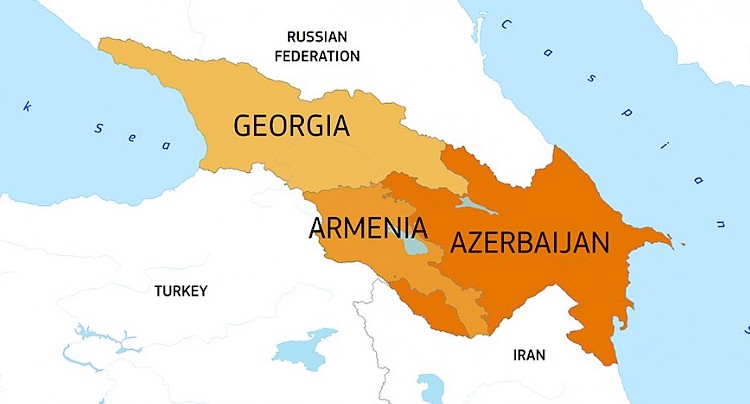
However, another long-standing conflict, just a few hundred kilometers southeast of Ukraine, might also be approaching a peaceful resolution: the more than 30-year struggle between Armenia and Azerbaijan in the South Caucasus.
This week brought promising news from both Yerevan and Baku regarding the potential signing of a lasting peace deal between the two nations. After years of intense negotiations, both sides have publicly confirmed that a draft agreement is in place and awaiting formal signatures from the respective leaders.
If a peace deal can be finalized, it would mark the end of a bloody conflict that began in the early 1990s following the collapse of the Soviet Union. Amid the ensuing chaos, ethnic Armenians in Azerbaijan’s Karabakh region sought to secede. This sparked a brutal war between Armenian-backed separatists and Azerbaijani forces attempting to reassert Baku’s control.
The initial fighting ended in 1994 with a ceasefire monitored by the Organization for Security and Cooperation in Europe, but not before both sides suffered severe atrocities. By the time the hostilities paused, Armenia had taken control of Karabakh and large portions of seven surrounding Azerbaijani districts, amounting to nearly 20 percent of Azerbaijan’s internationally recognized territory. Hundreds of thousands of Azerbaijanis were forcibly displaced from these areas, creating a refugee crisis that has persisted for decades.
Between 1994 and 2020 the front lines remained largely static. While skirmishes and ceasefire violations periodically occurred, serious fighting was rare except for a brief, but significant, four-day flare-up in 2016. During this time Armenia, with the backing of Russia and Iran, continued to maintain the upper hand. Meanwhile Azerbaijan, newly independent and struggling economically, endured a sense of national humiliation over its territorial losses.
Azerbaijan’s fortunes shifted as its economy rebounded, however, fueled by substantial oil and gas revenues. As its military capabilities grew, the balance of power began to tilt. By 2020, frustrated by decades of diplomatic deadlock, authorities in the country took decisive action.
In September of that year, following an Armenian shelling incident along the border, Baku launched a full-scale military operation to reclaim its lost territory. In just 44 days, Azerbaijani forces regained control over most of the occupied lands, with only a portion of Karabakh remaining under Armenian-backed control. On Nov. 8, 2020, a Russian-brokered ceasefire deal took effect.
But rather than resolving the conflict, the ceasefire agreement laid the groundwork for further tension. Russia, either unwilling or unable to enforce the terms of the deal, watched as Azerbaijan grew impatient with Armenia’s reluctance to comply. With Moscow distracted by its war in Ukraine, and Armenian resistance to key aspects of the deal mounting, Azerbaijan took decisive action in September 2023, swiftly completing its military objectives in less than 24 hours.
Since then, both sides have engaged in intense diplomacy in an attempt to secure a lasting peace agreement. The process has not been easy; contentious issues, such as delineating the state border, remain unresolved, though progress has been made. Armenia has been hesitant to open transport links that would connect Azerbaijan with its exclave of Nakhchivan, despite committing to this in the 2020 agreement.
Armenian Prime Minister Nikol Pashinyan has demonstrated a genuine willingness to normalize relations with Azerbaijan but faces strong domestic opposition from nationalist hardliners who reject peace with Baku.
Additionally, Armenia has criticized Azerbaijan for the detention of former officials from the self-proclaimed Karabakh government, who were captured following Baku’s final military operation in 2023.
Despite these challenges, recent statements from both capitals suggest that the major obstacles have been overcome. This is welcome news not only for Armenia and Azerbaijan but for the broader region as well. A genuine and lasting peace would end one of the most prolonged and destructive conflicts of the post-Soviet era while unlocking significant economic opportunities.
Armenia, in particular, stands to benefit from normalization of relations. One of the poorest countries in the region, it is landlocked and has been excluded from major energy and transport infrastructure projects due to its conflict with Azerbaijan. A peace agreement could change that, improving Armenia’s economic prospects and integrating it into regional trade networks.
Additionally, a diplomatic breakthrough with Azerbaijan could pave the way for the restoration of Armenia’s relations with Turkey, which were severed in the 1990s due to Armenia’s actions in the conflict. Renewed ties with Ankara could further stimulate Armenia’s economy and enhance regional stability.
Azerbaijan, too, stands to gain from peace. While it has emerged militarily victorious, long-term stability would allow it to focus on economic development and regional partnerships, rather than maintaining a state of perpetual readiness for war. Infrastructure projects that stalled as a result of geopolitical tensions could be revived, including key transportation corridors linking Central Asia with Europe. These projects would provide significant economic benefits, not only to Azerbaijan but also to the entire South Caucasus.
Moreover, peace between Armenia and Azerbaijan could reduce foreign influence in the South Caucasus. Historically, external powers — including Russia, Iran, and at times, France — have exploited the conflict to advance their own interests. The current peace talks, however, have been characterized by direct negotiations between Yerevan and Baku, with less reliance on external mediation. A successful peace agreement would deny foreign actors the ability to manipulate regional tensions for geopolitical leverage.
Despite these encouraging developments, the peace process is not yet complete. A final agreement must still be signed and both sides must work diligently to ensure it is fully implemented. The true test will be whether Armenia and Azerbaijan can move beyond decades of animosity and build a foundation for lasting stability. Trust will not be established overnight but concrete steps, such as people-to-people exchanges, economic cooperation and cross-border trade, could help foster reconciliation.
That said, the two countries have never been closer to achieving peace. For the sake of their people, their region, and global stability, one can only hope this deal crosses the finish line sooner rather than later.
Luke Coffey is a senior fellow at the Hudson Institute. X: @LukeDCoffey