In the contemporary foreign policy strategy of the Republic of Azerbaijan, integration with the Turkic world holds a pivotal place. Strengthening ties with Turkic states and enhancing cooperation through common institutions has been identified as a strategic priority by the Azerbaijani leadership.
Particularly following the restoration of territorial integrity in 2020, official Baku has designated comprehensive rapprochement with Turkic countries as a national objective. As President Ilham Aliyev emphasized during his 2024 inauguration – “The Organization of Turkic States is our primary international organization because it is our family. We have no other family. Our family is the Turkic world.” This statement is a clear manifestation of the centrality of the Turkic unity ideal in Azerbaijan’s foreign policy orientation.
Since regaining independence, Azerbaijan has pursued a multi-vector, balanced foreign policy. At the current stage, integration with the Turkic world has assumed greater importance within this strategy. Azerbaijan actively works to deepen mutual political trust with Turkic states, establish coordinated positions on shared interests, and demonstrate reciprocal support in international organizations. Hence, this integration is not limited to cultural or ethnic affinity – it is a pragmatic geopolitical instrument for safeguarding national interests and sovereignty in the complex global environment.
By placing Turkic integration at the core of its foreign policy, Azerbaijan seeks to maintain strategic autonomy amid competing global centers of power. As President Aliyev noted, Azerbaijan is “not looking for another family” – signaling no intention to enter military-political blocs led by the West or Russia. Instead, Baku views the Organization of Turkic States (OTS) as its principal multilateral platform. This approach allows Azerbaijan to preserve a balanced position while amplifying the role of Turkic unity as a geopolitical factor. Given the erosion of trust in certain Western institutions due to selective approaches to Azerbaijan’s territorial integrity, the unequivocal support extended by the OTS has further reinforced public confidence in this vector of integration.
Azerbaijan’s Role in the Organization of Turkic States
As a founding member, Azerbaijan plays a leading role in the activities of the OTS. Since its inception, Baku has prioritized this organization and advocated for its institutional development. Azerbaijan regards the OTS as a vital mechanism to advance multifaceted cooperation with both member and observer states. Numerous proposals by President Ilham Aliyev have contributed to shaping the organization’s agenda. Notably, the establishment of informal summit formats and the 2023 proposal to include defense and military-industrial collaboration under the OTS framework demonstrate Azerbaijan’s commitment to advancing the Turkic integration process.
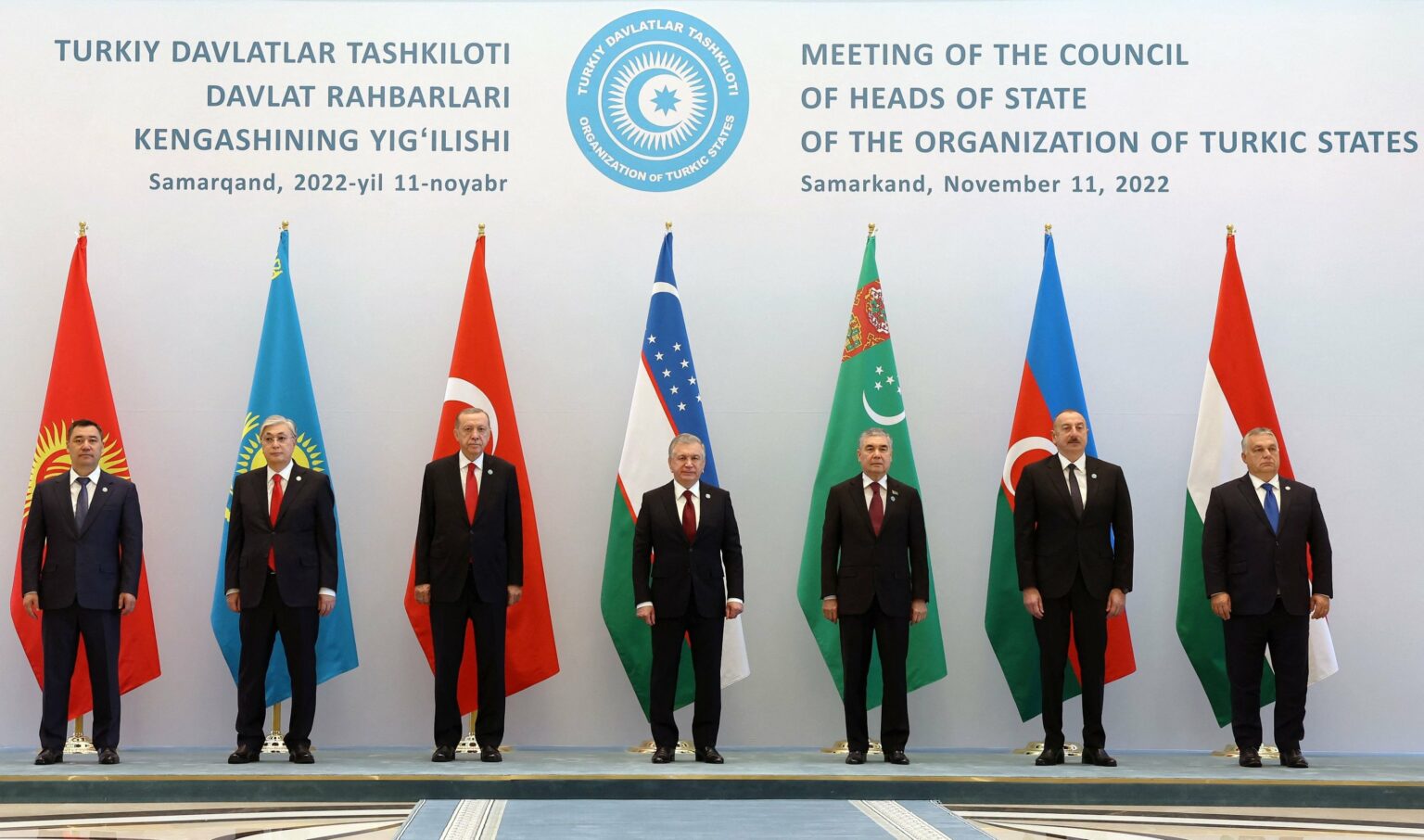
Strategic bilateral partnerships already exist between Azerbaijan and most OTS members, laying a robust foundation for broader multilateral cooperation. The current full members of the OTS are Azerbaijan, Türkiye, Kazakhstan, Kyrgyzstan, and Uzbekistan, while Turkmenistan, Hungary, and since 2023, the Turkish Republic of Northern Cyprus, hold observer status. Owing to the political will of its members, the organization has expanded its institutional structure in recent years. The creation of the Turkic Investment Fund, Joint Media Platform, Civil Protection Mechanism, and Joint Turkic University all signify the OTS’s transformation into a functional body for economic and security integration – not merely a cultural forum.
The geopolitical environment of the South Caucasus and Central Asia has undergone significant shifts in recent years. Within this evolving context, unity and strategic coordination among Turkic states have become increasingly important – both for ensuring regional stability and for counterbalancing global power rivalries. Azerbaijan’s victory in the Second Karabakh War in 2020 not only restored its territorial integrity but also showcased the potential of Turkic solidarity in action. It marked a moment when diplomatic, moral, and, to an extent, symbolic support from fellow Turkic states reinforced Azerbaijan’s position on the world stage.
In Central Asia, a growing trend toward Turkic cooperation is observable. This stems from multiple factors. First, the ongoing confrontation between Russia and the West – exacerbated by the war in Ukraine – has prompted many Central Asian countries to recalibrate their foreign policies and reduce overreliance on Moscow. However, these countries remain cautious due to historical, economic, and security linkages with Russia and China. In this context, Türkiye and the OTS present a viable and culturally aligned alternative. The U.S. Helsinki Commission’s 2024 report acknowledges Türkiye as the most appropriate actor to fill the geopolitical vacuum in Central Asia – suggesting that pan-Turkic cooperation could bolster regional sovereignty and strategic resilience.
Second, a new generation of leaders in Kazakhstan, Uzbekistan, and elsewhere appears more inclined to reconsider post-Soviet integration frameworks such as the CSTO and EEU, instead expressing greater enthusiasm for Turkic unity. Third, complex security challenges – from the Taliban resurgence to China’s assertive Belt and Road policy – further necessitate a collective Turkic response to threats such as terrorism, extremism, drug trafficking, and separatism.
More broadly, the Turkic world presents itself as a potential strategic bloc in global power dynamics. The disruption of traditional East-West trade routes following the Russia-Ukraine war has amplified the relevance of the Trans-Caspian corridor, or Middle Corridor, which links Central Asia to Europe through the South Caucasus and Türkiye. The main stakeholders in this corridor are OTS members. For Azerbaijan, this framework facilitates both regional leadership and access to vital logistical and economic networks.
Azerbaijan–Türkiye Alliance as the Driving Force of Turkic Integration
The relationship between Azerbaijan and Türkiye is a cornerstone of the Turkic integration agenda. The concept of “One nation, two states” aptly captures the depth of this alliance, rooted in a shared linguistic, historical, and cultural foundation. Since Türkiye became the first country to recognize Azerbaijan’s independence in 1991, bilateral ties have expanded into the spheres of security, energy, defense, and diplomacy. Türkiye’s unwavering support during the 2020 Karabakh War further solidified this partnership.
The signing of the Shusha Declaration in 2021 elevated the bilateral relationship to the level of a formal alliance. The declaration outlines frameworks for coordinated defense and security strategies, joint arms production, military exercises, and reciprocal consultations in times of crisis. If either side faces a threat to its sovereignty or territorial integrity, joint political and military measures will be pursued. This effectively constitutes a security alliance with strategic implications for the regional balance of power.
Azerbaijan and Türkiye also serve as the driving force behind key OTS initiatives. Most major decisions within the organization are preceded by consultations between Baku and Ankara, ensuring a cohesive leadership model. Their tandem role has facilitated the emergence of the Turkic world as a coherent actor on the global stage.
In conclusion, the Organization of Turkic States is evolving into a decisive force in regional geopolitics. With a combined population of approximately 170 million and a projected economic output of up to $2 trillion, the Turkic world represents a rising center of influence. Forecasts suggest that by 2050, the Turkic population could exceed 250 million, solidifying its relevance in global affairs.
The aftermath of the Russia-Ukraine war has heightened the urgency for regional powers to diversify alliances and strengthen strategic partnerships. Within this framework, the OTS serves as both a shield and a platform – offering its members agency in the global system and opportunities to advance their national agendas. For Azerbaijan, deepening Turkic unity ensures the consolidation of national sovereignty, reinforces its regional leadership, and amplifies its diplomatic leverage. As an active and proactive contributor to this integration process, Azerbaijan gains not only economic and security benefits but also enhanced recognition as a strategic player in the emerging multipolar world.
Matin Mammadli is a leading advisor at the Baku-based Center of Analysis of International Relations .