The “Strategy for the Preservation, Development and Promotion of the Culture of the Republic of Armenia for 2023–2027,” adopted in November 2023, at first glance looks like a sectoral document unrelated to security or diplomacy. However, Minval Politika reviewed its contents, and a closer analysis revealed that such documents often reflect the deeper foundations of the state — those that shape not just current rhetoric, but the real direction of political development.
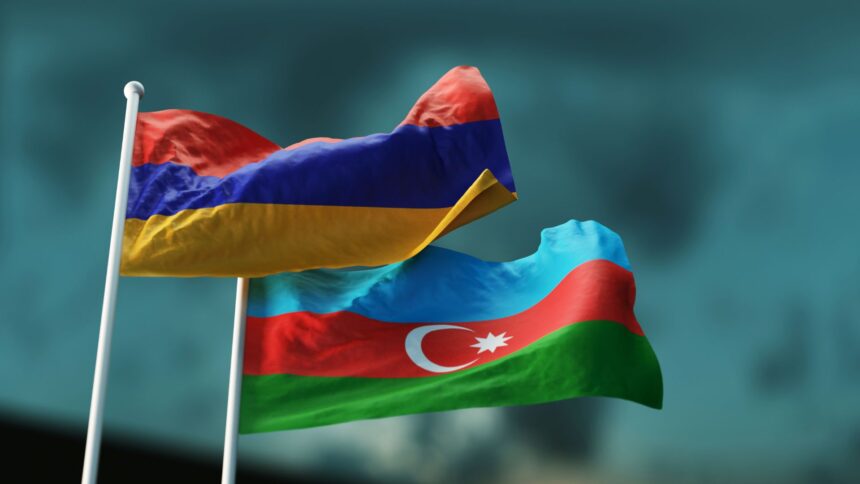
From this perspective, the Strategy raises serious concerns. Its provisions directly contradict the logic of the Washington agreements and the core principles of the initialed peace treaty between Azerbaijan and Armenia. In particular, Article 8 of the agreement obliges both sides to reject and prevent manifestations of intolerance, racial hatred, discrimination, separatism, and violent extremism. Yet the document under review includes narratives that not only fail to distance themselves from these phenomena, but in some cases institutionalize them in the form of official cultural policy.
Such a divergence between international commitments and the content of official documents creates a persistent impression in Baku that Armenia’s peace agenda is fragmented. Statements and actions by representatives of the Armenian establishment — both inside the country and abroad — increasingly appear inconsistent with the declared goals of normalization. Under these circumstances, a natural question arises: alongside the public peace rhetoric, does another, less articulated but more entrenched political line exist?
The terminology used in the Strategy draws particular attention. Phrases such as “Azerbaijan’s war against Karabakh,” “aggressor,” or “country that carried out cultural genocide” were recorded after the Prague summit in 2022, where both sides reaffirmed mutual recognition of territorial integrity based on the Alma-Ata Declaration. Institutionally, this signifies a refusal to acknowledge the new legal reality in which Armenia would be expected to rethink its own role in the past conflict, including the fact of long-term occupation of Azerbaijani territories.
The ethnopolitical component of the document is equally telling. Claims about the “millennia-long” presence of Armenians in Karabakh reproduce traditional narratives built on opposing “indigenous” and “arriving” populations. In the long run, such constructs undermine not only trust between societies, but also the very possibility of forming an inclusive political order — without which lasting peace is impossible.
Some elements of the Strategy go as far as openly vulnerable and scientifically untenable assertions — for example, the presentation of the Azykh Cave as Armenian historical heritage. Such claims reflect not concern for culture, but a desire to use cultural heritage as a tool of symbolic domination, which is characteristic of conflict, not post-conflict, societies. Moreover, presenting Azykh Cave as an “Armenian monument” is scientifically absurd. The site is extremely ancient, dating back to a period when many modern nations did not yet exist. Efforts to designate Armenians as the “aboriginal population of Karabakh” are equally unsustainable. There is ample evidence that significant Armenian presence in Karabakh began after Russia’s expansion into the Caucasus and the resettlement policy of the Russian Empire.
A similar logic appears in the treatment of areas such as carpet weaving. Instead of seeking points of cultural intersection and mutual recognition, official Yerevan continues to politicize cultural practices. Historical experience shows that such an approach rarely promotes reconciliation and more often reinforces dividing lines.
Unfortunately, official Yerevan applies this policy to international organizations as well.
For many years, Armenia systematically turned UNESCO into an instrument of political pressure on Azerbaijan. The biased and openly pro-Armenian stance of former Director-General Audrey Azoulay undermined trust in institutional neutrality and effectively legitimized this practice. With her departure, the period of targeted misuse of UNESCO patronage by Yerevan has ended. Under new conditions, Armenia must stop its destructive and politicized campaign against Azerbaijan within the framework of the international cultural organization.
Finally, it is important to note that the institutionalization of conflict narratives is not limited to national documents. They also appear in international formats, including the “EU–Armenia Partnership Agenda.” The wording contained in this document contradicts point XI of the initialed peace agreement, which explicitly prohibits the use of agreements with third parties to the detriment of bilateral obligations. Moreover, as Minval Politika has already reported, this document contains language that constitutes direct interference in Azerbaijan’s internal affairs, contradicts the agreements reached in the United States, and undermines the logic of the peace process. Above all, this concerns discussion of “Armenian prisoners” and repeated attempts to revive the issue of the “return of Armenians” to Karabakh.
Theoretically, one might argue that the “Strategy for the Preservation, Development and Promotion of the Culture of the Republic of Armenia for 2023–2027” was adopted before the Washington agreements. But first, it should be recalled: by that point, the Prague meeting had already taken place, where Armenia pledged to recognize Azerbaijan’s territorial integrity and the Alma-Ata Declaration. Second, the Armenian authorities had numerous opportunities to amend the adopted document and bring it into line with the country’s international obligations. Third, the “EU–Armenia Partnership Agenda” was adopted after the talks in the United States and the initialing of the peace agreement.
In political theory, lasting peace is impossible without coherence between declarations, institutions, and practices. If Armenia truly intends to follow the peace agenda, it must revise documents that reproduce the logic of the past conflict. Otherwise, the concept of the “Real Armenia” proclaimed by Nikol Pashinyan risks remaining a rhetorical formula unsupported by institutional substance.
Moreover, unfortunately, we have all too often seen cases where the Armenian authorities directly violated signed agreements and failed to fulfill their obligations. Similarly, on key issues, official Yerevan has tended to maintain two positions: one for the outside world and another for its domestic audience. If Armenia attempts to employ such “diplomatic techniques” again, this could create serious risks for the peace process.
Magsud Salimov