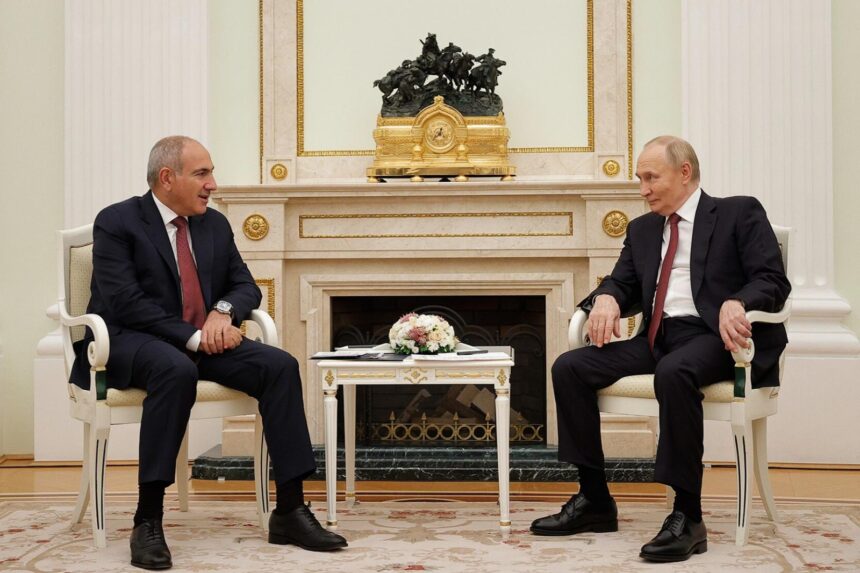
Farhad Mammadov, Director of the Center for Studies of the South Caucasus (CSSC), in an analysis published on his Telegram channel, noted that the central topic of the recent talks between Vladimir Putin and Nikol Pashinyan was nuclear energy. The official reason for Pashinyan’s visit was his participation in an event on this very subject.
In the part of the meeting open to the press, the Armenian Prime Minister stressed his government’s interest in acquiring small modular reactors from the United States in order to shut down the existing nuclear power plant and secure new generation capacities. However, the discussions with Putin focused primarily on extending the operation of Armenia’s current nuclear power plant. Among the delegations were the head of Rosatom and the director of the Armenian NPP.
Bilateral economic relations also featured on the agenda. The co-chairs of the intergovernmental commission participated in the talks. This year, trade turnover between Russia and Armenia has dropped by 50%. Moscow is redirecting its gold and diamond exports through other countries, while Armenia’s largest transport company has complained about obstacles both at border crossings and within Russia, where trucks have been held up for inspections.
Russia came prepared for the negotiations. Earlier, Deputy Prime Minister Alexey Overchuk had issued tough statements regarding Armenia’s aspirations for integration with the EU, and it is likely that Putin raised this issue directly.
Another key point of discussion was the transport sector. Moscow is keen to understand how the TRIPP project will be implemented and how Russian Railways South Caucasus (ЮКЖД) could participate in reopening communications across Armenian territory. The external dimension of the Eurasian Economic Union (EAEU), mentioned by Overchuk, was also tied into this context.
The issue of Russian border guards stationed on Armenia’s frontiers with Turkey and Iran was not overlooked either. According to Yerevan’s plans, the mission of Russia’s Federal Security Service (FSB) border troops is to conclude by the end of this year. At the same time, Pashinyan’s government has arrangements with the United States, which has pledged assistance in modernizing Armenia’s border forces.
According to Farhad Mammadov, Pashinyan sought to reassure Putin during Russia’s election campaign period. For Moscow, Armenia remains the only country in the South Caucasus where it still retains tangible resources and levers of influence—assets the Kremlin is actively employing amid regional transformations.