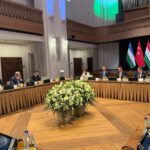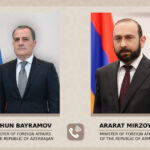
The event was a follow-up to their previous three European Union–mediated summits, on December 14, 2021, February 4, 2022, and April 6, 2022. The latest meeting delivered “tangible progress” related to transportation projects and border delimitation. Both sides decided to remain “in close contact” and convene again “in the same format” by August (Twitter.com/eucopresident, May 23).
At their first EU-mediated summit, on December 14 (see EDM, January 28), Pashinian and Aliyev agreed to terms on the railway connection along the so-called Zangazur corridor (linking mainland Azerbaijan with its Nakhchivan exclave, via southern Armenia). Building on that success, on May 22 the two leaders agreed on the terms of a highway running along the same route. The EU press statement declared that the sides settled on the major principles of border administration, security and land fees, as well as the customs to be applied to these connections (Consilium.europa.eu, May 23). The following day, Aliyev confirmed that they reached an agreement on the Zangazur corridor in Brussels (APA, May 23). The details have yet to be disclosed.
“Tangible progress” additionally encompassed the delimitation and demarcation of Armenia’s and Azerbaijan’s shared state borders. On May 23, both sides announced the composition of their respective state commissions; and the following day, the two bodies met on the Armenian-Azerbaijani border to launch their work (Mfa.gov.az, May 24). Their next pair of meetings will take place in Moscow and Brussels (Mfa.gov.az, May 24).
Negotiations on the establishment of a border commission first started a year ago. On May 19, 2021, amidst border clashes between Armenia and Azerbaijan. Russian Foreign Minister Sergei Lavrov then proposed the establishment of a bilateral delimitation commission, with the participation of Russia as a mediator and consultant (Civilnet.am, May 20).
Although Moscow remains an important actor in this process and more generally vis-à-vis Armenian-Azerbaijani peace negotiations, its role has now diminished in parallel with the growth of Brussels’ involvement. It is worth noting that since the beginning of this year, the representatives of the two South Caucasus republics have met exclusively under the mediation of the EU, while the only Russian-mediated meeting—that of the foreign ministers, held on May 12—took place on the sidelines of another major event and brought about no new developments in the negotiations.
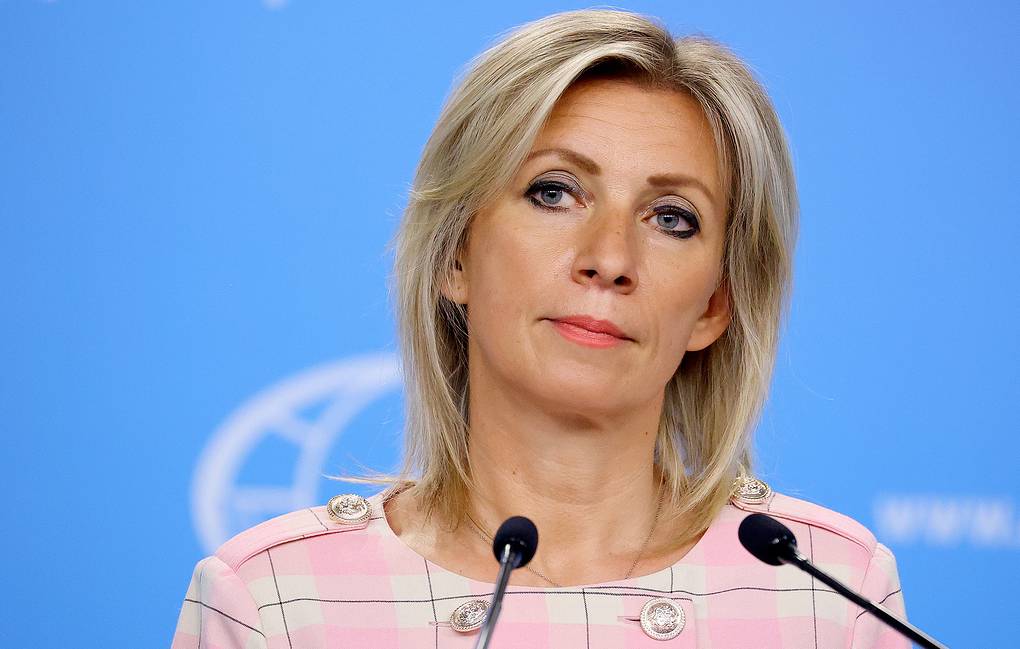
Maria Zakharova, the spokesperson of Russia’s Ministry of Foreign Affairs, furiously reacted to the May 22 Brussels summit, similar to her reaction to the previous summit of April 6 (see EDM, May 18). “We see persistent attempts by the EU to intervene in the process of trilateral agreements at the highest level,” Zakharova bemoaned. “We expect that Brussels will help implement them if it wants to and not play geopolitical games, but we do not want this,” she warned (News.am, May 25).
Russia was notably in the driver’s seat when it came to Armenian-Azerbaijani peace negotiations following the 2020 Karabakh war, until recent months. The first major Western involvement in the process without Russia’s participation took place more than six months after the end of war: In June 2021, via the mediation of the United States and Georgia, Yerevan handed over to Baku the first lot of mine maps in exchange for the release of 15 Armenian detainees (see EDM, June 14, 16, 2021). Few then expected that the West would be able to sustain, let alone increase, its role in the peace process, since Russia dominated all the major discussion platforms.
Yet in the following months, the US downscaled its mediating role while the EU took over the initiative. Although Brussels made the first major move on December 14, 2021, organizing the meeting of Armenian and Azerbaijani leaders on the sidelines of the summit of the Eastern Partnership, it began to play a more active role in the wake of the Russian invasion of Ukraine. This coincided with the EU’s growing interest in Azerbaijani natural gas exports and the increasing importance of the Trans-Caspian International Transportation Route, also known as the Middle Corridor, against the backdrop of disruptions to the inter-continental trans-Russian route (see EDM, April 20, May 4).
Stepping in as a mediator helps the EU to counterbalance against Russia in the region, which is critical for boosting the resilience of the regional countries and, thus, to ensure regional stability amidst an increasingly tense geopolitical situation in Eurasia. This regional stability, in turn, is necessary to preserve the continuation of energy exports and the implementation of new Trans-Caspian energy initiatives. At the same time, it is crucial for guaranteeing the operational utility of the Middle Corridor, including potentially associated transit projects like the Zangazur route. This decreases Russia’s relative importance in both spheres and is probably why the Russian foreign ministry has reproached Europe for allegedly playing “geopolitical games” in the South Caucasus.
The agendas of the EU-mediated and Russia-mediated negotiations have one notable difference. Namely, although Armenia and Azerbaijan discuss prospects for a comprehensive peace during their EU-mediated negotiations, they apparently do not focus in this format on the fate of Azerbaijan’s Karabakh region itself, where Russia’s peacekeeping contingent has been deployed (Armenpress.am, April 7).
Any peace deal that does not decisively resolve the Karabakh question will be unlikely to end the bilateral hostilities between the two South Caucasus republics. The persistence of the Karabakh question, thus, constitutes a threat to all other dimensions of the Armenian-Azerbaijani peace talks, including those on joint transportation projects and border delimitation. Any internal or externally motivated tensions in the Karabakh region can effectively sabotage the entire peace process between Yerevan and Baku. Therefore, Russia’s military foothold in the region, the pro-Russian sentiments of local separatist groups, and their calls for Russia’s support provide a trump card in Moscow’s hands. Russia can use this card if the peace talks spiral out of its control. The EU has limited tools to effectively handle this challenge, but it can still push the two sides to mutually recognize each other’s territorial integrity. Such a step would go a long way toward reducing the spoiler effect of the Karabakh question for longer-term peace efforts and regional stability.
Eurasia Daily Monitor