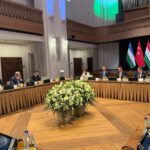
Curious developments are unfolding between Moscow and Yerevan. The staunchly pro-Western Armenian Prime Minister, Nikol Pashinyan, has traveled to Altai to attend an environmental conference—one joined by just eight countries, all of which are more or less aligned with Russia. Notably, he was accompanied by his wife and younger daughter, making it a rather cozy family trip.
Pashinyan also confirmed that Armenia does not intend to withdraw from the Eurasian Economic Union (EAEU)—Yerevan is clearly not ready to give up the economic benefits of “domestic” Russian prices on oil and gas. Even more interesting is the noticeable de-escalation in the “Twitter war” between Armenian parliamentary speaker Alen Simonyan and Russian propagandist Margarita Simonyan, which had included insults like “freak show character.” Margarita Simonyan even deleted one of her latest posts attacking Simonyan—a noteworthy gesture. All this comes as Armenia openly refused to support the U.S. initiative on the Zangezur Corridor. It seems Yerevan is trying to leverage the growing tension between Moscow and Baku. By traveling to Altai, Pashinyan appears to be making an effort to rebuild bridges with his former patrons—to clear the rubble, so to speak.
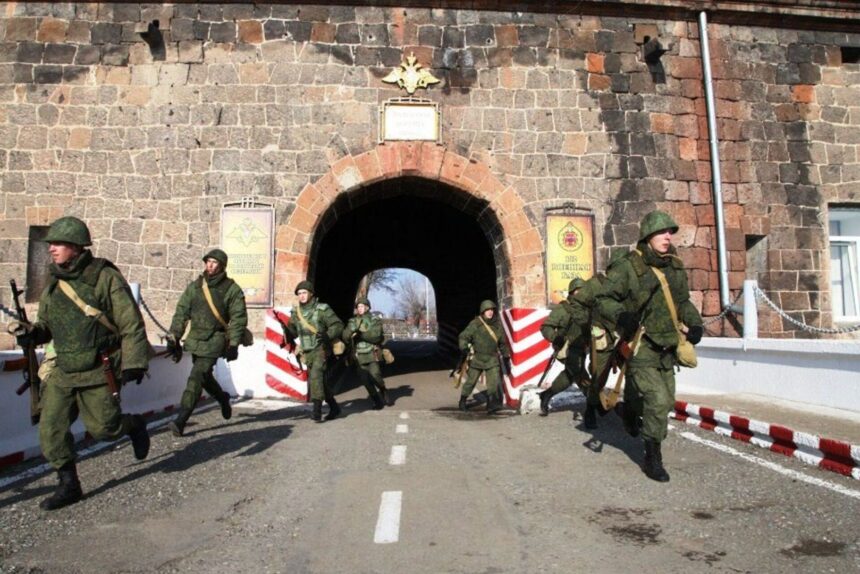
Yerevan has additional reasons for hope. Armenian newspaper Graparak reports that in recent weeks, large amounts of military equipment and ammunition have been delivered to the Russian base in Gyumri—several cargo planes with military supplies are landing daily. The purpose of these shipments is unknown, but experts speculate that Moscow may be “preparing for potential changes in the region.” Russian “Z-military bloggers” like Alexander Sladkov are already recommending that Moscow “urgently restore Armenia’s status as a major threat to Azerbaijan,” stating that “arresting diaspora leaders and crime bosses won’t help—Yerevan must be brought back to the idea of ‘Artsakh’” (quotes by Minval Politika).
But there’s a lot to “clear up.” Russian-Armenian oligarch Samvel Karapetyan is still in prison—once rumored to be groomed for a role similar to that of Bidzina Ivanishvili in Georgia. Pashinyan himself announced that Armenia is “80% ready” to leave the CSTO. Those familiar with Pashinyan understand well that such declarations are mostly empty rhetoric—he could change his mind at any moment. Still, such statements have an impact on the broader public.
Moreover, Armenia’s Western orientation is facing setbacks. The Trump administration has withdrawn its blanket support for Yerevan. The EU leadership has changed, and Brussels seems reluctant to return to past policies that harmed relations with Baku but delivered no tangible results in Armenia. Even France is losing interest. President Macron is too busy dealing with Ukraine, the disaster in New Caledonia, and problems in Africa to focus on Armenia. On top of that, Paris has already indicated to Pashinyan that it prefers the Armenian Revolutionary Federation (Dashnaks) instead. It may be time for Yerevan to seek favor from Moscow again.
It’s worth noting that Pashinyan only became pro-Western after Russia failed to deliver promised weapons. Before that, he had deployed Armenian sappers to join the Russian mission in Syria, helped turn Armenia into a hub for sanction circumvention, and granted more land for new Russian military installations.
The question now is whether Moscow will forgive Pashinyan’s earlier maneuvers or attempt to replace him with someone more obedient. And it doesn’t necessarily have to be Samvel Karapetyan.
Most importantly, if Moscow does attempt to “bring Yerevan back to the idea of ‘Artsakh’,” it won’t matter who’s in charge—be it Pashinyan, Karapetyan, Tatoyan, Arutyunyan, or any other “-yan.” Compared to what would follow, the defeats of 2020 and 2023 will seem like minor setbacks to Yerevan.
Given the ongoing war in Ukraine, Russia simply lacks the resources to generously prop up Armenia. Meanwhile, the Azerbaijani army has only grown stronger. And most critically—reviving a frozen conflict is one thing, but launching a new round of aggression is something else entirely. The military, political, and legal consequences would be far more severe.
Nurani