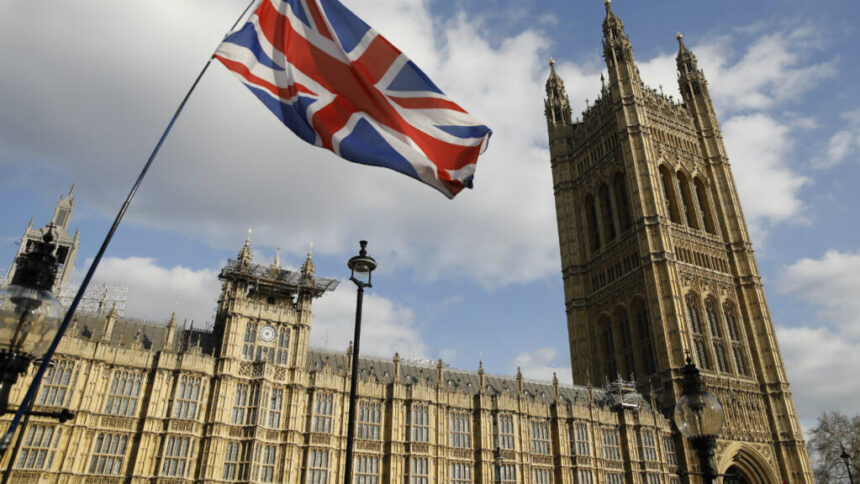
The Embassy of the United Kingdom in Baku responded to a wave of inquiries following the House of Commons hearing titled “Erasing the Past: The Destruction of Cultural Heritage,” which focused on the alleged destruction of Armenian heritage in Karabakh. The statement from the diplomatic mission was delivered in classic British fashion—impeccably polite, formally correct, and at the same time entirely evasive on the substance. The Embassy reminded that it represents the government of His Majesty King Charles III, not Parliament, which is “a separate and independent branch of the UK’s constitutional system.” The hearings in Westminster reflect the views of individual MPs or committees, not the official position of London. The position of the government itself “is clear and unchanged”: the United Kingdom recognises the sovereignty and territorial integrity of Azerbaijan.
Let us repeat: the wording is impeccable. The constitutional separation of powers is described accurately. But it is precisely this perfect formality that raises the main question: does the British establishment really apply this principle uniformly in all cases involving the territorial integrity of sovereign states?
To test this, a simple thought experiment is enough. Imagine that a parliamentary committee in the House of Commons holds a hearing titled “Cultural Heritage of Donbas: Threats to Russian Identity in Eastern Ukraine.” Imagine that it concerns the “DPR”—an entity the United Kingdom recognises as an illegal formation, whose leaders are under strict sanctions. Imagine that a representative from this entity is given a platform in the Westminster Palace to address British lawmakers about the “violation of the rights of Russian-speaking populations” and “cultural genocide” in the Donetsk region.
The very formulation of this scenario exposes its absurdity. Such hearings would be impossible in principle. No Speaker of the House of Commons would allow them. No parliamentary faction would risk attaching its name to them. And certainly the British Embassy in Kyiv would not hide behind explanations about constitutional separation of powers if such hearings somehow took place. The response would be immediate, unequivocal, and forceful—coming from the government, Parliament, and the full political spectrum of the country.
And this is not a matter of technicalities in constitutional law. It is a matter of political will—and how selectively it is applied. The British Parliament is indeed an independent branch of power, and no one disputes that fact. But parliamentary independence does not mean operating in a political vacuum. The government has a full arsenal of tools to influence the parliamentary agenda: from party whips controlling votes and MPs’ behaviour to informal channels of communication between the Cabinet and parliamentary committees. When London truly needs Parliament not to become a platform for foreign narratives, it knows perfectly well how to ensure that.
Let us return to the Ukrainian context, as it provides ample material for comparison. Since 2014, the United Kingdom has imposed extensive sanctions on the so-called “DPR” and “LPR.” Their “leaders”—from Pushilin to the lowest-ranking officials in the separatist administrations—are subject to personal restrictive measures. Any economic operations with these territories are prohibited for British citizens and companies. After Russia conducted “referenda” in September 2022 and claimed the annexation of Donetsk and Luhansk regions, London not only refused to recognise these actions but also strengthened the sanctions regime.
Over all these years, the British Parliament has held dozens of hearings and debates on Ukraine—and all of them have been conducted strictly in support of Ukrainian sovereignty. In April 2019, the House of Commons held a separate hearing on “Russian Annexation of Crimea,” and the tone of the discussion left no doubt: it was an unequivocal condemnation of the violation of Ukraine’s territorial integrity. In February 2022, after the start of the full-scale invasion, Parliament adopted a resolution explicitly expressing solidarity with the Ukrainian people and reaffirming its commitment to Ukraine’s sovereignty and territorial integrity.
Not once has any representative of the separatist entities been given a parliamentary platform—neither as a witness, an expert, nor in any other capacity. Moreover, in February 2026, the House of Commons debated Russian influence in British politics, and former British MEP Nathan Gill was condemned in November 2025 precisely for accepting bribes to promote pro-Russian narratives in the European Parliament.
In other words, London does not simply withhold a platform from separatists—it actively pursues those who attempt to advance narratives that undermine Ukraine’s territorial integrity.
Now, let us look at what happened in the case of Azerbaijan. In Westminster, a hearing was organised in which Artak Beglaryan—a former “ombudsman” and “state minister” of the separatist entity that was dissolved in September 2023 in full compliance with international law—was invited as a key witness. Today, Beglaryan heads the organisation “Artsakh Union”—an entity whose very name appeals to a non-existent quasi-state. And here is this individual, given a platform in the British Parliament to present a thesis that, in essence, calls into question the legitimacy of Azerbaijan’s restoration of sovereignty over its own territory.
The parallel with the Ukrainian context is direct and undeniable. Just as the DPR and LPR were illegal entities on the sovereign territory of Ukraine, the so-called “NKR” was an illegal formation on the sovereign territory of Azerbaijan. Just as representatives of the Donetsk and Luhansk separatists would never be allowed to speak in the House of Commons, former officials of the Karabakh separatist regime should not have been given such an opportunity. The United Kingdom recognises the territorial integrity of both states—this is recorded in official documents and confirmed, most recently, in the embassy’s statement in Baku. Yet the practical application of this recognition turns out to be diametrically different.
In this case, the reference to the separation of powers sounds like a legal excuse. Undoubtedly, the government does not dictate the parliamentary agenda. But the government is fully capable of stating its position publicly and unequivocally. When an MP from the Reform Party was implicated in promoting pro-Russian narratives for money, the government machinery reacted with full seriousness—initiating an investigation, a trial, and a verdict. But when a group of MPs organises an event that effectively questions the legality of Azerbaijan’s actions on its own territory, the British Embassy limits itself to a polite explanation of the country’s constitutional system.
This selectivity undermines the very idea of the principles London claims to uphold. Territorial integrity is either a universal principle or it is not a principle at all. One cannot consistently and firmly defend the territorial integrity of some countries, impose sanctions on separatist entities, and prosecute lobbyists working to undermine Ukraine’s sovereignty—while at the same time quietly observing as a platform is provided within one’s own Parliament to officials of a dissolved separatist regime that acted against Azerbaijan.
The embassy’s statement concludes by affirming support for the “normalisation of relations between Azerbaijan and Armenia as the path to a lasting and peaceful settlement.” The wording is impeccable. But lasting peace is built on consistency, not double standards. If the United Kingdom truly supports the peace process, it should reflect on the signal sent by hearings in which former separatist officials are given an international platform to promote narratives that directly oppose normalisation. Providing a stage to individuals whose political activity was dedicated to the dismemberment of Azerbaijan is a form of support for revanchist sentiments—even if wrapped in the academic terminology of “cultural heritage protection.”
Baku has taken note of the clarifications from the British Embassy. We are well aware of the United Kingdom’s constitutional system, and parliamentary independence is a matter deserving respect. But respect for institutions implies their responsible use. The House of Commons is one of the oldest parliaments in the world, and its authority carries obligations. Granting a parliamentary platform to officials of a separatist regime undermines that authority just as it would if a platform were given to representatives of the LPR or DPR to speak about the “Russian cultural heritage of Donbas.” If in one case this is unthinkable, and in another it is permitted, then we are dealing with pure double standards. And no matter how elegant the diplomatic phrasing, it does not resolve this contradiction.
Samir Veliyev
Caliber.Az