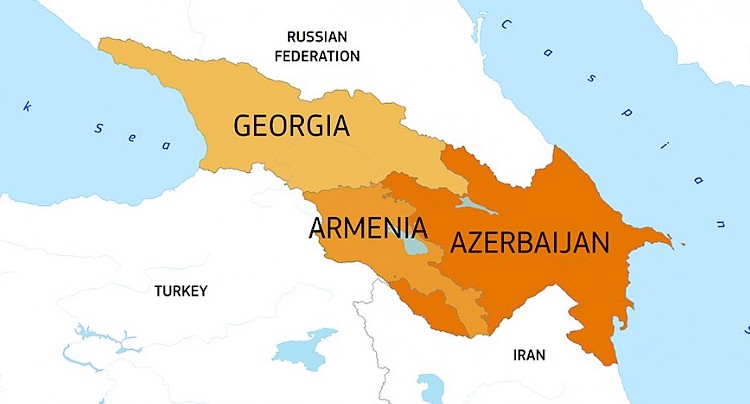
The evolving dynamics of Russia-USA relations have sent shockwaves through the post-Soviet space, with the South Caucasus emerging as a critical region to observe the fallout. Recent negotiations between the United States and Russia, particularly those aimed at resolving the war in Ukraine, have exposed fault lines in international diplomacy that carry profound lessons for Armenia, Azerbaijan, and Georgia. The implications of this “rapprochement” are starkly illustrated by Ukraine’s experience, Azerbaijan’s strategic foresight, and Armenia’s persistent miscalculations in relying on external powers for security.
Ukraine’s sense of betrayal in the wake of US-Russia negotiations offers a sobering lesson. These talks, along with tensions between Ukrainian President Volodymyr Zelenskyy and US leadership, sparked outrage in Kyiv and across Europe, as Ukrainian officials and citizens felt sidelined in decisions about their own fate. President Zelenskyy and other Ukrainian leaders have publicly decried their exclusion, arguing that it undermines their sovereignty and sacrifices their interests for the sake of a broader US-Russia deal.
Reports indicate that Ukraine fears concessions – such as territorial compromises or neutrality clauses – may be imposed without its consent. This concern was amplified when the United States voted alongside Russia against a UN resolution in February 2025 condemning Moscow’s actions. This perceived betrayal has strained US-Ukraine relations and underscored the risks of relying on a superpower’s support in times of crisis. Ukraine’s experience serves as a cautionary tale: even a staunch ally like the United States may prioritize its own geopolitical interests – potentially warming ties with Russia – over the sovereignty of a smaller partner.
Ukraine’s predicament stands in stark contrast to Azerbaijan’s long-standing foreign policy strategy, which has proven prescient in light of these developments. Azerbaijan has consistently avoided tethering its security or foreign policy to any single major power, whether the West, Russia, or others. Instead, Baku has pursued a balanced approach, cultivating relations with all key players – Russia, Türkiye, the United States, and even Iran where possible – without compromising its autonomy by aligning too closely with one at the expense of others.
This strategy proved decisive in the Armenia-Azerbaijan conflict, during which Azerbaijan faced decades of occupation. Rather than waiting for Western intervention or Russian goodwill, Azerbaijan built its military and economic capacity, leveraging energy exports and regional partnerships, notably with Türkiye, to liberate its territories in 2020 and decisively end the occupation in 2023.
Ukraine’s difficult situation, along with the international factors that led to Azerbaijan’s success, reinforce Baku’s conviction that relying on external powers is a gamble not worth taking. By maintaining strategic independence, Azerbaijan has emerged as a regional power in the South Caucasus, proving that self-reliance and pragmatic diplomacy trump the uncertainties of great power patronage.
For Armenia, however, the lessons of Ukraine’s betrayal and Azerbaijan’s success have yet to fully sink in, despite ample evidence from its own recent history. Armenia has long anchored its security and foreign policy to external powers, most notably Russia, which enabled Yerevan to occupy Azerbaijani territories for three decades following the First Karabakh War in the 1990s. This reliance on Moscow, formalized through the Collective Security Treaty Organization (CSTO), was expected to guarantee Armenia’s position. Yet, when Azerbaijan launched military campaigns in 2020 and 2023 to liberate Karabakh, Russia’s support proved hollow. Acknowledging that Karabakh belongs to Azerbaijan under international law, Russia refrained from intervention, to Armenia’s disillusionment.
In the aftermath of this loss, Armenia has doubled down on seeking new external guarantors rather than pivoting toward regional reconciliation. Disillusioned with Russia, Yerevan has turned to India, France, and some Western actors, exemplified by its rush to sign a miscalculated Strategic Partnership deal with the United States in January 2025 under the Biden administration – just days before the inauguration of the new administration. This deal, intended to bolster Armenia’s security and counterbalance Azerbaijan’s growing power, was hailed as a turning point. Yet within two months, the dramatic shift in US foreign policy under the Trump administration – marked by reduced security commitments to European allies and a potential thaw with Russia – cast doubt on Washington’s reliability as a security partner for Yerevan.
Armenia’s hope that France, India, or the US will step in during a future crisis mirrors the misplaced trust Ukraine once placed in Western assurances. The rapid reversal of US priorities should serve as a wake-up call: external powers, no matter how sympathetic, are unlikely to risk their own interests for Yerevan’s sake. Instead, Armenia would be better served by ending all disputes with its neighbors, removing territorial claims from its foundational documents, and supporting the establishment of a trilateral cooperation format with Azerbaijan and Georgia.
The Russia-USA “rapprochement,” however tentative, has illuminated a harsh reality for the South Caucasus: great powers pursue their own agendas, often at the expense of smaller states. This is a lesson Azerbaijan has long internalized through its balanced and independent foreign policy. Armenia, meanwhile, stands at a crossroads. Its history of leaning on Russia, and now pivoting to other external actors, has left it vulnerable, as neither Moscow nor Washington has proven a steadfast guarantor against regional threats. The South Caucasus thrives when its nations prioritize regional stability over great power games. For Armenia, the path forward lies not in chasing new protectors but in forging peaceful relations with its neighbors and renouncing territorial ambitions once and for all.
Dr. Vasif Huseynov, is a Senior Advisor at the Center of Analysis of International Relations (AIR Center) and Adjunct Lecturer at Khazar University in Baku, Azerbaijan.