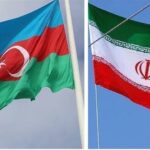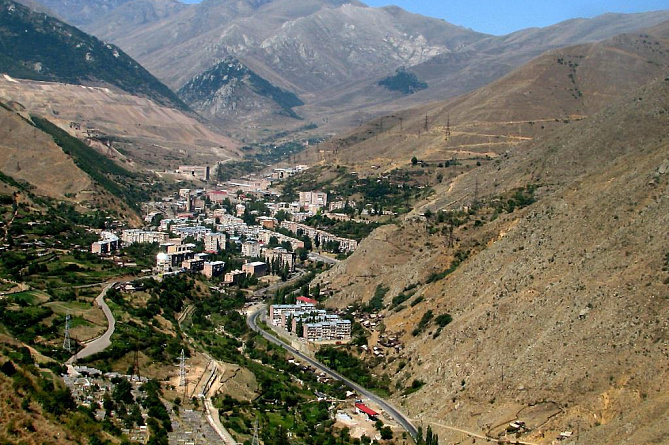
The Zangezur transport corridor initiative has emerged as a crucial element in the geopolitical dynamics of the South Caucasus with wide-ranging implications for international actors, including Israel. The proposed corridor is a major dividing point between Russia and Iran, allies in their fight against the West.
The Zangezur route would connect Azerbaijan to the Nakhchivan autonomous region, an Azerbaijani enclave, via Armenian territory. Both Armenia and Azerbaijan have claims to the area, which was a district established by the Russian Empire in 1868. In January of 1919, Britain, then holding a mandate over Azerbaijan, approved Azerbaijani jurisdiction over the Zangezur corridor. However, in 1920, Soviet authorities took control of the region and reassigned the territory to the Armenian Soviet Republic, severing the land link between Azerbaijan and its exclave of Nakhchivan.
In 2020, after the Second Karabakh war between Armenia and Azerbaijan, a Russian-brokered ceasefire agreement stipulated the reopening of the Zangezur corridor. The transit route would create a link between Turkey and the Turkic states of Central Asia, thereby strengthening the unity of the Turkic world. Iran and Armenia harshly oppose the project, fearing it will disrupt the regional power balance to their disadvantage. Russia is interested in the reopening of the corridor, hoping to play the role of a mediator between Baku, Ankara and Tehran.
From an Israeli perspective, the Zangezur corridor’s significance lies in its potential to shift the geopolitical balance in ways that could both align with and challenge Israel’s strategic interests.
Under the leadership of President Recap Tayyip Erdoğan, Turkey has strained relations with Israel, especially after Oct. 7. One reason for this is the domestic challenges facing Erdoğan’s ruling Justice and Development Party (AKP). Many Turkish voters blame the party for the country’s rampant inflation and corruption. Erdogan has traditionally sought to use foreign-policy issues to offset these problems. Part of this strategy involves expanding Turkish influence in the post-Soviet space and increasing anti-Israel rhetoric.
Azerbaijan, by contrast, has a close strategic partnership with Israel. This relationship serves as a counterweight to Iranian pressure on Azerbaijan, which includes anti-Azerbaijani propaganda and intelligence operations conducted by Iranian agencies against Baku. In addition, Iran is putting pressure against the development of trans-Caspian routes through Azerbaijan and opposes the construction of the Zangezur corridor. There is also the issue of self-determination of southern Azerbaijan, where a significant share of the Azerbaijani population lives in the territory controlled by Iran.
For Israel, the primary strategic interest in this situation—consistent with its own national security concerns—is to continue strategic cooperation with Azerbaijan and support the establishment of the Zangezur corridor. It should be noted that Israel is currently not interested in expanding Turkish influence in the post-Soviet space, particularly in the South Caucasus, because of Erdogan’s policies. Erdogan has been pressuring post-Soviet countries to adopt a collective anti-Israeli stance on the war in Gaza. However, Israel’s relations with Turkey are complex, and there may come a point in the future when the expansion of Turkish influence in the region could benefit Israel by providing an alternative to the influence of China and Russia, with whom Israel’s relations have also deteriorated due to the Gaza conflict.
This leads to another possible priority in Israel’s policy toward Zangezur. Israel does not want Armenia, where Russian influence is waning, to fall into Iran’s sphere of influence and become another proxy in the Iranian ecosystem to be used in its war against Israel. In line with this goal, Israel should support the Armenian government and its efforts to turn to the West by abandoning its old alliance with Russia. A return to the strategic alliance between Armenia and Russia would be undesirable for Israel, given the growing rapprochement between Moscow and Tehran.
Armenia’s attempts to free itself from confrontation with Azerbaijan and Turkey and create a new political system in the South Caucasus with less Russian and Iranian influence also coincide with Israeli interests.
Consequently, Israel cannot endorse Armenian efforts, based on nationalist ideas, to further utilize strategic ties with Iran to counterbalance pressure from Azerbaijan and Turkey. This policy contradicts the liberal direction of current Armenian Prime Minister Nikol Pashinyan’s government, which seeks closer ties with the West. In addition, the potential transfer of military technology or weapons to Iran through Armenia could pose a direct threat to Israel’s national security. Equally dangerous for Jerusalem are attempts by Iranian security services to direct Armenian nationalism against Israel. (There are some attempts in this direction, although they contradict the basic ideas of Armenian nationalists themselves, who are traditionally hostile mainly to Muslim and Turkic states).
Israel also needs to consider that the construction of the Zangezur corridor could have significant implications for the future of the South Caucasus and the Caspian Sea region. The transit of Central Asian goods to Europe via Turkey could significantly strengthen the independence of Central Asian countries from Russia, China and Iran. It would also increase the chances of successful implementation of trans-Caspian energy projects, which could greatly enhance Europe’s energy security. This aligns with the Western coalition’s policy in the post-Soviet space. Broadly speaking, Israel is part of this coalition, although it has its own national interests aimed at ensuring its security against Iran and preventing Armenia from becoming another proxy ally in Iran’s conflict with Israel.
Andrey Kazantsev-Vaisman is an affiliated-research fellow at the PSCR Program, the Begin-Sadat Center for Strategic Studies, Bar-Ilan University, and a professor at Narxoz University, Kazakhstan.